
Kidney transplantation and the kidney transplant recipient
For kidney failure, a transplant gives a longer, better life than dialysis. The new kidney sits low in the belly and needs lifelong care against rejection.
What it is
Placement of a kidney from a living or deceased donor into a person with end-stage kidney disease. It is the best treatment for most patients with kidney failure: it replaces dialysis, lengthens life and improves its quality, in exchange for lifelong immunosuppression.
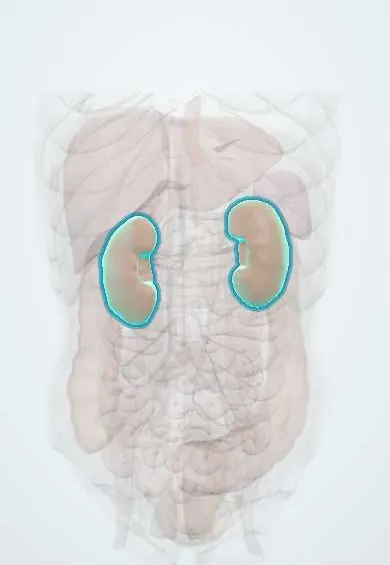
Who gets it
Chronic kidney disease is common and rising, driven by diabetes and hypertension, which are also the leading causes of kidney failure in Colombia. Far more people need a kidney than receive one, and the kidney is the most transplanted organ in Colombia and worldwide. Under Ley 1805 de 2016 Colombia presumes donation unless a person registered opposition in life, but living donation by relatives remains an important source.
Causes
- End-stage kidney disease (CKD stage 5), on dialysis or approaching it, from any cause
- Diabetic kidney disease and hypertensive nephrosclerosis (the commonest causes)
- Glomerular diseases: IgA nephropathy, focal segmental glomerulosclerosis, lupus nephritis and others
- Inherited diseases: autosomal dominant polycystic kidney disease, Alport syndrome; congenital anomalies and reflux in children
- Type 1 diabetes with kidney failure: simultaneous pancreas–kidney transplant in suitable patients
Risk factors
- For rejection: prior sensitisation (pregnancy, blood transfusion, previous transplant), HLA mismatch, poor adherence, low drug levels, young age
- For delayed graft function: deceased donor, donation after circulatory death, older donor, long cold ischaemia time
- For infection: intensity of immunosuppression, donor-positive and recipient-negative cytomegalovirus or Epstein–Barr virus, latent tuberculosis, Strongyloides or Chagas disease in people from endemic areas
- For cancer: years of immunosuppression, sun exposure and fair skin, Epstein–Barr virus mismatch, human papillomavirus, smoking
- For poor graft survival: deceased donor, long time on dialysis before transplant, recurrent original disease, cardiovascular disease
Pathophysiology
Failed kidneys → dialysis replaces only part of the work and leaves high cardiovascular risk → a functioning graft restores filtration, hormone production (erythropoietin, active vitamin D) and removes the dialysis burden. The graft is placed outside the peritoneum in the iliac fossa: renal artery to the external iliac artery, renal vein to the external iliac vein, ureter tunnelled into the bladder, usually over a temporary stent. Donor HLA molecules are foreign → recipient T cells (cellular rejection) and antibodies against donor HLA (antibody-mediated rejection) attack the graft → immunosuppression blocks T-cell activation and proliferation → but also blunts defence against viruses (cytomegalovirus, BK, Epstein–Barr), Pneumocystis and fungi and lowers cancer surveillance; calcineurin inhibitors also narrow the graft's own arterioles → a nephrotoxicity that looks like rejection.
Classification
- By donor: living donor (related or unrelated, or through paired exchange) versus deceased donor (after brain death or after circulatory death); living donor kidneys work sooner and last longer
- By timing: pre-emptive (before dialysis starts, the best results) versus after a period on dialysis
- Matching and compatibility: ABO blood group, HLA typing, panel reactive antibodies (how sensitised the recipient is) and a crossmatch to detect donor-specific antibodies before surgery
- Rejection: hyperacute (minutes, preformed antibodies), acute T-cell-mediated (weeks to months, commonest), antibody-mediated (acute or chronic, donor-specific antibodies) and chronic (slow fibrosis over years)
- Infections by time: first month (surgical and hospital infections), months 1–6 (opportunistic: cytomegalovirus, BK virus, Pneumocystis, reactivated tuberculosis), after 6 months (community infections, late viral infections)
- Combined transplants: simultaneous pancreas–kidney (type 1 diabetes with kidney failure), pancreas after kidney, liver–kidney
Symptoms and signs
- Before transplant: symptoms of kidney failure and dialysis dependence
- Delayed graft function: little urine in the first week, needing dialysis until the kidney wakes up
- Rejection: usually silent, found as a rising creatinine; sometimes less urine, weight gain, fever or graft tenderness
- Urological problems: urine leak (pain, fluid from the wound), obstruction or a lymphocele (swelling, leg oedema, rising creatinine)
- Infection: fever, cough, diarrhoea, painful urination or flank pain over the graft, often milder than expected
Diagnosis
- Clinical
- Transplant evaluation checks that the operation is safe and the graft will be protected: heart and blood vessels (the iliac arteries must be suitable), infection and cancer screening, urological anatomy, and psychosocial support and adherence. After transplant, a rising creatinine needs a structured search: volume status and drugs first, then the plumbing, then rejection or infection.
- Tests
- Before transplant: blood group, HLA typing, panel reactive antibodies and crossmatch; serologies for cytomegalovirus, Epstein–Barr virus, hepatitis B and C, HIV and syphilis; latent tuberculosis testing and, where relevant, Strongyloides and Chagas serology. After transplant: creatinine and urine protein, immunosuppressant drug levels, donor-specific antibodies, BK and cytomegalovirus viral loads in blood, urine culture; graft biopsy is the gold standard for rejection.
- Imaging
- Doppler ultrasound of the graft is the first test for any change in function: blood flow in the renal artery and vein, hydronephrosis, urine leak and lymphocele. CT angiography or angiography for suspected transplant renal artery stenosis. Before transplant, CT of the iliac arteries checks for calcification where the graft will be connected.
Differential diagnosis
- Rising creatinine after transplant: dehydration, calcineurin inhibitor toxicity, rejection, BK virus nephropathy, obstruction or urine leak, lymphocele, renal artery stenosis, pyelonephritis, recurrent original disease
- Fever: graft pyelonephritis, cytomegalovirus, Pneumocystis, tuberculosis, wound infection, rejection
- Diarrhoea: cytomegalovirus colitis, Clostridioides difficile, drug side effects (antiproliferative agents)
Rising creatinine after a kidney transplant: which cause?
| Cause | Typical timing | Clue | How to tell |
|---|---|---|---|
| Acute T-cell-mediated rejection | Weeks to first months | Silent creatinine rise; low drug levels, missed doses | Graft biopsy |
| Antibody-mediated rejection | Any time; often months to years | New donor-specific antibodies, protein in urine | Biopsy (capillary inflammation, C4d) and donor-specific antibodies |
| Calcineurin inhibitor toxicity | Any time | High drug levels, tremor, high potassium, new interacting drug | Drug level; improves when the dose is lowered; biopsy if unclear |
| BK virus nephropathy | Months 2–12 | Silent creatinine rise; heavy immunosuppression | BK viral load in blood; biopsy |
| Obstruction, urine leak or lymphocele | Days to weeks | Less urine, swelling over the graft, leg oedema | Doppler ultrasound |
| Dehydration (prerenal) | Any time | Diarrhoea, vomiting, diuretics, low blood pressure | Improves with fluids |
Goal of treatment
Transplant as early as possible with the best available kidney, keep the graft working for as long as possible by balancing rejection against infection and drug toxicity, and protect the recipient's heart, bones and skin.
Treatment
- Surgical
- Heterotopic transplantation into the iliac fossa outside the peritoneum, with arterial and venous joins to the iliac vessels and the ureter implanted into the bladder over a temporary stent; native kidneys are left in place unless they cause infection, bleeding or, in polycystic disease, lack of space.
- Medical
- Immunosuppression by drug class: induction with antibodies at the time of transplant, then lifelong maintenance usually combining a calcineurin inhibitor, an antiproliferative agent and a corticosteroid, with mTOR inhibitors or costimulation blockers in selected patients; regimens are set by the transplant team.
- Acute
- Rejection: corticosteroid pulses and, for severe T-cell rejection, depleting antibodies; antibody-mediated rejection with plasma exchange, intravenous immunoglobulin and other agents per centre protocol.
- Medical
- Infection prevention: prophylaxis against Pneumocystis and, according to donor and recipient status, cytomegalovirus; treatment of latent tuberculosis and of Strongyloides before transplant; vaccination before transplant and no live vaccines after; reduction of immunosuppression for BK virus.
- Procedure
- Dialysis for delayed graft function; percutaneous nephrostomy or stent for ureteric obstruction or leak; drainage or laparoscopic fenestration of a symptomatic lymphocele; angioplasty and stenting for transplant renal artery stenosis.
- Surgical
- Simultaneous pancreas–kidney transplant for type 1 diabetes with kidney failure: the pancreas, with a segment of donor duodenum, is usually drained into the bowel and joined to the iliac vessels; it frees many patients from insulin and protects the new kidney from diabetes.
- Follow-up
- Lifelong transplant clinic follow-up: creatinine and urine protein, drug levels and interactions, viral loads early on, blood pressure, glucose (post-transplant diabetes), lipids, bone health, yearly skin examination and age-appropriate cancer screening.
- Lifestyle
- Taking immunosuppressants on time every day, checking every new medicine or herbal product with the team, sun protection, no smoking, healthy weight and exercise, food and water safety, and contraception planning (some immunosuppressants harm the fetus).
Complications
- Delayed graft function, graft artery or vein thrombosis
- Urine leak, ureteric stenosis, lymphocele
- Rejection: hyperacute, T-cell-mediated, antibody-mediated and chronic
- Calcineurin inhibitor nephrotoxicity
- Infections: urinary tract and graft pyelonephritis, cytomegalovirus, BK virus nephropathy, Pneumocystis pneumonia, tuberculosis
- Cancers: skin squamous cell carcinoma (the commonest), post-transplant lymphoproliferative disorder, Kaposi sarcoma, anogenital cancers, cancer in the native kidneys
- Post-transplant diabetes, hypertension, dyslipidaemia and cardiovascular disease (the main cause of death with a working graft)
- Recurrence of the original disease (focal segmental glomerulosclerosis, IgA nephropathy, atypical haemolytic uraemic syndrome)
Common traps
- The new kidney replaces the old one in the loin: it is placed in the iliac fossa and the native kidneys usually stay; a tender lower abdominal mass is the graft
- A rising creatinine after transplant means rejection: calcineurin inhibitor toxicity, BK virus, obstruction and dehydration look the same; ultrasound and drug levels first, biopsy to decide
- Rejection causes pain and fever: most rejection is silent and is caught only by routine creatinine checks
- Dialysis is just as good if a patient copes with it: transplantation gives longer survival and better quality of life than staying on dialysis for most patients
- Skin cancer after transplant is the same as in anyone: squamous cell carcinoma becomes commoner than basal cell carcinoma and is more aggressive, so yearly skin checks are needed
Prognosis
Compared with staying on the waiting list on dialysis, transplantation roughly doubles or more the expected remaining years for most patients and improves quality of life; it also costs the health system less over time. Living donor kidneys last longest, on average well over a decade, and deceased donor kidneys somewhat less. Most graft losses come from chronic antibody-mediated rejection or death with a functioning graft, usually from cardiovascular disease.
Prevention
- Preventing kidney failure: control of diabetes and blood pressure, early treatment of CKD
- Early referral so transplant can be pre-emptive, and encouraging living donation
- Registering and discussing donation wishes with the family
- Avoiding unnecessary blood transfusions in people who may need a transplant (sensitisation)
- After transplant: strict adherence, vaccination, sun protection and cardiovascular risk control
Test yourself
Think of the answer, then tap the question to see it.
Where is a transplanted kidney placed, and which vessels and organ is it connected to?
In the iliac fossa, outside the peritoneum: renal artery to the external iliac artery, renal vein to the external iliac vein and ureter into the bladder. The native kidneys usually stay in place.
Why does hyperacute rejection almost never happen today?
It is caused by preformed antibodies against donor ABO or HLA antigens, and ABO matching plus a crossmatch before surgery detect them.
Four months after transplant, creatinine rises with no symptoms; immunosuppression was intensified for a rejection episode. Which virus must you check, and how?
BK polyomavirus, which causes BK virus nephropathy under heavy immunosuppression. Measure the BK viral load in blood and confirm with graft biopsy; treatment is reducing immunosuppression.
Why can a calcineurin inhibitor raise the creatinine of the kidney it protects?
It constricts the afferent arterioles, lowering filtration, and over years causes fibrosis; high drug levels and drug interactions make it worse, and it can mimic rejection.
Which patients are offered a simultaneous pancreas–kidney transplant, and what does it give them?
People with type 1 diabetes and kidney failure who are fit for major surgery. It ends dialysis, often frees them from insulin and protects the new kidney from diabetic damage.
Why it happens
- Hereditary glomerular disease: Alport, thin GBM, Fabry
- Autosomal recessive polycystic kidney disease
- Other renal cysts: medullary, dysplastic, acquired
- Focal segmental glomerulosclerosis
- Autosomal dominant polycystic kidney disease
- Chronic kidney disease and uremia
Show 1 more
Connections
Educational information, not medical advice. For any symptom, see a health professional.
Sources: Kidney Transplantation (StatPearls (NCBI Bookshelf), 2023); Chronic Kidney Transplant Rejection (StatPearls (NCBI Bookshelf), 2025); Pancreas Transplantation (StatPearls (NCBI Bookshelf), 2023); Kidney Transplantation | MedlinePlus (MedlinePlus (U.S. National Library of Medicine), 2025).
Spotted a mistake?We are always improving for the community. Tell us what is wrong and our team will review it.Report a mistake
Representative model, for educational purposes only.