
Pleurisy (pleuritis and pleuritic chest pain)
The lung lining is inflamed, so every breath hurts sharply. Often a virus, but a clot, pneumonia or collapsed lung must be ruled out first.
Quick facts
- Key signs
- Sharp · Shallow breathing to avoid the pain · Cough
- First line
- They relieve pain without depressing breathing
Red flags ↓
No doses: the clinician sets them by the current guideline.
What it is
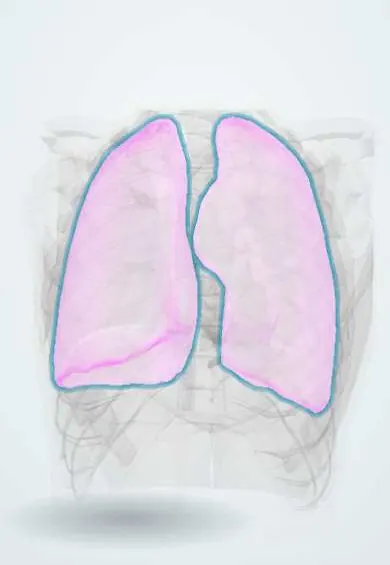
Inflammation of the pleura, the layers covering the lungs and lining the chest wall, causing sharp chest pain that worsens on breathing in, coughing or sneezing. Pleuritic pain is a symptom with many causes, from self-limiting viral pleurisy to pulmonary embolism and pneumonia.
Who gets it
Pleuritic chest pain is common in emergency and primary care. Pulmonary embolism is the most common serious cause, found in about 5–21% of emergency patients presenting with it. Viruses are among the most common benign causes, and their pain usually settles within two to four weeks.
Causes
- Viral infection: coxsackieviruses, influenza, parainfluenza, respiratory syncytial virus, adenovirus, cytomegalovirus, Epstein–Barr virus, mumps
- Pneumonia and infected pleural fluid (empyema)
- Pulmonary embolism
- Pneumothorax and chest injury, including rib fracture
- Autoimmune disease: lupus, rheumatoid arthritis, Sjögren syndrome
- Tuberculosis and cancer (subacute or recurrent pain)
- Drugs with pleural or lung toxicity, familial Mediterranean fever, post-cardiac injury syndromes
Risk factors
- Recent viral illness
- Previous deep vein thrombosis or active cancer (pulmonary embolism)
- Autoimmune, kidney or sickle cell disease, or heart failure
- Smoking
- Some medicines, such as nitrofurantoin and certain cancer drugs
- Exposure to tuberculosis
Pathophysiology
The visceral pleura over the lung has no pain fibres; the parietal pleura lining the chest wall and diaphragm has somatic ones. Inflammation roughens the pleural surfaces, so they rub with each breath and stimulate those fibres. The chest-wall pleura and outer diaphragm are supplied by intercostal nerves, so pain is felt over the chest wall; the central diaphragm is supplied by the phrenic nerve, so its pain is referred to the neck or shoulder on the same side. Deep breaths, coughing and laughing stretch the inflamed layers, so patients breathe shallowly.
Classification
- Must-not-miss causes: pulmonary embolism, myocardial infarction, pericarditis, aortic dissection, pneumonia, pneumothorax
- Common and self-limiting: viral pleurisy
- Subacute or recurrent: tuberculosis, cancer, autoimmune disease, familial Mediterranean fever, drugs
- With or without pleural effusion
Symptoms and signs
- Sharp, stabbing or burning chest pain on breathing in, coughing, sneezing or laughing
- Shallow breathing to avoid the pain
- Pain referred to the neck or shoulder when the diaphragmatic pleura is involved
- Cough, fever or breathlessness, depending on the cause
Diagnosis
- Clinical
- Confirm the pain is pleuritic, then look for the six must-not-miss causes. Listen for a pleural friction rub, a rough, scratchy sound with each breath; it is also heard in some pneumonia and pulmonary embolism. Use a validated decision rule (Wells, Geneva or PERC) to judge the probability of pulmonary embolism.
- Tests
- ECG (diffuse ST elevation with PR depression in pericarditis; ST elevation in adjacent leads in infarction) and high-sensitivity troponin when ischaemia is possible. D-dimer guided by the pulmonary embolism decision rule. Blood tests for infection and autoimmune disease. If there is an effusion, pleural fluid sampling for infection, tuberculosis or cancer.
- Imaging
- Chest X-ray for most patients (pneumonia, pneumothorax, effusion, rib fracture). Lung ultrasound finds fluid and small pneumothoraces and guides aspiration. CT pulmonary angiography when the rule and D-dimer call for it; CT angiography for suspected dissection. Echocardiography when a cardiac cause is suspected.
Differential diagnosis
- Pulmonary embolism
- Myocardial infarction
- Pericarditis
- Aortic dissection
- Pneumonia
- Pneumothorax
- Rib fracture and costochondritis
- Herpes zoster before the rash
Pain on breathing: viral pleurisy or a must-not-miss cause?
| Condition | Clue in the story | Bedside finding | First test |
|---|---|---|---|
| Viral pleurisy | Recent viral illness, otherwise well | Friction rub, normal oxygen | Diagnosis of exclusion after normal tests |
| Pulmonary embolism | Sudden breathlessness, previous clot or cancer, leg swelling | Fast heart rate, low oxygen | Decision rule, D-dimer, CT pulmonary angiography |
| Pericarditis | Recent virus; pain worse lying flat, eased sitting forward | Pericardial rub | ECG: diffuse ST elevation, PR depression |
| Pneumonia | Fever, productive cough | Crackles, reduced breath sounds, sometimes a rub | Chest X-ray: consolidation |
| Pneumothorax | Sudden breathlessness | Reduced breath sounds, hyperresonance | Chest X-ray or lung ultrasound |
Goal of treatment
Find and treat the cause, control the pain so the patient can breathe and cough deeply, and keep viral pleurisy a diagnosis of exclusion.
Treatment
- Medical
- Non-steroidal anti-inflammatory drugs are first-line for pleuritic pain: they relieve pain without depressing breathing or clouding the mind; corticosteroids are kept for intolerance of these drugs or for tuberculous pleurisy.
- Medical
- Treat the cause: antibiotics for pneumonia, anticoagulation for pulmonary embolism, anti-tuberculosis treatment, control of the autoimmune disease, colchicine for familial Mediterranean fever.
- Procedure
- Drain a large or infected effusion or a significant pneumothorax (needle aspiration or chest tube); pleurodesis for recurrent malignant effusion.
- Follow-up
- Viral pleurisy usually settles in two to four weeks; review if pain persists, and repeat the chest X-ray at about six weeks after pneumonia in smokers, people over 50 or those with persisting symptoms.
Complications
- Pleural effusion
- Empyema
- Pleural adhesions
- Complications of a missed cause, above all pulmonary embolism
Common traps
- Sharp pain on breathing is just pleurisy: viral pleurisy is diagnosed only after pulmonary embolism, infarction, pericarditis, dissection, pneumonia and pneumothorax are excluded.
- A friction rub proves benign pleurisy: a rub is also heard in some pneumonia and pulmonary embolism.
- Shoulder-tip pain means a shoulder problem: inflamed central diaphragmatic pleura refers pain to the neck and shoulder through the phrenic nerve.
- Pain that changes with position is always pleural: pain worse lying flat and eased by sitting forward suggests pericarditis, so check the ECG.
- Opioids are the best painkillers for pleurisy: anti-inflammatory drugs relieve the pain without depressing breathing, so the patient can breathe deeply and cough.
Prognosis
Viral pleurisy usually resolves within two to four weeks. Otherwise the outlook is that of the cause: excellent for most infections, serious for a missed pulmonary embolism, tuberculosis or cancer.
Prevention
- Prompt assessment of pleuritic pain, so pulmonary embolism and pneumonia are caught early
- Stopping smoking
- Good control of autoimmune disease
Test yourself
Think of the answer, then tap the question to see it.
Why can pleurisy cause pain in the shoulder?
The central diaphragmatic pleura is supplied by the phrenic nerve, so its pain is referred to the neck and shoulder on the same side.
Which six serious causes must be excluded before diagnosing viral pleurisy?
Pulmonary embolism, myocardial infarction, pericarditis, aortic dissection, pneumonia and pneumothorax.
What is the most common serious cause of pleuritic chest pain in the emergency department?
Pulmonary embolism, found in about 5–21% of these patients.
Why are anti-inflammatory drugs preferred over opioids for pleuritic pain?
They relieve pain and inflammation without depressing breathing or clouding the mind, so the patient can breathe and cough deeply.
Which layer of the pleura produces pleuritic pain, and why?
The parietal pleura, because it has somatic pain fibres from the intercostal and phrenic nerves; the visceral pleura over the lung has none.
Connections
Educational information, not medical advice. For any symptom, see a health professional.
Sources: Pleuritic Chest Pain: Sorting Through the Differential Diagnosis (American Family Physician, 2017); Pleural Disorders - What Are Pleural Disorders? (National Heart, Lung, and Blood Institute (NIH), 2022); Pleural Disorders - Diagnosis (National Heart, Lung, and Blood Institute (NIH), 2022).
Spotted a mistake?We are always improving for the community. Tell us what is wrong and our team will review it.Report a mistake
Representative model, for educational purposes only.