
Ocular migraine and facial neuralgias
Headaches with visual aura, brief visual loss in one eye, or eye pain with tearing. Most are benign, but stroke and arteritis must be excluded.
What it is
Primary headaches and neuralgias with eye features: migraine aura (a spreading zigzag scotoma seen with both eyes), retinal migraine (brief, fully reversible loss in one eye), cluster headache (severe pain around one eye with tearing, red eye and Horner signs) and trigeminal neuralgia (electric-shock facial pain).
Who gets it
Migraine aura affects about a third of people with migraine; retinal migraine is rare and a diagnosis of exclusion. Cluster headache is more common in men who smoke; trigeminal neuralgia mostly affects people over 50.
Causes
- Migraine aura: cortical spreading depression in the occipital cortex
- Retinal migraine: transient vasospasm of retinal or choroidal circulation
- Cluster headache: hypothalamic activation of the trigeminal-autonomic reflex
- Trigeminal neuralgia: vascular compression of the trigeminal root, multiple sclerosis or tumours
Risk factors
- Personal or family history of migraine
- Female sex for migraine
- Male sex and smoking for cluster headache
- Multiple sclerosis in young-onset trigeminal neuralgia
Pathophysiology
A slowly spreading wave of neuronal depolarisation across the visual cortex produces positive then negative visual phenomena in the field of both eyes. Retinal migraine reflects retinal vasospasm and is monocular. In cluster headache, activation of trigeminal afferents and parasympathetic outflow causes tearing and conjunctival injection, while sympathetic dysfunction causes ptosis and miosis.
Classification
- Migraine with visual aura (binocular, gradually spreading, under 60 minutes)
- Retinal migraine (monocular, fully reversible, with headache)
- Cluster headache and other trigeminal autonomic cephalalgias
- Trigeminal neuralgia (classic, secondary, idiopathic)
Symptoms and signs
- Zigzag flashing lights or a shimmering expanding blind spot, followed by headache
- Brief dimming or loss of vision in one eye (retinal migraine)
- Excruciating one-sided pain around the eye with tearing, red eye, nasal blockage, droopy lid and small pupil (cluster)
- Seconds-long electric-shock facial pain triggered by touch, chewing or wind (trigeminal neuralgia)
Diagnosis
- Clinical
- Detailed history: monocular versus binocular (cover each eye), duration and spread of symptoms, triggers, autonomic signs; full eye and neurological examination between episodes.
- Tests
- ESR and CRP when giant cell arteritis is possible; cardiovascular workup (carotid ultrasound, ECG) for transient monocular loss in older patients.
- Imaging
- MRI of the brain for atypical aura, cluster headache or trigeminal neuralgia (to look for compression, demyelination or tumour); vascular imaging for transient monocular loss.
Differential diagnosis
- Transient ischaemic attack or amaurosis fugax
- Giant cell arteritis
- Occipital seizures or lesions
- Acute angle-closure glaucoma
- Herpes zoster ophthalmicus or postherpetic neuralgia
Eye symptoms with head or face pain: which one?
| Condition | Eye or eyes | Timing | Key clue |
|---|---|---|---|
| Migraine with visual aura | Both eyes, same half of the field | Spreads over minutes, under an hour, then headache | Zigzag flashing lights that leave a blind spot behind them |
| Retinal migraine | One eye only | Brief and fully reversible, with headache | Diagnosis of exclusion; normal eye between attacks |
| Amaurosis fugax or TIA | One eye (amaurosis) or a field in both eyes | Sudden, minutes, without a spreading march | Older patient with vascular risk factors; needs urgent workup |
| Cluster headache | Pain around one eye, vision normal | Attacks lasting up to a few hours, in bouts | Tearing, red eye, ptosis and miosis on the painful side |
| Trigeminal neuralgia | Face; no visual loss | Electric shocks lasting seconds | Triggered by touch, chewing or wind |
Goal of treatment
Confirm a primary headache after excluding vascular and ocular emergencies, then control attacks and reduce their frequency.
Treatment
- Acute
- Migraine: simple analgesics, anti-inflammatories or triptans for the headache; triptans are avoided in retinal migraine. Cluster: high-flow oxygen or a triptan.
- Medical
- Prevention: beta-blockers, topiramate or other agents for frequent migraine; verapamil for cluster headache; carbamazepine or oxcarbazepine as first-line for trigeminal neuralgia.
- Surgical
- Microvascular decompression or percutaneous procedures for drug-resistant trigeminal neuralgia.
- Lifestyle
- Headache diary, trigger avoidance, regular sleep and stopping smoking and alcohol in cluster periods.
Complications
- Permanent visual loss (rare, retinal migraine)
- Medication-overuse headache
- Missed stroke or arteritis
Common traps
- Ocular migraine always affects one eye: most of what patients call ocular migraine is binocular cortical aura; true monocular retinal migraine is rare and diagnosed only after vascular causes are excluded
- Patients can always tell whether one eye or both were affected: people often blame the eye on the side of a homonymous field defect; ask whether covering each eye changed the symptom
- A first aura after age 50 is just late-onset migraine: new transient visual loss in an older patient is TIA, amaurosis fugax or giant cell arteritis until proven otherwise; check ESR, CRP and the carotids
- Triptans suit any migraine with eye symptoms: they are avoided in retinal migraine, which is thought to involve vasospasm of the retinal or choroidal circulation
- Ptosis and a small pupil in a headache patient are always part of cluster headache: they are expected during cluster attacks, but a persistent Horner syndrome needs imaging to exclude a structural cause such as carotid dissection
Prognosis
Benign in most; migraine aura and cluster headache are recurrent but treatable, and most trigeminal neuralgia responds to medication or surgery.
Test yourself
Think of the answer, then tap the question to see it.
During zigzag lights a man covers each eye in turn, and each eye still sees them on the right side. Where is the problem?
In the left occipital cortex: the same half of the field in both eyes is a homonymous, cortical event, so this is migraine aura, not retinal migraine.
A 72-year-old has a few minutes of vision loss in one eye and jaw pain when chewing. What is the next step?
Treat as giant cell arteritis until proven otherwise: urgent ESR and CRP and same-day specialist care, because the other eye can be lost; also assess the carotids and heart.
Why does a cluster attack cause a droopy lid and small pupil as well as tearing?
The trigeminal-autonomic reflex drives parasympathetic outflow (tearing, red eye, blocked nose), while the sympathetic supply to the eye is disturbed, giving a partial Horner syndrome on that side.
A 30-year-old has electric-shock facial pain and mild facial numbness. Why is MRI needed?
Trigeminal neuralgia at a young age or with numbness suggests a secondary cause such as multiple sclerosis or a tumour; MRI looks for demyelination, compression or a mass.
Which drug class is avoided in suspected retinal migraine, and why?
Triptans, because they constrict blood vessels and retinal migraine is thought to involve vasospasm of the retinal or choroidal circulation.
In neurology
- Migraine aura versus TIA: the march tells them apart
- Facial pain and neuralgias: trigeminal, glossopharyngeal, post-herpetic
Connections
Educational information, not medical advice. For any symptom, see a health professional.
Sources: Retinal Migraine Headache (StatPearls Publishing (NCBI Bookshelf), 2023); Migraine With Aura (StatPearls Publishing (NCBI Bookshelf), 2024); Cluster Headache (StatPearls Publishing (NCBI Bookshelf), 2023); Trigeminal Neuralgia (StatPearls Publishing (NCBI Bookshelf), 2024).
Spotted a mistake?We are always improving for the community. Tell us what is wrong and our team will review it.Report a mistake
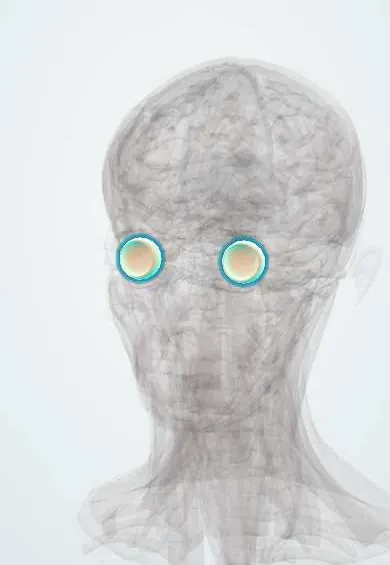
Representative model, for educational purposes only.