Conditions · Gastroenterology and hepatology
Paralytic ileus and colonic pseudo-obstruction (Ogilvie) !
The bowel stops moving without a blockage, often after surgery or with opioids, low potassium or severe illness, so gas and fluid build up.
Updated 2026-11-01
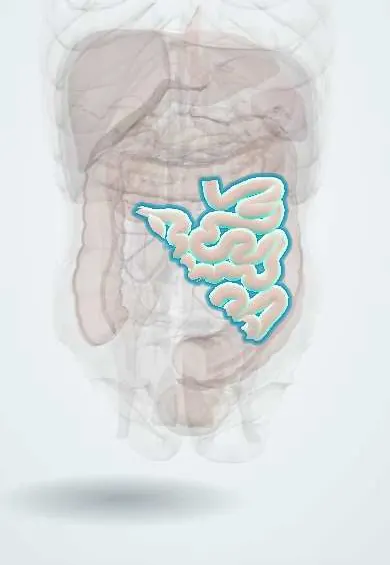
Structures involved
Tap one to see what it is and open it in 3D.
In the clinical exam
Why it happens
- The enteric nervous system, slow waves and GI control
- Small bowel and colon motility
- Sympathetic and parasympathetic effects on each organ
- The GI tract wall: mucosa, submucosa, muscularis, serosa; enteric plexuses
What it is
A functional failure of intestinal peristalsis with no mechanical obstruction. Paralytic ileus usually involves the small bowel and colon; acute colonic pseudo-obstruction (Ogilvie syndrome) is massive dilation of the colon, mainly the caecum and right colon, without a blockage.
Who gets it
Ileus is very common after abdominal surgery and in hospitalised patients. Ogilvie syndrome mainly affects older, seriously ill or bedridden patients and occurs after surgery (including caesarean section and orthopaedic surgery), trauma and severe medical illness.
Causes
- Abdominal surgery (postoperative ileus, the most common cause)
- Drugs: opioids, anticholinergics, some calcium channel blockers and antipsychotics
- Electrolyte disorders: low potassium, magnesium or sodium, high calcium
- Intra-abdominal or retroperitoneal inflammation or bleeding: peritonitis, pancreatitis, appendicitis, retroperitoneal haematoma
- Systemic illness: sepsis, heart failure, myocardial infarction, pneumonia, kidney failure, hypothyroidism, spinal injury
Risk factors
- Major or open abdominal surgery and long operations
- High or prolonged opioid use
- Immobility and older age
- Electrolyte disturbances and diabetes
- Critical illness and sepsis
Pathophysiology
Surgical handling, inflammation and drugs increase sympathetic inhibitory signals and release inflammatory mediators, so smooth muscle stops contracting in a coordinated way. Gas and fluid accumulate, the bowel distends and its wall absorbs less. In Ogilvie syndrome an imbalance in autonomic supply of the colon leaves it atonic; by the law of Laplace the caecum, the widest part, is most at risk of ischaemia and perforation as it dilates.
Classification
- Postoperative ileus: expected and transient after surgery
- Paralytic (adynamic) ileus from medical causes
- Acute colonic pseudo-obstruction (Ogilvie syndrome)
- Chronic intestinal pseudo-obstruction (neuropathic or myopathic, rare)
Symptoms and signs
- Abdominal distension and bloating
- Nausea and vomiting
- No passage of flatus or stool
- Diffuse discomfort rather than colicky pain
- Absent or reduced bowel sounds on auscultation
- Tympanic abdomen, usually without marked tenderness
Diagnosis
- Clinical
- Typical setting (recent surgery, opioids, severe illness) with distension, vomiting, no flatus and quiet bowel sounds. The key task is to distinguish it from mechanical obstruction.
- Tests
- Electrolytes (potassium, magnesium, calcium), kidney function, blood count, glucose, thyroid tests and drug review; lactate if ischaemia is suspected.
- Imaging
- Plain abdominal films show diffuse gas in the small bowel and colon without a transition point. CT, ideally with contrast, excludes mechanical obstruction and measures caecal size. In Ogilvie syndrome, CT or a water-soluble contrast enema excludes a distal colonic obstruction.
Differential diagnosis
- Mechanical small bowel obstruction
- Large bowel obstruction (cancer, volvulus)
- Toxic megacolon
- Acute mesenteric ischaemia
- Faecal impaction
Goal of treatment
Rest and decompress the bowel, correct the causes (electrolytes, drugs, underlying illness) and prevent ischaemia and perforation, especially of the caecum.
Treatment
- Conservative
- Nothing by mouth, intravenous fluids and electrolyte replacement (potassium and magnesium), nasogastric decompression if vomiting, early mobilisation, and a rectal tube for colonic distension; changing position (prone or knee-chest) may help passage of gas.
- Medical
- Reduce or stop opioids and anticholinergics, using opioid-sparing analgesia; peripherally acting mu-opioid receptor antagonists are used for opioid-related ileus. In Ogilvie syndrome that does not resolve, intravenous neostigmine with cardiac monitoring (risk of bradycardia) is first-line drug treatment.
- Procedure
- Colonoscopic decompression, often with a decompression tube, when neostigmine fails or is contraindicated.
- Surgical
- Surgery (caecostomy or colectomy) for perforation, ischaemia or failure of other measures.
- Follow-up
- Nursing priorities: monitor abdominal girth, bowel sounds, passage of flatus, vomiting and nasogastric output, fluid balance and electrolytes; serial abdominal films measure caecal diameter in Ogilvie syndrome; encourage walking after surgery.
Complications
- Bowel ischaemia and perforation (especially of the caecum)
- Dehydration and electrolyte imbalance
- Aspiration pneumonia from vomiting
- Longer hospital stay and malnutrition
Prognosis
Most cases resolve within a few days once causes are corrected. Ogilvie syndrome carries a significant mortality if the colon perforates, which is why early recognition and decompression matter.
Prevention
- Opioid-sparing pain control and minimally invasive surgery when possible
- Early mobilisation and early feeding after surgery (enhanced recovery pathways)
- Keeping electrolytes in range in hospitalised patients
Test yourself
Think of the answer, then tap the question to see it.
How do bowel sounds differ between paralytic ileus and early mechanical obstruction?
Ileus: reduced or absent; early mechanical obstruction: high-pitched and hyperactive (tinkling).
Which electrolyte abnormality is a classic correctable cause of ileus?
Hypokalaemia (also low magnesium).
In Ogilvie syndrome, which segment of the colon is most at risk of perforation and why?
The caecum, because it has the largest diameter and thus the highest wall tension (law of Laplace).
Which drug is used for Ogilvie syndrome that does not respond to conservative care, and what must be monitored?
Intravenous neostigmine, with cardiac monitoring for bradycardia.
What is a key nursing intervention to prevent postoperative ileus?
Early ambulation, with opioid-sparing analgesia and monitoring of bowel sounds and flatus.
Related conditions
- Postoperative ileus
- Small bowel obstruction
- Large bowel obstruction
- Acute mesenteric ischaemia
- Acute pancreatitis
- Acute appendicitis
- Sepsis and septic shock
- Constipation and faecal impaction
Educational information, not medical advice. For any symptom, see a health professional.
Sources: Ileus - Gastroenterology - MSD Manual Professional Edition (MSD Manual Professional Edition, 2025); Intestinal obstruction and Ileus: MedlinePlus Medical Encyclopedia (MedlinePlus (U.S. National Library of Medicine), 2025).
Spotted a mistake?We are always improving for the community. Tell us what is wrong and our team will review it.Report a mistake
Representative model, for educational purposes only.