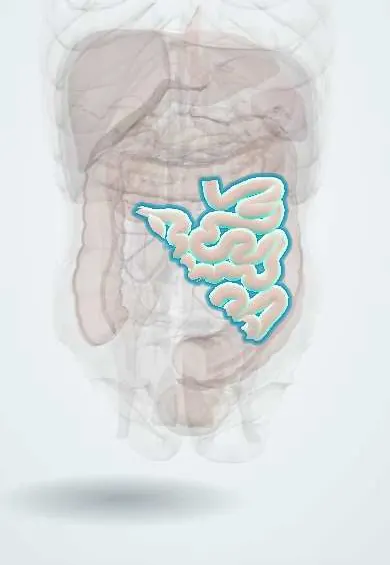
Small bowel obstruction !
Small bowel obstruction is a blockage of the small intestine, often from adhesions or a hernia; it causes cramping pain, vomiting and a swollen belly.
Updated 2026-10-29
Structures involved
Tap one to see what it is and open it in 3D.
In biochemistry
Microorganisms that cause it
In the clinical exam
- Abdominal inspection
- Abdominal auscultation: bowel sounds and bruits
- Abdominal percussion: liver span and tympany
- Examination of the groin and abdominal wall for hernias
- Bowel obstruction syndrome
In physiology
Why it happens
- Infarction: red vs white, and what decides the damage
- Necrotizing enterocolitis: why the premature gut is vulnerable
- Water and electrolyte absorption and how diarrhea happens
- Metabolic alkalosis and its compensation
What it is
A blockage of the jejunum or ileum, mechanical or functional, that stops the passage of gut contents and gas, causing colicky pain, vomiting and distension.
Who gets it
One of the most common reasons for emergency surgical admission. Adhesions after abdominal surgery are the leading cause where surgery is common; in people without previous operations, hernias are a frequent cause, particularly where hernias go untreated.
Causes
- Adhesions after previous abdominal or pelvic surgery (most common)
- Hernias: inguinal, femoral, umbilical, incisional or internal
- Tumours: intraluminal, in the wall or compressing from outside (including peritoneal metastases)
- Crohn disease strictures, radiation enteritis
- Less common: volvulus, intussusception, gallstone ileus, bezoars, foreign bodies
Risk factors
- Previous laparotomy, especially lower abdominal and pelvic surgery
- Untreated abdominal wall hernia
- Intra-abdominal cancer or prior abdominal radiotherapy
- Inflammatory bowel disease
Pathophysiology
Gas and fluid build up above the blockage, so the bowel distends and its wall becomes oedematous. Secretion rises and absorption falls; with vomiting this causes dehydration, electrolyte loss and kidney injury. Rising wall pressure can compromise venous and then arterial flow (strangulation), leading to ischaemia, necrosis, bacterial translocation and perforation, most often in a closed loop.
Classification
- Partial vs complete obstruction
- Simple vs closed-loop
- Without vs with strangulation (ischaemia)
- Proximal (high) vs distal (low): high gives early vomiting, low gives more distension
Symptoms and signs
- Colicky, crampy central abdominal pain
- Nausea and vomiting, bilious early in high obstruction and feculent late in low obstruction
- Abdominal distension
- Constipation and no passage of flatus (obstipation) in complete obstruction
- High-pitched, tinkling bowel sounds early; quiet abdomen late
- Signs of dehydration: tachycardia, dry mucosa, low urine output
Diagnosis
- Clinical
- History of previous surgery, hernias or cancer; vomiting, distension and absent flatus. Examination checks hydration, scars, all hernia orifices (including femoral) and signs of peritonitis; digital rectal examination.
- Tests
- Blood count, electrolytes, kidney function, lactate and blood gas (vomiting may cause hypokalaemic metabolic alkalosis; acidosis suggests ischaemia). Group and screen before surgery.
- Imaging
- CT of the abdomen and pelvis with intravenous contrast is the main test: it shows dilated small bowel, a transition point, the cause and signs of strangulation. Plain films may show dilated loops and air-fluid levels. Water-soluble contrast follow-up X-rays help predict whether adhesive obstruction will settle.
Differential diagnosis
- Paralytic ileus (postoperative, electrolytes, drugs)
- Large bowel obstruction
- Acute mesenteric ischaemia
- Gastroenteritis
- Acute pancreatitis
- Perforated viscus
Goal of treatment
Restore fluids and electrolytes, decompress the bowel, relieve the obstruction and recognise strangulation early so that ischaemic bowel is operated on before it perforates.
Treatment
- Acute
- Resuscitation: nil by mouth, intravenous crystalloids, correction of potassium and other electrolytes, urinary catheter to track output, plus analgesia and antiemetics.
- Conservative
- Bowel rest and nasogastric tube decompression; most adhesive obstructions without signs of ischaemia settle with this non-operative approach.
- Procedure
- Oral water-soluble contrast in adhesive obstruction: arrival in the colon on follow-up X-ray predicts resolution, and it may speed recovery.
- Surgical
- Surgery (open or laparoscopic) for strangulation, peritonitis, closed loop, obstructed hernia or failure of non-operative care: adhesiolysis, hernia repair, and resection of non-viable bowel.
- Follow-up
- Close reassessment with repeated examination, lactate and fluid balance; worsening signs prompt surgery.
Complications
- Bowel ischaemia, necrosis and perforation
- Sepsis and peritonitis
- Aspiration pneumonia from vomiting
- Acute kidney injury and electrolyte disturbance
- Short bowel after extensive resection
- Recurrent obstruction from new adhesions
Prognosis
Most adhesive obstructions resolve without surgery, though recurrence is common. Mortality rises sharply when strangulation is missed or surgery is delayed; outcome depends on the cause, age and comorbidities.
Prevention
- Elective repair of symptomatic hernias
- Careful surgical technique and laparoscopic approaches that reduce adhesions
Test yourself
Think of the answer, then tap the question to see it.
What is the most common cause of small bowel obstruction in a patient with previous abdominal surgery?
Postoperative adhesions.
Which imaging test is preferred to confirm small bowel obstruction and look for strangulation?
CT of the abdomen and pelvis with intravenous contrast, which shows the transition point, the cause and signs of ischaemia.
Which features suggest strangulation in small bowel obstruction?
Continuous pain, fever, tachycardia, peritonitis, rising white cell count or lactate, and CT signs such as a closed loop or poor wall enhancement.
What acid-base disturbance is typical after prolonged vomiting in proximal obstruction?
Hypokalaemic, hypochloraemic metabolic alkalosis.
Which hernia orifice must always be examined in elderly women with bowel obstruction?
The femoral canal, below the inguinal ligament: femoral hernias are small, easily missed and often strangulate.
Related conditions
- Inguinal hernia
- Colorectal cancer
- Femoral hernia
- Incisional (ventral) hernia
- Umbilical hernia
- Crohn disease
- Large bowel obstruction
- Acute mesenteric ischaemia
- Acute pancreatitis
Educational information, not medical advice. For any symptom, see a health professional.
Sources: Small Bowel Obstruction (StatPearls (NCBI Bookshelf), 2025).
Spotted a mistake?We are always improving for the community. Tell us what is wrong and our team will review it.Report a mistake
Representative model, for educational purposes only.