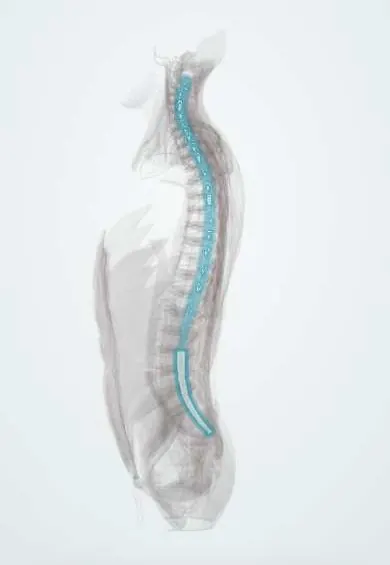
Spinal epidural abscess !
A spinal epidural abscess is a collection of pus inside the spinal canal that can press on the spinal cord or nerves; it is an emergency.
Updated 2026-10-29
Structures involved
Tap one to see what it is and open it in 3D.
In the clinical exam
Why it happens
- Outcomes of acute inflammation: resolution, abscess, scar or chronic inflammation
- Upper versus lower motor neuron lesions
What it is
Collection of pus in the epidural space between the dura and the vertebral canal that can compress the spinal cord or cauda equina. It is a neurosurgical emergency.
Who gets it
Uncommon but rising. Most patients are adults with risk factors; diagnosis is often delayed because the first symptom is back pain alone.
Causes
- Staphylococcus aureus (most cases, including methicillin-resistant strains)
- Streptococci and Gram-negative bacilli
- Blood spread from skin, urinary or other infections
- Direct spread from vertebral osteomyelitis or a psoas abscess
- Spinal procedures: surgery, epidural catheters or injections
Risk factors
- Injection drug use
- Diabetes mellitus
- Alcohol use disorder
- Immunosuppression or HIV
- Recent spinal procedure, haemodialysis or indwelling catheters
Pathophysiology
Pus spreads along the epidural space, usually behind the dura where the fat is thicker, often over several levels. It harms the cord by direct compression and by thrombosis of the epidural veins and arteries, so deficits can appear and become permanent within hours.
Symptoms and signs
- Severe, localised back pain (usually the first symptom)
- Fever (not always present)
- Radicular pain along a nerve root
- Weakness, numbness, bladder or bowel dysfunction, then paralysis
- The classic triad of back pain, fever and neurological deficit is present in only a minority at first
Diagnosis
- Clinical
- High suspicion in back pain with risk factors, and repeated neurological exams; staging runs from back pain to root pain, then deficit, then paralysis.
- Tests
- ESR and CRP are usually raised; white cell count may be normal. Blood cultures before antibiotics; culture of pus from surgery or aspiration. Lumbar puncture is generally avoided.
- Imaging
- Urgent MRI with gadolinium, ideally of the whole spine because abscesses can skip levels; CT myelography if MRI is not possible.
Differential diagnosis
- Vertebral osteomyelitis without abscess
- Spinal metastasis with cord compression
- Transverse myelitis
- Spinal epidural haematoma
- Bacterial meningitis
- Disc herniation with cauda equina syndrome
Goal of treatment
Decompress the cord or cauda equina before deficits become permanent and eradicate the infection.
Treatment
- Acute
- Emergency care: blood cultures and urgent spine surgery consultation; empirical intravenous antibiotics covering Staphylococcus aureus (including resistant strains) and Gram-negative bacilli once cultures are drawn.
- Surgical
- Urgent surgical decompression and drainage, typically by laminectomy, especially with neurological deficit; stabilisation if the spine is unstable.
- Medical
- Prolonged culture-guided antibiotic therapy, intravenous at first.
- Follow-up
- Medical treatment alone only in selected patients without deficit, with frequent neurological checks and repeat MRI; failure leads to surgery.
- Rehabilitation
- Rehabilitation, bladder and bowel care, and prevention of pressure sores and venous thrombosis.
Complications
- Permanent paraplegia or tetraplegia
- Neurogenic bladder and bowel
- Sepsis and death
- Meningitis
- Spinal instability
Prognosis
Depends mainly on the neurological status at the time of surgery: patients operated on before paralysis usually do well, while paralysis lasting more than a short time is often permanent.
Test yourself
Think of the answer, then tap the question to see it.
What is the classic triad of spinal epidural abscess?
Back pain, fever and neurological deficit, though all three are present in only a minority of patients at first.
What is the most common organism in spinal epidural abscess?
Staphylococcus aureus.
Which imaging study is used for suspected spinal epidural abscess?
Urgent MRI with gadolinium, ideally of the whole spine because abscesses may skip levels.
What is the strongest predictor of neurological outcome in spinal epidural abscess?
The neurological status before surgery: deficits present for long, especially paralysis, often do not recover.
Why is lumbar puncture generally avoided in suspected spinal epidural abscess?
It may spread infection into the subarachnoid space and adds little to diagnosis.
Related conditions
- Vertebral osteomyelitis
- Spinal tuberculosis (Pott disease)
- Cauda equina syndrome
- Sepsis and septic shock
- Bacterial meningitis
- Spinal cord injury
Educational information, not medical advice. For any symptom, see a health professional.
Sources: Spinal Epidural Abscess (StatPearls (NCBI Bookshelf), 2025).
Spotted a mistake?We are always improving for the community. Tell us what is wrong and our team will review it.Report a mistake
Representative model, for educational purposes only.