Neurofibromatosis (types 1 and 2) !
Neurofibromatosis is a group of inherited conditions that cause benign tumours along nerves, plus skin spots (type 1) or hearing nerve tumours (type 2).
Updated 2026-11-01
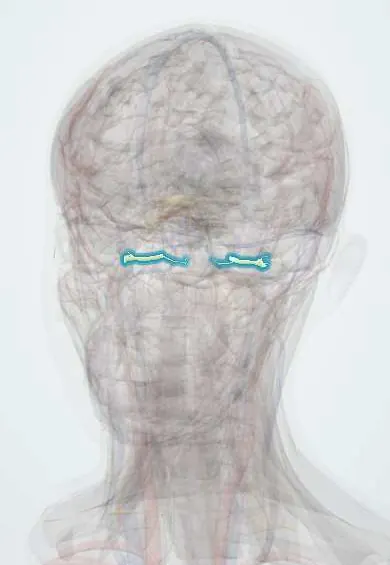
Structures involved
Tap one to see what it is and open it in 3D.
- Vestibulocochlear nerve (VIII)
- Neck nerve roots
- Optic nerve
- Skin
- Iris
- Internal acoustic meatus
- Cochlea
- Dorsal root ganglia
- Spinal cord
- Mid-back nerve roots
Why it happens
- Mendelian inheritance: autosomal dominant, recessive and X-linked
- Tumour suppressor genes: RB, TP53, APC, BRCA and the two-hit hypothesis
- Hereditary cancer syndromes: the table to know
- Receptor tyrosine kinases
- Peripheral nerve: endoneurium, perineurium, epineurium; myelin
What it is
A group of autosomal dominant tumour-predisposition syndromes affecting the nervous system and skin. Type 1 (NF1) causes café-au-lait spots, neurofibromas and optic gliomas; type 2 (now called NF2-related schwannomatosis) causes bilateral vestibular schwannomas and other nervous system tumours.
Who gets it
NF1 is one of the most common single-gene disorders, about 1 in 3,000 to 4,000 people worldwide, with no ethnic predilection; NF2 is much rarer, about 1 in 33,000. About half of cases arise from a new mutation with no family history. In Colombia both are followed in genetics, neurology and paediatric services and are rare diseases in the national registry.
Causes
- NF1: pathogenic variant in the NF1 gene (chromosome 17), which encodes neurofibromin, a negative regulator of the RAS pathway
- NF2: pathogenic variant in the NF2 gene (chromosome 22), which encodes merlin (schwannomin)
- Autosomal dominant inheritance with complete penetrance but very variable expression
- About half of cases are de novo; mosaic forms give segmental disease
Risk factors
- An affected parent (50% risk to each child)
- Higher paternal age for de novo variants
Pathophysiology
Both genes are tumour suppressors. A second hit in the remaining normal copy within a cell allows uncontrolled growth: in NF1, loss of neurofibromin leaves RAS signalling on, driving neurofibromas from Schwann cells and other nerve sheath cells, optic pathway gliomas and pigment changes; in NF2, loss of merlin leads to schwannomas (classically on both vestibular nerves), meningiomas and ependymomas.
Classification
- NF1 (von Recklinghausen disease): café-au-lait macules, axillary or inguinal freckling, neurofibromas, Lisch nodules, optic glioma, bone dysplasias
- NF2-related schwannomatosis: bilateral vestibular schwannomas, meningiomas, ependymomas, juvenile cataract
- Non-NF2 schwannomatosis: multiple painful schwannomas without vestibular tumours (SMARCB1, LZTR1)
Symptoms and signs
- NF1: six or more café-au-lait spots (larger than 5 mm before puberty, 15 mm after), often present at birth or in early childhood
- NF1: freckling in the armpits or groin, and cutaneous neurofibromas that appear from adolescence
- NF1: plexiform neurofibromas, Lisch nodules (iris hamartomas), learning difficulties and ADHD, short stature, macrocephaly
- NF1: optic pathway glioma with reduced vision or early puberty; scoliosis and tibial bowing (pseudarthrosis)
- NF2: progressive hearing loss, tinnitus and imbalance in adolescence or early adulthood
- NF2: facial weakness, headache, spinal cord or root symptoms, and juvenile cataract
Diagnosis
- Clinical
- Mainly clinical, with revised international consensus criteria (2021). NF1 needs two or more of: six or more café-au-lait macules, freckling, two or more neurofibromas or one plexiform, optic glioma, two or more Lisch nodules or choroidal anomalies, a typical bone lesion, a heterozygous NF1 variant, or one feature plus an affected parent. NF2 is classically diagnosed by bilateral vestibular schwannomas. Annual skin, eye, blood pressure, growth and spine examination.
- Tests
- Genetic testing for NF1 or NF2 variants in unclear or mosaic cases and for family planning. Audiometry in NF2. Plasma or urine metanephrines if pheochromocytoma is suspected.
- Imaging
- Contrast MRI of the brain and internal auditory canals in NF2; MRI of the spine for spinal tumours. In NF1, MRI of the orbits and brain when there are visual or neurological signs (often showing focal T2 bright areas); whole-body MRI may map plexiform tumours. X-rays for scoliosis and tibial bowing.
Differential diagnosis
- Legius syndrome (café-au-lait spots without tumours, SPRED1)
- Isolated café-au-lait spots or McCune-Albright syndrome (irregular coast-of-Maine spots)
- Sporadic unilateral vestibular schwannoma in an older adult
- Non-NF2 schwannomatosis
- Tuberous sclerosis complex (different skin lesions: ash-leaf macules, angiofibromas)
Goal of treatment
No cure: the aims are regular surveillance to catch complications early, treating tumours that cause symptoms, preserving vision and hearing, and supporting learning, development and quality of life.
Treatment
- Follow-up
- Multidisciplinary follow-up with yearly review of skin, vision, blood pressure, growth, spine and development, with genetic counselling for the family.
- Medical
- MEK inhibitors can shrink symptomatic inoperable plexiform neurofibromas in NF1; chemotherapy is used for optic gliomas that threaten vision; anti-VEGF therapy may slow growing vestibular schwannomas in NF2.
- Surgical
- Surgical removal of painful, disfiguring or compressing neurofibromas and schwannomas, and resection of spinal tumours or pheochromocytoma; spine surgery for severe scoliosis.
- Procedure
- Stereotactic radiosurgery is an option for selected vestibular schwannomas; hearing implants (cochlear or auditory brainstem implants) restore some hearing in NF2.
- Rehabilitation
- Educational support for learning difficulties and ADHD, physical therapy, and hearing and vision rehabilitation.
Complications
- Malignant peripheral nerve sheath tumour (lifetime risk around 8–13% in NF1)
- Optic glioma with vision loss; other brain tumours
- Hypertension from renal artery stenosis or pheochromocytoma
- Scoliosis and tibial pseudarthrosis
- Learning disability and ADHD
- Higher risk of breast cancer in women with NF1 and of some other cancers
- NF2: deafness, facial palsy, brainstem and spinal cord compression
Prognosis
NF1 is very variable: many people have a normal life with mainly skin findings, but life expectancy is reduced on average by cancer and vascular complications. NF2 usually leads to deafness and multiple tumours and has higher morbidity; early diagnosis and specialised care improve outcomes.
Test yourself
Think of the answer, then tap the question to see it.
What is the inheritance pattern of neurofibromatosis types 1 and 2?
Autosomal dominant, with about half of cases arising from a new (de novo) variant.
What are three classic findings of NF1?
Six or more café-au-lait spots, axillary or inguinal freckling and neurofibromas; also Lisch nodules and optic glioma.
What tumour defines NF2?
Bilateral vestibular schwannomas, causing hearing loss, tinnitus and imbalance.
Which genes and proteins are affected in NF1 and NF2?
NF1 (chromosome 17) encodes neurofibromin, a RAS-pathway regulator; NF2 (chromosome 22) encodes merlin.
Which complication is suggested by rapid growth and new pain in a plexiform neurofibroma?
Malignant transformation into a malignant peripheral nerve sheath tumour.
Related conditions
- Vestibular schwannoma (acoustic neuroma)
- Meningioma
- Scoliosis
- Phaeochromocytoma
- Arterial hypertension
- Hearing loss (conductive and sensorineural, including sudden hearing loss)
- Cataract
- Attention-deficit/hyperactivity disorder (ADHD)
- Breast cancer
- Childhood brain tumours (medulloblastoma, pilocytic astrocytoma, craniopharyngioma)
Educational information, not medical advice. For any symptom, see a health professional.
Sources: Neurofibromatosis type 1: MedlinePlus Genetics (MedlinePlus Genetics, US National Library of Medicine, 2026); Neurofibromatosis type 2: MedlinePlus Genetics (MedlinePlus Genetics, US National Library of Medicine, 2026).
Spotted a mistake?We are always improving for the community. Tell us what is wrong and our team will review it.Report a mistake
Representative model, for educational purposes only.