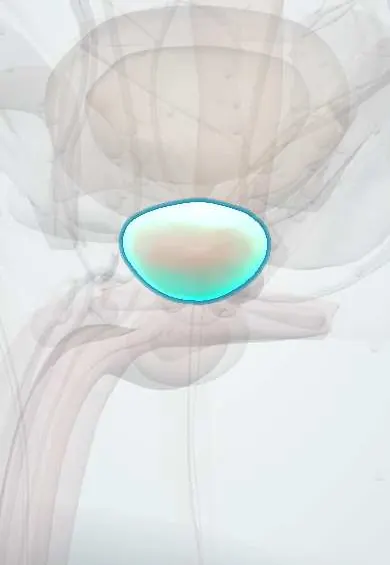
Prostate cancer !
Prostate cancer is a cancer of the prostate gland; some grow so slowly they never cause harm, while others are aggressive and spread to bone.
Updated 2026-10-29
Structures involved
Tap one to see what it is and open it in 3D.
- Prostate
- Peripheral zone
- Seminal vesicles
- Rectum
- Pelvic plexus and cavernous nerves
- Obturator nodes
- External iliac nodes
- Urinary bladder
In biochemistry
- Tumour markers: principles of use
- Prostate-specific antigen (PSA)
- 17α-Hydroxylase/17,20-lyase (CYP17A1)
In histology
In the clinical exam
In physiology
Why it happens
- Translocations, amplifications and epigenetic changes in cancer
- Tumour markers: serum and tissue, and what each one is for
- Pathways of spread and the usual metastatic sites
- Grading and staging: what TNM means
- Cancer epidemiology: age, environment, predisposing conditions (and Colombia)
- From specimen to report: fixation, margins and the pathology report
Show 3 more
What it is
A malignant tumour of the prostate, mostly acinar adenocarcinoma arising in the peripheral zone. It ranges from slow-growing disease that never causes harm to aggressive cancer that spreads to bone.
Who gets it
One of the most frequently diagnosed cancers in men worldwide and in Colombia, and a leading cause of male cancer death in Latin America. Risk rises with age and is higher in men of African descent.
Causes
- Adenocarcinoma of the glandular epithelium
- Growth depends on androgen-receptor signalling
- Inherited or acquired gene changes (e.g. BRCA2, HOXB13, mismatch-repair genes)
- Precursor: high-grade prostatic intraepithelial neoplasia
Risk factors
- Older age
- Father or brother with prostate cancer
- Hereditary syndromes (BRCA1/2, Lynch)
- African ancestry
- Possibly obesity and diet (evidence mixed)
Pathophysiology
Most tumours start in the posterior peripheral zone, where they can be felt on rectal exam, and are often multifocal. Spread is local (capsule, seminal vesicles, bladder neck), to pelvic lymph nodes, and through the blood mainly to bone, producing osteoblastic lesions in the spine and pelvis.
Classification
- Gleason score and ISUP grade groups 1–5 (group 1 = Gleason 6; group 5 = Gleason 9–10)
- TNM staging
- Risk groups (very low to very high) combining PSA, grade group and stage; criteria vary between guidelines
- Castration-sensitive vs castration-resistant disease
Symptoms and signs
- Usually none in early disease (found by PSA or exam)
- Lower urinary tract symptoms, often from coexisting BPH
- Blood in urine or semen
- Bone pain, weight loss or anaemia in metastatic disease
- Hard, nodular or asymmetric prostate on rectal exam
Diagnosis
- Clinical
- Digital rectal exam. PSA screening is offered after shared decision-making about benefits (fewer deaths) and harms (false positives, overdiagnosis, overtreatment).
- Tests
- PSA, repeated to confirm; biopsy (transperineal or transrectal, often MRI-targeted) gives the Gleason score and ISUP grade group; testosterone and alkaline phosphatase.
- Imaging
- Multiparametric MRI before biopsy; staging with CT and bone scan or PSMA PET in higher-risk disease.
Differential diagnosis
- Benign prostatic hyperplasia
- Prostatitis
- Urinary tract infection (raises PSA)
- Other causes of bone lesions
- Bladder cancer
Goal of treatment
Cure localised, clinically significant cancer while avoiding overtreatment of low-risk disease, and control advanced disease with good quality of life.
Treatment
- Follow-up
- Active surveillance (PSA, exam, repeat MRI and biopsy) for low-risk disease; watchful waiting for older or frail men.
- Surgical
- Radical prostatectomy (open, laparoscopic or robotic), with pelvic lymph node dissection when indicated.
- Procedure
- Radiotherapy (external beam or brachytherapy), often with androgen deprivation in intermediate- and high-risk disease.
- Medical
- Androgen deprivation therapy (GnRH agonists or antagonists, or orchiectomy) for advanced disease, often combined with androgen-receptor pathway inhibitors or taxane chemotherapy.
- Medical
- Castration-resistant disease: taxanes, androgen-receptor pathway inhibitors, PARP inhibitors (with DNA-repair mutations), radioligand therapy and bone-protecting agents.
- Acute
- Suspected spinal cord compression: urgent corticosteroids, MRI and radiotherapy or surgery.
Drugs for this condition
Complications
- Bone metastases, fractures and spinal cord compression
- Urinary obstruction
- After treatment: urinary incontinence and erectile dysfunction
- Radiation proctitis or cystitis
- Androgen deprivation effects: hot flushes, bone loss, metabolic and cardiovascular risk
Prognosis
Localised disease has very good long-term survival. Outlook worsens with higher grade group and metastases, although many men with advanced disease live for years with treatment.
Test yourself
Think of the answer, then tap the question to see it.
In which zone of the prostate do most cancers arise?
The peripheral zone, posterior and palpable on digital rectal exam.
How do the Gleason score and ISUP grade groups relate?
ISUP groups 1–5 regroup Gleason scores: group 1 is Gleason 6 and group 5 is Gleason 9–10.
How is PSA screening approached?
By shared decision-making, weighing fewer cancer deaths against false positives, overdiagnosis and overtreatment.
Where does prostate cancer most often metastasise?
To bone, with osteoblastic lesions, mainly in the spine and pelvis.
Which oncological emergency must be recognised in metastatic prostate cancer?
Spinal cord compression: back pain with leg weakness, numbness or sphincter problems.
Related conditions
- Benign prostatic hyperplasia
- Prostatitis
- Urinary tract infection (acute cystitis)
- Bladder cancer
- Erectile dysfunction
Educational information, not medical advice. For any symptom, see a health professional.
Sources: Prostate Cancer (StatPearls (NCBI Bookshelf), 2024).
Spotted a mistake?We are always improving for the community. Tell us what is wrong and our team will review it.Report a mistake
Representative model, for educational purposes only.