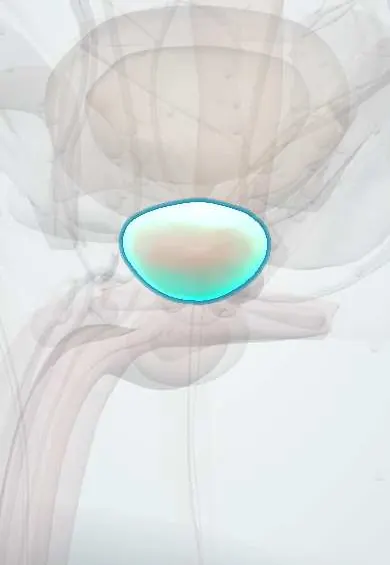
Benign prostatic hyperplasia !
Benign prostatic hyperplasia is a non-cancerous enlargement of the prostate, common with age; it can squeeze the urethra and weaken or slow the urine flow.
Updated 2026-10-29
Structures involved
Tap one to see what it is and open it in 3D.
- Prostate
- Transition zone
- Prostatic urethra
- Urinary bladder
- Anterior fibromuscular stroma
- Peripheral zone
- Central zone
- Ureters
- Inferior vesical and prostatic arteries
In biochemistry
In histology
In the clinical exam
- Digital rectal examination
- Urinary symptoms: dysuria, frequency, oliguria and hematuria
- Bladder examination: the distended bladder
In physiology
Why it happens
What it is
Non-cancerous growth of the prostate's transition zone around the urethra, common in ageing men. It can obstruct urine flow and cause lower urinary tract symptoms (LUTS).
Who gets it
Becomes more common with every decade after middle age; most men show it on histology by old age. A frequent reason for urology visits in Colombia and Latin America as the population ages.
Causes
- Ageing
- Androgens: dihydrotestosterone (DHT), made by 5-alpha-reductase, drives growth
- Stromal–epithelial signalling and chronic inflammation
- Genetic factors
Risk factors
- Increasing age
- Functioning testes (androgens)
- Family history
- Obesity, metabolic syndrome and diabetes
- Physical inactivity
Pathophysiology
DHT stimulates nodular growth of stromal and glandular cells in the transition zone, which compresses the prostatic urethra (static component). Alpha-1 adrenergic tone in prostatic and bladder-neck smooth muscle adds a dynamic component. The bladder compensates with a thicker detrusor, then may become overactive or fail, leaving residual urine.
Classification
- International Prostate Symptom Score (IPSS): mild (0–7), moderate (8–19), severe (20–35), plus a quality-of-life question
- Storage symptoms vs voiding symptoms
- Uncomplicated vs complicated (retention, stones, infection, kidney damage)
Symptoms and signs
- Voiding: weak stream, hesitancy, straining, intermittency, terminal dribbling
- Feeling of incomplete emptying
- Storage: frequency, urgency, nocturia, urge incontinence
- Digital rectal exam: smooth, firm, symmetrically enlarged prostate
Diagnosis
- Clinical
- History with the IPSS questionnaire, frequency–volume chart and digital rectal exam.
- Tests
- Urinalysis; creatinine; PSA after shared decision-making; uroflowmetry; urodynamic studies in selected cases.
- Imaging
- Ultrasound measures post-void residual urine and prostate volume; kidney ultrasound if creatinine is raised or there is retention.
Differential diagnosis
- Prostate cancer
- Urethral stricture
- Neurogenic bladder (diabetes, Parkinson disease, spinal disease)
- Prostatitis
- Urinary tract infection
- Bladder stones or bladder cancer
Goal of treatment
Relieve bothersome symptoms, improve quality of life and prevent complications such as retention and kidney damage.
Treatment
- Follow-up
- Watchful waiting with lifestyle advice for mild or non-bothersome symptoms.
- Lifestyle
- Less fluid in the evening, less caffeine and alcohol, bladder training, and review of diuretics, decongestants and anticholinergic medicines.
- Medical
- Alpha-1 blockers relax prostatic and bladder-neck smooth muscle and act within days; dizziness and ejaculatory changes are common side effects.
- Medical
- 5-alpha-reductase inhibitors shrink large prostates over months and lower the risk of retention and surgery; often combined with an alpha-blocker. They lower PSA, which must be considered when reading it.
- Medical
- For storage symptoms: antimuscarinics or beta-3 agonists; phosphodiesterase-5 inhibitors, especially with erectile dysfunction.
- Acute
- Acute retention: urethral catheterisation (suprapubic if not possible), then a trial without catheter on an alpha-blocker.
- Surgical
- Transurethral resection of the prostate (TURP) or alternatives: laser enucleation or vaporisation, simple prostatectomy for very large glands, and other minimally invasive options.
Drugs for this condition
Complications
- Acute urinary retention
- Recurrent urinary tract infection
- Bladder stones and diverticula
- Haematuria
- Hydronephrosis and chronic kidney disease
- Overflow incontinence and detrusor failure
Prognosis
Usually slowly progressive, though symptoms stay stable or improve in some men. Most are well controlled with medicines, and surgery gives lasting relief for those who need it. BPH does not turn into cancer.
Test yourself
Think of the answer, then tap the question to see it.
From which zone of the prostate does BPH arise?
The transition zone, around the prostatic urethra.
What is the IPSS?
The International Prostate Symptom Score: a questionnaire that grades LUTS as mild, moderate or severe, with a quality-of-life question.
How do alpha-blockers and 5-alpha-reductase inhibitors differ?
Alpha-blockers relax smooth muscle within days; 5-alpha-reductase inhibitors block DHT formation and shrink the gland over months.
What effect do 5-alpha-reductase inhibitors have on PSA?
They lower it, roughly by half, which must be considered when interpreting results.
What is the standard operation for BPH?
Transurethral resection of the prostate (TURP).
Related conditions
Educational information, not medical advice. For any symptom, see a health professional.
Sources: Benign Prostatic Hyperplasia (StatPearls (NCBI Bookshelf), 2024).
Spotted a mistake?We are always improving for the community. Tell us what is wrong and our team will review it.Report a mistake
Representative model, for educational purposes only.