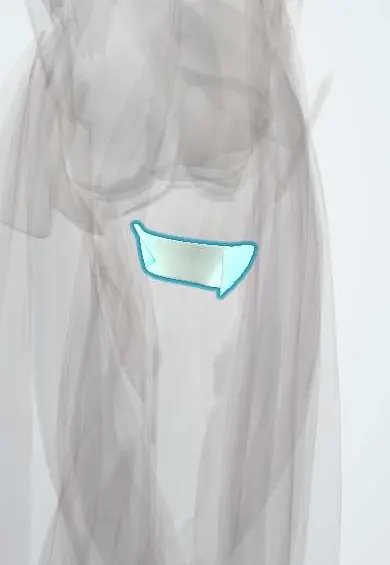
Radial head subluxation (pulled elbow) !
Pulled elbow is a common toddler injury when a pull on the arm slips the ring ligament over the top of the radius; it is usually put back in seconds.
Updated 2026-10-29
Structures involved
Tap one to see what it is and open it in 3D.
What it is
Partial slipping of the annular ligament over the head of the radius, so that the ligament becomes caught in the joint between the radius and the capitellum. It is the commonest elbow injury of toddlers and is usually reduced in seconds without anaesthesia.
Who gets it
Typical between about 1 and 4 years of age, with a peak around 2 to 3. It is a frequent reason for paediatric emergency visits in Colombia and everywhere else, and it often recurs in the same child.
Causes
- Sudden pull on the hand or wrist with the elbow extended and the forearm pronated (lifting a child by the hand, pulling to stop a fall or swinging the child by the arms)
- Less often, a fall or a twist of the arm in a very young infant
Risk factors
- Age 1 to 4 years
- Previous episode in the same arm
- Ligament laxity and a radial head that is still small and rounded in young children
Pathophysiology
In young children the radial head is small and the annular ligament is loose and thin distally. Axial traction on the extended, pronated forearm pulls the radius a little out of the ligament, and part of the ligament slides proximally into the radiocapitellar joint. The trapped ligament blocks supination and causes pain, but there is no fracture and usually no swelling.
Symptoms and signs
- Sudden crying and refusal to use the arm after a pull
- Arm held at the side, elbow slightly flexed and forearm pronated
- Little or no swelling, bruising or deformity
- Pain on attempted supination; tenderness, if any, over the lateral elbow
Diagnosis
- Clinical
- Typical history of traction and a child holding the arm still in pronation, with no swelling or bony tenderness. Successful reduction, with the child using the arm within minutes, confirms the diagnosis.
- Tests
- Not needed.
- Imaging
- X-rays are not required in a typical case; they are taken if there was a fall, swelling or bony tenderness, or if reduction fails.
Differential diagnosis
- Supracondylar humerus fracture
- Lateral condyle or other occult elbow fracture
- Clavicle fracture
- Septic arthritis of the elbow
- Non-accidental injury
Goal of treatment
Free the trapped annular ligament quickly and painlessly so that the child uses the arm normally, and lower the chance of recurrence.
Treatment
- Procedure
- Hyperpronation manoeuvre: with the elbow flexed, the forearm is firmly pronated while a thumb over the radial head feels for a click. Many studies report a higher first-attempt success than with supination.
- Procedure
- Supination–flexion manoeuvre: the forearm is supinated and the elbow then fully flexed. If one technique fails, clinicians usually try the other.
- Follow-up
- Observation for 10 to 30 minutes after reduction to see the child reach and use the arm; a short period in a sling is an option if use is delayed or the reduction is uncertain.
- Conservative
- If reduction fails or the diagnosis is unclear, X-rays, a sling and early follow-up; many subluxations reduce spontaneously.
Complications
- Recurrence, especially in the first years
- Missed fracture when the history or examination is atypical
- Very rarely, an irreducible subluxation that needs open reduction
Prognosis
Excellent. After reduction the child usually uses the arm within minutes, with no lasting harm. The tendency to recur disappears as the radial head and ligament mature, typically by about school age.
Prevention
- Lifting children under the armpits rather than by the hands or wrists
- Avoiding swinging small children by the arms
Test yourself
Think of the answer, then tap the question to see it.
Which ligament is trapped in the radiocapitellar joint in a pulled elbow?
The annular ligament, which slips proximally over the head of the radius.
What is the typical mechanism of radial head subluxation?
Sudden axial traction on the hand with the elbow extended and the forearm pronated, such as lifting or pulling a toddler by the hand.
How does a child with a pulled elbow typically hold the arm?
At the side, with the elbow slightly flexed and the forearm pronated, refusing to use it, with little or no swelling.
Which two reduction manoeuvres are used for a pulled elbow?
Hyperpronation, often reported as more successful at the first attempt, and supination followed by full flexion of the elbow.
When are X-rays indicated in a suspected pulled elbow?
When there was a fall, swelling, bruising or bony tenderness, or when reduction fails to restore use of the arm.
Related conditions
Educational information, not medical advice. For any symptom, see a health professional.
Sources: Nursemaid Elbow (StatPearls (NCBI Bookshelf), 2023).
Spotted a mistake?We are always improving for the community. Tell us what is wrong and our team will review it.Report a mistake
Representative model, for educational purposes only.