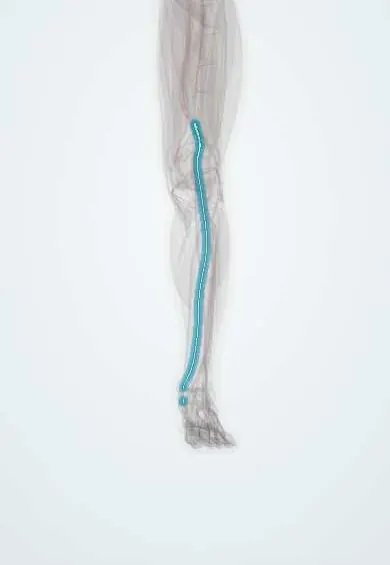
Tarsal tunnel syndrome !
Tarsal tunnel syndrome is compression of the tibial nerve behind the inner ankle; it causes pain, burning and tingling in the sole.
Updated 2026-10-29
Structures involved
Tap one to see what it is and open it in 3D.
- Tibial nerve
- Flexor retinaculum
- Medial plantar nerve
- Lateral plantar nerve
- Tibialis posterior
- Flexor digitorum longus
- Flexor hallucis longus
- Posterior tibial artery
- Abductor hallucis
- Ankle tendon sheaths
Why it happens
What it is
Compression of the tibial nerve or its plantar branches in the tarsal tunnel, the space behind the medial malleolus under the flexor retinaculum, causing pain and abnormal sensation in the sole.
Who gets it
Uncommon and probably underdiagnosed, since it overlaps with plantar heel pain and neuropathy. Adults are affected more often than children.
Causes
- Space-occupying lesions: ganglion cyst, varicose veins, lipoma, nerve tumor or tenosynovitis
- Trauma: ankle fracture, sprain or scar tissue
- Hindfoot valgus and flatfoot that stretch the nerve
- Accessory muscles or bony prominences
- Systemic disease such as diabetes, rheumatoid arthritis or hypothyroidism
Risk factors
- Previous ankle injury
- Flatfoot or hindfoot valgus
- Diabetes
- Inflammatory arthritis
- Prolonged standing or running
- Obesity
Pathophysiology
The tunnel holds the tendons of tibialis posterior, flexor digitorum longus and flexor hallucis longus, the posterior tibial vessels and the tibial nerve. Its walls cannot stretch, so anything that fills the space or stretches the nerve raises pressure and reduces its blood supply. The nerve or its medial and lateral plantar branches then lose function, first in sensation.
Symptoms and signs
- Burning, tingling or numbness of the sole and toes
- Pain behind the medial malleolus that can spread up the leg
- Symptoms worse with standing, walking or at night
- Weakness or wasting of the intrinsic foot muscles in long-standing cases
Diagnosis
- Clinical
- Tinel sign over the tibial nerve behind the medial malleolus, tenderness in the tunnel, symptoms reproduced by dorsiflexion and eversion of the ankle, and a sensory map that fits the plantar nerves.
- Tests
- Nerve conduction studies and EMG support the diagnosis, although a normal study does not rule it out; glucose and thyroid tests when a systemic cause is suspected.
- Imaging
- MRI or ultrasound looks for a mass, ganglion, varicose veins or tenosynovitis in the tunnel; X-rays show bony causes.
Differential diagnosis
- Plantar fasciitis
- Peripheral polyneuropathy (for example diabetic)
- S1 radiculopathy
- Morton neuroma
- Tibialis posterior tendinopathy
Goal of treatment
Relieve pressure on the tibial nerve, treat the cause and restore pain-free walking.
Treatment
- Conservative
- Activity changes, orthoses or a brace to correct hindfoot valgus, and supportive footwear.
- Medical
- NSAIDs and neuropathic pain agents such as gabapentinoids or tricyclic antidepressants; treatment of an underlying systemic disease.
- Procedure
- Corticosteroid injection into the tunnel in selected cases.
- Surgical
- Tarsal tunnel release: division of the flexor retinaculum and freeing of the nerve and its branches, with removal of any mass.
- Rehabilitation
- Physiotherapy with nerve gliding, stretching and strengthening of the foot and ankle.
Complications
- Permanent numbness or burning of the sole
- Weakness of the intrinsic foot muscles
- Persistent or recurrent symptoms after surgery
- Wound problems after release
Prognosis
Results are best when a clear cause such as a ganglion is found and removed. Idiopathic cases respond less predictably to surgery.
Test yourself
Think of the answer, then tap the question to see it.
Which nerve is compressed in tarsal tunnel syndrome?
The tibial nerve or its medial and lateral plantar branches, behind the medial malleolus.
Which structure forms the roof of the tarsal tunnel?
The flexor retinaculum of the ankle.
What does the mnemonic «Tom, Dick And Very Nervous Harry» describe?
The order of tarsal tunnel contents from front to back: tibialis posterior, flexor digitorum longus, artery, vein, nerve, flexor hallucis longus.
Which bedside sign supports tarsal tunnel syndrome?
A positive Tinel sign: tapping the tibial nerve behind the medial malleolus causes tingling in the sole.
Does a normal nerve conduction study rule out tarsal tunnel syndrome?
No. The tests support the diagnosis but can be normal, so the clinical picture matters most.
Related conditions
- Flatfoot (pes planus)
- Plantar Fasciitis
- Morton neuroma
- Ankle fracture
- Type 2 diabetes mellitus
- Rheumatoid arthritis
Educational information, not medical advice. For any symptom, see a health professional.
Sources: Posterior Tarsal Tunnel Syndrome (StatPearls (NCBI Bookshelf), 2026).
Spotted a mistake?We are always improving for the community. Tell us what is wrong and our team will review it.Report a mistake
Representative model, for educational purposes only.