Conditions · Surgery and trauma
Abdominal compartment syndrome !
Pressure inside the belly rises so high that it squeezes the organs and blood vessels, causing kidney, lung and heart problems. It needs urgent care.
Updated 2026-11-01
Structures involved
Tap one to see what it is and open it in 3D.
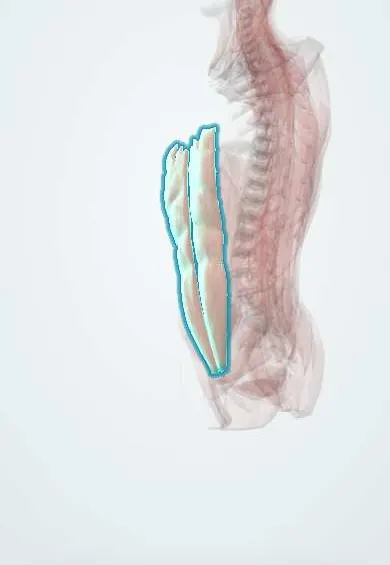
- Rectus abdominis
- Peritoneum
- Kidneys
- Urinary bladder
- Diaphragm
- Inferior vena cava
- Linea alba
- Transversus abdominis
- External oblique
- Jejunum
- Ileum
- Liver
- Left renal vein
Why it happens
- Venous return and the Guyton curves
- Cardiac output and what sets it
- Lung and chest wall compliance
- Glomerular filtration: the barrier and its determinants
What it is
Organ dysfunction caused by a sustained rise in intra-abdominal pressure. By international consensus (WSACS), intra-abdominal hypertension is a sustained pressure of 12 mmHg or more, and abdominal compartment syndrome is a sustained pressure above 20 mmHg with new organ dysfunction or failure.
Who gets it
Mostly seen in intensive care, after major trauma, emergency abdominal surgery, severe acute pancreatitis, major burns and massive fluid resuscitation. Intra-abdominal hypertension is common in critically ill patients; full abdominal compartment syndrome is less frequent but has high mortality. In Colombia and Latin America, trauma from road crashes and violence, severe pancreatitis and burns are relevant settings.
Causes
- Primary: abdominal or pelvic injury or disease (haemoperitoneum, damage-control surgery, ruptured abdominal aortic aneurysm, severe pancreatitis)
- Secondary: conditions outside the abdomen that need massive fluid resuscitation (sepsis, major burns, shock)
- Ileus, bowel obstruction or colonic distension
- Tense ascites or large intra-abdominal haematoma
- Abdominal closure under tension or tight dressings
Risk factors
- Massive fluid or blood transfusion and positive fluid balance
- Shock, acidosis, hypothermia and coagulopathy
- Major burns, especially of the trunk
- Severe acute pancreatitis
- Obesity and prone positioning
- Mechanical ventilation with high airway pressures
Pathophysiology
The abdomen behaves like a closed box with limited compliance. As pressure rises, venous return through the inferior vena cava falls and cardiac output drops. The diaphragm is pushed up, raising airway pressures and impairing ventilation. Renal vein and parenchymal compression reduce kidney perfusion, causing oliguria. Gut perfusion falls, promoting ischaemia, bacterial translocation and more oedema, a vicious cycle. Intracranial pressure can also rise. Abdominal perfusion pressure equals mean arterial pressure minus intra-abdominal pressure.
Classification
- Intra-abdominal hypertension grade I: 12–15 mmHg
- Grade II: 16–20 mmHg
- Grade III: 21–25 mmHg
- Grade IV: above 25 mmHg
- Primary, secondary or recurrent abdominal compartment syndrome
Symptoms and signs
- Tense, distended abdomen
- Falling urine output despite fluids
- Rising peak airway pressures and worsening oxygenation in ventilated patients
- Hypotension and tachycardia
- Abdominal pain and difficulty breathing in awake patients
Diagnosis
- Clinical
- Abdominal examination is unreliable for estimating pressure; measurement is required in at-risk patients. Suspect it when organ dysfunction appears together with a tense abdomen and risk factors.
- Tests
- Intravesical (bladder) pressure is the reference method: measured at end-expiration, supine, with the transducer zeroed at the mid-axillary line and a small saline instillation. Creatinine, urine output, blood gases and lactate assess organ dysfunction.
- Imaging
- Imaging is supportive: CT may show a round-belly sign, compressed inferior vena cava, bowel wall thickening or fluid collections; ultrasound guides drainage of ascites or collections.
Differential diagnosis
- Hypovolaemic or septic shock without raised abdominal pressure
- Acute kidney injury from other causes
- Acute mesenteric ischaemia
- Tension pneumothorax (rising airway pressures with hypotension)
- Bowel obstruction without organ failure
Goal of treatment
Lower intra-abdominal pressure and restore organ perfusion, keeping abdominal perfusion pressure adequate, while treating the underlying cause.
Treatment
- Follow-up
- Serial bladder pressure measurements in patients at risk; nursing priorities include correct measurement technique, urine output, ventilator pressures, haemodynamics and fluid balance.
- Conservative
- Evacuate intraluminal contents with nasogastric and rectal tubes, avoid head-up positions that raise pressure, loosen tight dressings, and avoid a positive fluid balance after initial resuscitation.
- Medical
- Adequate analgesia and sedation, short trials of neuromuscular blockade, prokinetics for ileus, and blood-product ratios that limit crystalloids in massive haemorrhage.
- Procedure
- Percutaneous catheter drainage of ascites, blood or other free fluid when feasible.
- Surgical
- Decompressive laparotomy with temporary abdominal closure (open abdomen, negative-pressure dressings) for established abdominal compartment syndrome that does not respond to other measures.
Complications
- Acute kidney injury
- Respiratory failure
- Low cardiac output and shock
- Bowel ischaemia and sepsis
- Multiple organ failure and death
- Open-abdomen complications: fistula, ventral hernia
Prognosis
Untreated abdominal compartment syndrome has very high mortality. Early recognition and decompression improve organ function, but survivors of an open abdomen often need later abdominal wall reconstruction.
Prevention
- Restrictive, goal-directed fluid resuscitation after the initial phase
- Routine bladder pressure monitoring in high-risk ICU patients
- Considering leaving the abdomen open after damage-control surgery
Test yourself
Think of the answer, then tap the question to see it.
How is abdominal compartment syndrome defined by the WSACS consensus?
A sustained intra-abdominal pressure above 20 mmHg, with or without abdominal perfusion pressure below 60 mmHg, associated with new organ dysfunction or failure.
What is the reference method to measure intra-abdominal pressure?
Intravesical (bladder) pressure, at end-expiration, supine, zeroed at the mid-axillary line.
How is abdominal perfusion pressure calculated?
Mean arterial pressure minus intra-abdominal pressure.
What is the definitive treatment of refractory abdominal compartment syndrome?
Decompressive laparotomy with temporary abdominal closure (open abdomen).
Why does urine output fall in abdominal compartment syndrome?
Raised pressure compresses the renal veins and parenchyma and reduces cardiac output, lowering kidney perfusion.
Related conditions
- Acute pancreatitis
- Burns (thermal, chemical, electrical; inhalation injury)
- Blunt abdominal trauma
- Major trauma (polytrauma): ATLS primary survey
- Acute kidney injury
- Sepsis and septic shock
- Hypovolaemic shock
- Abdominal aortic aneurysm
- Acute compartment syndrome
- Acute mesenteric ischaemia
- Postoperative ileus
Educational information, not medical advice. For any symptom, see a health professional.
Sources: Intra-abdominal hypertension and the abdominal compartment syndrome: updated consensus definitions and clinical practice guidelines from the World Society of the Abdominal Compartment Syndrome (Intensive Care Medicine, 2013).
Spotted a mistake?We are always improving for the community. Tell us what is wrong and our team will review it.Report a mistake
Representative model, for educational purposes only.