
Bile acid malabsorption (bile acid diarrhoea)
Bile acids that should be taken back in the last part of the small bowel reach the colon and cause watery diarrhoea. It is common and treatable.
Quick facts
- Key signs
- Chronic watery diarrhoea · Pale
- Diagnosis
- Low retention
Red flags ↓
No doses: the clinician sets them by the current guideline.
What it is
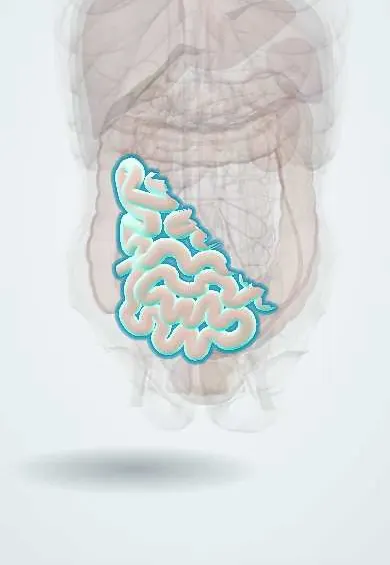
Chronic watery diarrhoea from bile acids that escape reabsorption in the terminal ileum and reach the colon, where they drive secretion and speed transit. It follows ileal disease or resection, can be primary (often labelled diarrhoea-predominant irritable bowel syndrome), or accompanies other gut disorders, including after cholecystectomy.
Who gets it
Estimated to affect about 1% of the population in Western countries. Bile acid malabsorption is found in about a third of people with diarrhoea-predominant irritable bowel syndrome or functional diarrhoea, and in most people with chronic diarrhoea after ileal resection or with ileal Crohn disease.
Causes
- Type 1: ileal disease or resection, such as Crohn disease, ileal resection or radiation injury
- Type 2: primary (idiopathic), without structural disease; linked to weak FGF19 feedback and excess bile acid synthesis by the liver
- Type 3: other gut disorders, such as diarrhoea after cholecystectomy, small intestinal bacterial overgrowth, coeliac disease, chronic pancreatitis and microscopic colitis
- Type 4 (proposed): excess bile acid synthesis, for example with metformin
Risk factors
- Ileal Crohn disease or ileal resection
- Pelvic or abdominal radiotherapy
- Cholecystectomy
- Diarrhoea-predominant irritable bowel syndrome
- Metformin use
Pathophysiology
The liver makes bile acids from cholesterol → they help absorb dietary fat and fat-soluble vitamins in the small bowel → the terminal ileum reabsorbs about 95% through a sodium-dependent transporter → absorbed bile acids release FGF19, which tells the liver to slow synthesis. If the ileum is diseased or removed, or FGF19 feedback is weak, more bile acid reaches the colon → bile acids increase chloride and water secretion and mucosal permeability and trigger strong propulsive contractions → watery diarrhoea. When more than about 100 cm of ileum is lost, liver synthesis cannot keep up, the pool shrinks below what is needed to form micelles → steatorrhoea, with loss of fat-soluble vitamins and vitamin B12.
Classification
- Type 1: ileal dysfunction or resection
- Type 2: primary (idiopathic)
- Type 3: other gastrointestinal disorders, including after cholecystectomy
- Type 4 (proposed): bile acid overproduction
Symptoms and signs
- Chronic watery diarrhoea
- Diarrhoea that starts after ileal surgery, cholecystectomy or radiotherapy
- A picture identical to diarrhoea-predominant irritable bowel syndrome
- Pale, bulky, greasy stools when the bile acid pool is depleted
Diagnosis
- Clinical
- Think of it in chronic watery diarrhoea after ileal resection, in ileal Crohn disease, after cholecystectomy or radiotherapy, and in diarrhoea-predominant irritable bowel syndrome or functional diarrhoea.
- Tests
- SeHCAT test: a capsule of a selenium-75-labelled synthetic bile acid is swallowed and the amount retained in the body is measured at 7 days; low retention confirms malabsorption, and lower values predict a better response to a binder (not available in many countries, including the United States). Serum 7α-hydroxy-4-cholesten-3-one (C4), a marker of bile acid synthesis, is a good rule-out test; serum FGF19 and 48-hour faecal bile acids are alternatives. Where none is available, a therapeutic trial of a bile acid sequestrant is used, accepting that a response is not specific. Other causes of chronic diarrhoea, such as microscopic colitis and coeliac disease, are ruled out.
- Imaging
- Not diagnostic in itself; imaging and endoscopy look for ileal disease such as Crohn disease.
Differential diagnosis
- Diarrhoea-predominant irritable bowel syndrome without bile acid malabsorption
- Microscopic colitis
- Coeliac disease
- Small intestinal bacterial overgrowth
- Lactose intolerance
- Exocrine pancreatic insufficiency
Ileal bile acid loss: watery stool or fatty stool?
| Feature | Bile acid diarrhoea (modest loss) | Bile acid deficiency (extensive loss) |
|---|---|---|
| Typical setting | Ileal disease or resection under about 100 cm, primary form, after cholecystectomy | Ileal resection over about 100 cm, short bowel syndrome |
| Bile acid pool | Kept up by more synthesis in the liver | Depleted; the liver cannot keep up |
| Stool | Watery, secretory | Fatty and bulky (steatorrhoea) |
| Mechanism | Excess bile acids stimulate the colon | Too little bile acid to form micelles and absorb fat |
| Bile acid sequestrant | Usually helps | Does not correct fat malabsorption |
Goal of treatment
Reduce the bile acids reaching the colon, treat any underlying disease, and prevent vitamin deficiencies when the loss is extensive.
Treatment
- Medical
- Bile acid sequestrants (cholestyramine, colestipol, colesevelam) bind bile acids in the gut; other drugs are taken at separate times because the resins bind them too. Constipation, bloating and nausea are common and limit adherence; colesevelam is better tolerated.
- Medical
- Treat the underlying cause (for example active Crohn disease or bacterial overgrowth); FXR agonists such as obeticholic acid are experimental.
- Lifestyle
- With extensive ileal loss and steatorrhoea, manage as short bowel syndrome, with fat-soluble vitamin and vitamin B12 replacement.
- Follow-up
- Follow stool frequency and consistency; with long-term high-dose resins, watch for fat-soluble vitamin deficiency (bleeding, bone disease).
Complications
- Dehydration and electrolyte loss
- Deficiency of fat-soluble vitamins (A, D, E, K) and vitamin B12 with extensive ileal loss
- Years of symptoms when it is misdiagnosed as irritable bowel syndrome
Common traps
- Chronic watery diarrhoea with a normal colonoscopy is just irritable bowel syndrome: about a third of these patients have bile acid malabsorption, which responds to a binder
- The more ileum removed, the more a binder will help: beyond about 100 cm the pool is depleted and stools become fatty, which a binder cannot fix
- A response to cholestyramine proves the diagnosis: a therapeutic trial is practical but not specific; SeHCAT or serum C4 confirm it where available
- Diarrhoea after cholecystectomy must be a surgical complication: post-cholecystectomy bile acid diarrhoea is a recognised type 3 cause
Prognosis
Chronic but treatable. Most patients with proven malabsorption improve with a sequestrant, and the more severe the malabsorption on SeHCAT, the more likely the response; poor tolerance of resins is the main limitation.
Prevention
- Consider it early in chronic diarrhoea after ileal resection, cholecystectomy or pelvic radiotherapy, to avoid repeated tests
Test yourself
Think of the answer, then tap the question to see it.
Where are bile acids actively reabsorbed?
In the terminal ileum, through a sodium-dependent bile acid transporter; about 95% are recovered.
How does the SeHCAT test work?
A selenium-75-labelled synthetic bile acid is swallowed and its retention in the body is measured at 7 days; low retention means bile acids are being lost.
Why does a long ileal resection cause steatorrhoea rather than watery diarrhoea?
So much bile acid is lost that the pool is depleted; too little is left to form micelles, so fat is not absorbed.
Which hormone from the ileum normally slows bile acid synthesis in the liver?
Fibroblast growth factor 19 (FGF19); weak FGF19 feedback is linked to primary bile acid diarrhoea.
Which disorders cause type 3 bile acid malabsorption?
Gut disorders without ileal disease, such as diarrhoea after cholecystectomy, bacterial overgrowth, coeliac disease, chronic pancreatitis or microscopic colitis.
Why it happens
Connections
Educational information, not medical advice. For any symptom, see a health professional.
Sources: Bile Acid Diarrhea: Prevalence, Pathogenesis, and Therapy (Gut and Liver, 2015); Pathophysiology and Clinical Management of Bile Acid Diarrhea (Journal of Clinical Medicine, 2022); Overview of Malabsorption - Gastroenterology - MSD Manual Professional Edition (MSD Manual Professional Edition, 2025); Short Bowel Syndrome - Gastroenterology - MSD Manual Professional Edition (MSD Manual Professional Edition, 2024).
Spotted a mistake?We are always improving for the community. Tell us what is wrong and our team will review it.Report a mistake
Representative model, for educational purposes only.