
Eustachian tube dysfunction (including patulous Eustachian tube)
The tube linking the middle ear to the back of the nose fails to open or stays open, causing a blocked, popping or echoing ear.
What it is
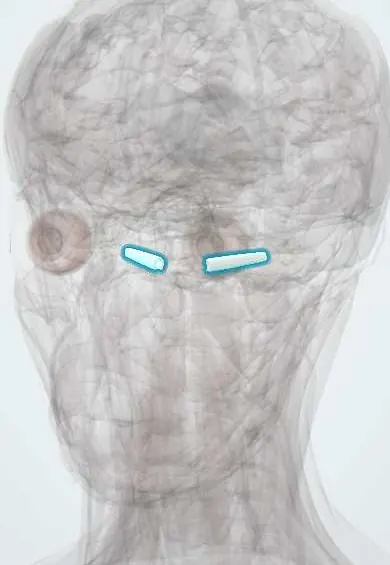
Failure of the auditory (Eustachian) tube to ventilate, drain and protect the middle ear. In the common dilatory (obstructive) form the tube fails to open; in the rarer patulous form it stays abnormally open.
Who gets it
Very common in children, whose tube is shorter, wider and more horizontal; in adults it affects around 1% at any time and is frequent after colds and with allergic rhinitis. Patulous Eustachian tube is much rarer and often follows marked weight loss.
Causes
- Mucosal swelling: upper respiratory infection, allergic or chronic rhinosinusitis, laryngopharyngeal reflux, tobacco smoke
- Mechanical obstruction of the tubal opening: adenoid hypertrophy, nasopharyngeal tumour
- Poor action of the tensor veli palatini: cleft palate, Down syndrome
- Failure to equalise pressure when flying or diving
- Patulous tube: rapid weight loss, pregnancy and other hormonal changes, radiotherapy, neurological disease
Risk factors
- Childhood and daycare attendance
- Allergic rhinitis and chronic rhinosinusitis
- Active or passive smoking
- Adenoid hypertrophy
- Cleft palate and Down syndrome
- Gastro-oesophageal or laryngopharyngeal reflux
- For the patulous form: major weight loss, pregnancy
Pathophysiology
The tube is normally closed and opens briefly on swallowing or yawning, mainly through the tensor veli palatini, to equalise middle-ear pressure, drain secretions and protect the ear from nasopharyngeal reflux and loud sound. When it fails to open, the mucosa absorbs middle-ear gas, pressure becomes negative, the eardrum retracts and a transudate may form (otitis media with effusion); long-standing negative pressure leads to retraction pockets and cholesteatoma. When it stays open (patulous), voice and breathing sounds reach the middle ear directly and the eardrum moves with breathing.
Classification
- Dilatory (obstructive) dysfunction: functional or anatomical
- Baro-challenge-induced dysfunction: symptoms only with pressure changes
- Patulous dysfunction: abnormally open tube
- Acute (under 3 months) or chronic
Symptoms and signs
- Ear fullness or pressure
- Muffled hearing
- Popping or crackling in the ear
- Mild ear discomfort and tinnitus
- Patulous form: autophony (hearing one's own voice and breathing loudly)
- Patulous form: symptoms that ease when lying down or with the head lowered
Diagnosis
- Clinical
- Otoscopy may show a retracted eardrum (prominent short process and foreshortened handle of the malleus), sometimes an air-fluid level or bubbles, and reduced mobility on pneumatic otoscopy; it can be normal between episodes. In the patulous form the eardrum moves in and out with breathing, best seen while the patient breathes through one nostril.
- Tests
- Tympanometry: type C (negative peak pressure) in dilatory dysfunction and type B (flat) with effusion; in the patulous form tracings can fluctuate with breathing. Audiometry shows any conductive loss; a symptom questionnaire (ETDQ-7) grades severity; nasal endoscopy examines the nasopharynx and is mandatory in an adult with unilateral effusion.
- Imaging
- Not routine; CT or MRI of the nasopharynx and skull base when a mass is suspected.
Differential diagnosis
- Otitis media with effusion (often its consequence)
- Temporomandibular disorder
- Superior semicircular canal dehiscence (also causes autophony)
- Meniere disease (aural fullness)
- Sudden sensorineural hearing loss
- Cerumen impaction
- Nasopharyngeal carcinoma
Goal of treatment
Treat the nasal or nasopharyngeal cause, restore middle-ear ventilation and prevent chronic ear disease.
Treatment
- Conservative
- Watchful waiting: most cases after a cold settle within weeks. Autoinflation (Valsalva manoeuvre, a nasal balloon) helps, especially in children with effusion.
- Medical
- Treatment of the cause: intranasal corticosteroids and antihistamines for allergic rhinitis, management of rhinosinusitis or reflux, and stopping smoking. Evidence that sprays or decongestants fix the tube itself is limited, and topical decongestants are kept to a few days.
- Surgical
- Ventilation (tympanostomy) tubes for persistent effusion with hearing loss or retraction; adenoidectomy in children with large adenoids; balloon dilation of the Eustachian tube for selected adults with chronic dilatory dysfunction.
- Conservative
- Patulous form: reassurance, regaining weight when relevant, stopping nasal decongestants, saline nasal drops and lying down during episodes; procedures that narrow the tube for refractory cases. Ventilation tubes help only some patients.
- Follow-up
- Referral to otolaryngology when symptoms last more than about three months, with unilateral effusion in an adult, retraction pockets or hearing loss, suspected patulous tube, or recurrent symptoms in people who fly or dive.
Complications
- Otitis media with effusion and recurrent acute otitis media
- Retraction pockets and adhesive otitis media
- Cholesteatoma
- Conductive hearing loss, with speech and school delay in children
- Ear barotrauma
Prognosis
Most acute dilatory dysfunction resolves with the cold or allergy; chronic forms can persist and need procedures. Children usually outgrow it as the tube matures.
Test yourself
Think of the answer, then tap the question to see it.
Which tympanogram type fits Eustachian tube dysfunction without middle-ear fluid?
Type C: a normal-shaped peak shifted to negative pressure.
An adult has unilateral otitis media with effusion. What must be excluded?
Nasopharyngeal carcinoma blocking the tube opening: the nasopharynx is examined by endoscopy.
Which muscle mainly opens the Eustachian tube, and why does cleft palate cause tube dysfunction?
The tensor veli palatini; in cleft palate its insertion is abnormal, so it cannot open the tube.
Which symptom suggests a patulous Eustachian tube, and what eases it?
Autophony, hearing one's own voice and breathing loudly; it eases when lying down or lowering the head.
Why are children more prone to Eustachian tube dysfunction?
Their tube is shorter, wider and more horizontal, and adenoids and frequent colds block it.
Connections
Educational information, not medical advice. For any symptom, see a health professional.
Sources: Eustachian Tube Dysfunction (StatPearls (NCBI Bookshelf), 2023).
Spotted a mistake?We are always improving for the community. Tell us what is wrong and our team will review it.Report a mistake
Representative model, for educational purposes only.