
Laryngopharyngeal reflux
Stomach contents rising up to the throat and voice box. It causes hoarseness, throat clearing and a lump-in-the-throat feeling, often without heartburn.
What it is
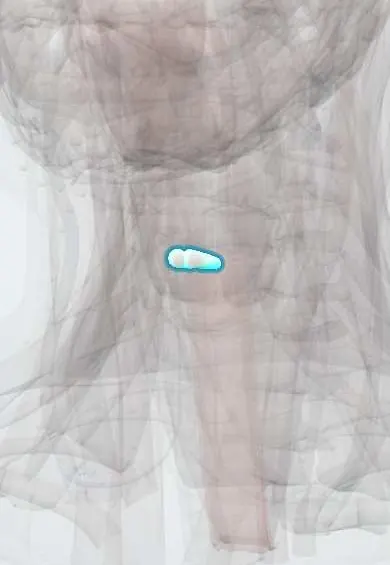
Backflow of gastric contents (acid, pepsin and bile) past the upper oesophageal sphincter into the larynx and pharynx, whose lining is far more sensitive than the oesophagus. Many patients have no heartburn, so it is also called silent reflux.
Who gets it
A frequent reason for consultation in otolaryngology and voice clinics, often in adults with GERD, obesity or smoking. It is probably overdiagnosed because its symptoms and laryngoscopy signs are not specific.
Causes
- Failure of the upper and lower oesophageal sphincters and of oesophageal clearance
- Direct injury to laryngeal mucosa by pepsin and acid
- Reflex cough and throat clearing triggered by acid in the distal oesophagus
Risk factors
- Gastro-oesophageal reflux disease and hiatus hernia
- Obesity
- Smoking and alcohol
- Large, fatty or late meals, coffee and carbonated drinks
- Voice overuse
Classification
- Acid, weakly acid or non-acid reflux on impedance testing
- With or without typical GERD symptoms
- Severity scored with the Reflux Symptom Index (symptoms) and the Reflux Finding Score (laryngoscopy)
Symptoms and signs
- Hoarseness that varies through the day
- Frequent throat clearing and excess throat mucus
- Chronic cough
- Globus: a feeling of a lump in the throat
- Sore throat and mild difficulty swallowing
- Heartburn in only some patients
Diagnosis
- Clinical
- Typical symptoms with a Reflux Symptom Index above 13, and laryngoscopy showing posterior laryngitis: redness and swelling of the arytenoids, interarytenoid thickening, subglottic oedema (pseudosulcus) and thick mucus; a Reflux Finding Score above 7 supports it. An empirical treatment trial with improvement supports the diagnosis.
- Tests
- 24-hour multichannel intraluminal impedance-pH monitoring with a pharyngeal sensor when the diagnosis is doubtful or before surgery; salivary pepsin testing in some centres; upper endoscopy for dysphagia, alarm features or long-standing GERD.
- Imaging
- Videolaryngoscopy or videostroboscopy documents the larynx. A barium swallow may show hiatus hernia or dysmotility.
Differential diagnosis
- Vocal fold nodules, polyps and other benign lesions
- Laryngeal cancer
- Postnasal drip from rhinitis or chronic rhinosinusitis
- Asthma and other causes of chronic cough
- Eosinophilic oesophagitis and oesophageal dysmotility
Treatment
- Lifestyle
- Lifestyle measures first: weight loss, stopping smoking, limiting alcohol, coffee and fatty foods, avoiding meals two to three hours before bedtime, and raising the head of the bed.
- Medical
- Proton pump inhibitors (omeprazole, esomeprazole) usually twice daily for an empirical trial of about two to three months, then tapered to the lowest dose that controls symptoms.
- Medical
- Alginates after meals and at bedtime, alone or with a proton pump inhibitor, form a barrier against reflux.
- Surgical
- Laparoscopic fundoplication for proven reflux that does not respond to medical treatment, after impedance-pH testing.
- Follow-up
- Re-evaluation with laryngoscopy if symptoms persist, and referral to otolaryngology or gastroenterology to look for another cause.
Complications
- Chronic laryngitis and voice disorders
- Contact granuloma of the vocal process
- Subglottic stenosis and laryngospasm
- Worsening of asthma and chronic cough
- A possible contribution to laryngeal cancer (debated)
Prognosis
Usually good with lifestyle measures and medical treatment, but improvement of laryngeal signs takes months and symptoms often recur. Persistent symptoms despite treatment call for a review of the diagnosis.
Test yourself
Think of the answer, then tap the question to see it.
Why is laryngopharyngeal reflux called silent reflux?
Because many patients have no heartburn; they present with hoarseness, throat clearing, cough or globus.
Which laryngoscopy findings are typical?
Posterior laryngitis: arytenoid redness and swelling, interarytenoid thickening and pseudosulcus.
Which test detects non-acid reflux reaching the pharynx?
24-hour multichannel intraluminal impedance-pH monitoring with a pharyngeal sensor.
What must be done for a smoker with hoarseness lasting more than a few weeks?
Laryngoscopy to exclude laryngeal cancer before attributing it to reflux.
Why it happens
In ENT
- Laryngitis and other laryngeal inflammation: acute, chronic, TB, perichondritis and congenital webs
- Voice and speech disorders: muscle tension, spasmodic dysphonia, puberphonia and voice care
- Chronic pharyngitis and other non-acute sore throats
Connections
Educational information, not medical advice. For any symptom, see a health professional.
Sources: Laryngopharyngeal Reflux (StatPearls (NCBI Bookshelf), 2025).
Spotted a mistake?We are always improving for the community. Tell us what is wrong and our team will review it.Report a mistake
Representative model, for educational purposes only.