
Moebius syndrome
A rare congenital palsy of the face and of sideways eye movements, present from birth. Babies cannot smile and may have limb anomalies.
What it is
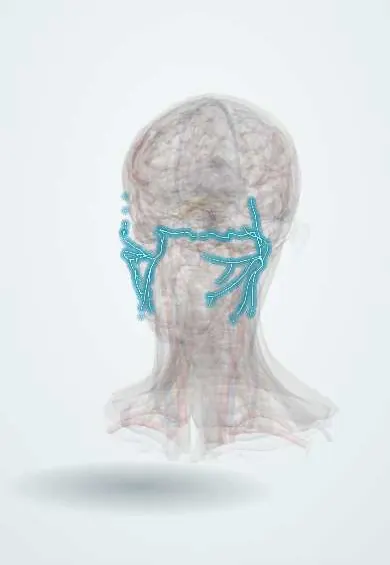
Moebius syndrome is a rare congenital, non-progressive palsy of the facial nerve (one or both sides) with limited abduction from sixth nerve or horizontal gaze palsy. Other cranial nerves (especially the hypoglossal) and limb anomalies such as clubfoot or Poland anomaly are common.
Who gets it
Rare; affects both sexes equally and is usually sporadic.
Causes
- Disrupted development of the brainstem nuclei, possibly from vascular interruption in early pregnancy
- Exposure to misoprostol, ergotamine or other drugs and toxins in the first trimester
- Rare genetic forms (PLXND1, REV3L)
Risk factors
- Misoprostol exposure in early pregnancy
- Maternal trauma or vascular events in the first trimester
Pathophysiology
Maldevelopment or ischaemic injury of the brainstem around the abducens and facial nuclei in the pons causes a non-progressive facial diplegia and horizontal gaze limitation. Because the facial nerve loops around the abducens nucleus, the two are often affected together.
Symptoms and signs
- Mask-like face: no smile or frown from birth
- Incomplete eye closure
- Feeding and sucking difficulty in infancy, drooling
- Inability to look sideways; esotropia
- Speech difficulty, small or weak tongue, limb or chest-wall anomalies
Diagnosis
- Clinical
- Congenital non-progressive facial weakness with limited abduction or horizontal gaze; examination for other cranial nerves and limb anomalies.
- Tests
- Genetic evaluation when other features suggest a syndrome; hearing and swallowing assessment.
- Imaging
- MRI of the brain may show brainstem hypoplasia, a flat floor of the fourth ventricle or absent facial nerves.
Differential diagnosis
- Duane retraction syndrome
- Congenital unilateral facial palsy from birth trauma
- Myotonic dystrophy or congenital myopathy
- Congenital fibrosis of the extraocular muscles
Congenital facial or eye-movement weakness: which one?
| Condition | Onset | Face | Eye movements | Key clue |
|---|---|---|---|---|
| Moebius syndrome | Congenital, non-progressive | Weak on one or both sides, mask-like | Limited abduction or horizontal gaze; vertical gaze usually spared | Other cranial nerves (XII) and limb anomalies; MRI may show brainstem hypoplasia |
| Duane retraction syndrome | Congenital | Normal | Limited abduction (or adduction) | Globe retracts and lid fissure narrows when the eye turns in |
| Facial palsy from birth trauma | At birth, often after a difficult or instrumental delivery | One side, sometimes with bruising | Normal | Usually improves over weeks |
| Bell palsy | Acquired, sudden | One side, whole half of the face | Normal | Usually recovers within months |
Goal of treatment
Protect the cornea, support feeding and speech and align the eyes; care is multidisciplinary.
Treatment
- Conservative
- Lubricants and night-time protection of the cornea; amblyopia treatment.
- Surgical
- Strabismus surgery for esotropia; lid surgery for exposure; later smile reconstruction with free muscle transfer.
- Rehabilitation
- Feeding, speech and physical therapy.
- Follow-up
- Regular eye checks for exposure keratopathy and amblyopia.
Complications
- Exposure keratopathy and corneal scarring
- Amblyopia
- Aspiration and feeding problems
- Psychosocial impact of facial immobility
Common traps
- Moebius is a bilateral Bell palsy in a newborn: Bell palsy is acquired, one-sided and usually recovers; Moebius is congenital, often bilateral, comes with an abduction or horizontal gaze defect and does not recover
- Limited abduction with facial weakness is just a sixth nerve palsy: facial fibres wrap around the abducens nucleus, so a pontine lesion usually gives a horizontal gaze palsy plus facial weakness; examine both and the other cranial nerves
- In Duane syndrome the face is weak too: Duane spares the face; its sign is globe retraction with narrowing of the lid fissure on adduction, from miswiring of the third nerve to the lateral rectus
- Poor eye closure is only a cosmetic problem: without a full blink the cornea dries, so lubrication and night protection start early to prevent exposure keratopathy and scarring
- Feeding difficulty will be outgrown without help: weak lips and tongue cause a poor suck, drooling and aspiration; infants need an early feeding and swallowing assessment
Prognosis
Non-progressive with normal life expectancy in most; outcome depends on associated anomalies and support.
Prevention
- Avoiding misoprostol and other teratogens in early pregnancy
Test yourself
Think of the answer, then tap the question to see it.
Why are the facial and abducens nerves so often affected together in Moebius syndrome?
Facial nerve fibres loop around the abducens nucleus in the pons, so one developmental or ischaemic lesion there damages both: facial weakness plus an abduction or horizontal gaze defect.
A newborn cannot smile, cannot close the eyes fully and cannot look to either side, but looks up and down normally. Which diagnosis fits best?
Moebius syndrome: congenital, often bilateral facial weakness with horizontal gaze limitation and spared vertical gaze. MRI may show brainstem hypoplasia.
What is the most urgent eye priority in an infant with Moebius syndrome?
Protecting the cornea: incomplete closure and a poor blink cause exposure keratopathy, so lubricants and night-time protection start early, with checks for amblyopia from esotropia.
Which pregnancy exposure should be asked about, and how does it fit the mechanism?
Misoprostol in the first trimester: by causing uterine contractions it may interrupt blood flow to the embryo, fitting the theory of a vascular injury to the developing brainstem.
How does Moebius syndrome differ from Duane syndrome on examination?
Moebius weakens the face and usually limits horizontal gaze; Duane spares the face and shows globe retraction with narrowing of the lid fissure on adduction.
Connections
Educational information, not medical advice. For any symptom, see a health professional.
Sources: Möbius Syndrome (EyeWiki (American Academy of Ophthalmology), 2025); Moebius syndrome: MedlinePlus Genetics (MedlinePlus, US National Library of Medicine, 2026).
Spotted a mistake?We are always improving for the community. Tell us what is wrong and our team will review it.Report a mistake
Representative model, for educational purposes only.