Portal hypertension !
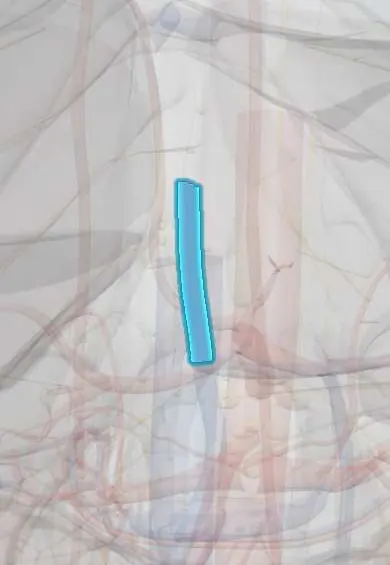
Portal hypertension is raised pressure in the portal vein, the vein carrying gut blood to the liver; it causes varices, ascites and a large spleen.
Updated 2026-10-29
Structures involved
Tap one to see what it is and open it in 3D.
- Portal vein
- Liver
- Splenic vein
- Mesenteric veins
- Spleen
- Esophagus
- Hepatic veins
- Inferior vena cava
- Peritoneum
Microorganisms that cause it
In embryology
In the clinical exam
- Abdominal inspection
- Ascites: shifting dullness and fluid wave
- Palpation of the liver and spleen
- Portal hypertension and the signs of chronic liver disease
- Upper and lower gastrointestinal bleeding
In physiology
Why it happens
- Hyperemia and congestion (the nutmeg liver, heart-failure cells)
- Edema and effusions: the four mechanisms
- Flow, pressure and resistance: Poiseuille and turbulent flow
- Liver: lobule, acinus, hepatocytes, sinusoids, Kupffer cells
What it is
Raised pressure in the portal venous system, defined by a hepatic venous pressure gradient above the normal range. It causes varices, ascites and splenomegaly, and its main cause is cirrhosis.
Who gets it
Cirrhosis causes most cases worldwide and in Latin America. Non-cirrhotic causes such as portal vein thrombosis and schistosomiasis (in endemic areas of South America) matter in some settings.
Causes
- Prehepatic: portal or splenic vein thrombosis, extrinsic compression
- Intrahepatic, presinusoidal: schistosomiasis, idiopathic non-cirrhotic portal hypertension
- Intrahepatic, sinusoidal: cirrhosis of any cause (most common)
- Intrahepatic, postsinusoidal: sinusoidal obstruction syndrome
- Posthepatic: Budd-Chiari syndrome, right heart failure, constrictive pericarditis
Risk factors
- Chronic liver disease from alcohol, hepatitis B or C, or MASLD
- Thrombophilia, myeloproliferative disorders, abdominal infection or surgery (portal vein thrombosis)
- Living in or coming from schistosomiasis-endemic areas
Pathophysiology
Portal pressure rises when resistance to flow increases (fibrosis, nodules, vasoconstriction in the liver) and when splanchnic vasodilation increases inflow. Blood diverts through portosystemic collaterals: gastro-oesophageal, rectal, paraumbilical (caput medusae) and retroperitoneal. Sinusoidal hypertension, low albumin and sodium retention lead to ascites; back-pressure enlarges the spleen.
Classification
- By site: prehepatic, intrahepatic (presinusoidal, sinusoidal, postsinusoidal) or posthepatic
- Hepatic venous pressure gradient: normal up to about 5 mmHg; 10 mmHg or more is clinically significant portal hypertension
- Consensus groups (e.g., Baveno) define stages and non-invasive criteria
Symptoms and signs
- Often silent until a complication appears
- Abdominal swelling from ascites
- Splenomegaly, with low platelets (hypersplenism)
- Dilated veins around the umbilicus (caput medusae)
- Vomiting blood or black stools from variceal bleeding
- Confusion from hepatic encephalopathy
Diagnosis
- Clinical
- Signs of chronic liver disease, splenomegaly, ascites and caput medusae. In cirrhosis, clinically significant portal hypertension is often inferred from non-invasive tests.
- Tests
- Platelet count, liver tests, albumin, INR. Diagnostic paracentesis: a serum-ascites albumin gradient (SAAG) of 1.1 g/dL or more points to portal hypertension. Hepatic venous pressure gradient measurement is the reference standard where available.
- Imaging
- Doppler ultrasound: portal vein size and flow, thrombosis, splenomegaly, ascites and collaterals. Elastography of liver and spleen stiffness. CT or MRI for vascular anatomy. Upper endoscopy screens for varices.
Differential diagnosis
- Ascites from heart failure, peritoneal carcinomatosis or tuberculous peritonitis
- Nephrotic syndrome or protein-losing states
- Splenomegaly from haematological disease, malaria or leishmaniasis
- Upper GI bleeding from peptic ulcer
Goal of treatment
Treat the cause, lower portal pressure, prevent and control variceal bleeding, manage ascites and its infections, and refer for transplant when indicated.
Treatment
- Medical
- Non-selective beta-blockers lower portal pressure and help prevent first and repeat variceal bleeding.
- Procedure
- Endoscopic band ligation of oesophageal varices, as an alternative or addition to beta-blockers; tissue adhesive for some gastric varices.
- Acute
- Acute variceal bleeding: cautious resuscitation, vasoactive drugs (somatostatin or vasopressin analogues), antibiotic prophylaxis and endoscopy within about 12 hours.
- Medical
- Ascites: sodium restriction and diuretics (aldosterone antagonist with or without a loop diuretic); large-volume paracentesis with albumin when tense or refractory.
- Procedure
- TIPS (transjugular intrahepatic portosystemic shunt) for refractory ascites, uncontrolled bleeding or, in selected high-risk patients, early after a bleed.
- Medical
- Anticoagulation for portal vein thrombosis in selected patients; antiparasitic treatment for schistosomiasis.
- Surgical
- Liver transplantation for decompensated cirrhosis; surgical shunts are now rarely used.
Drugs for this condition
Complications
- Variceal bleeding (oesophageal, gastric, ectopic)
- Ascites and spontaneous bacterial peritonitis
- Hepatic encephalopathy
- Hepatorenal syndrome
- Hypersplenism with thrombocytopenia
- Portal hypertensive gastropathy; hepatopulmonary syndrome and portopulmonary hypertension
Prognosis
Depends on the cause and liver function. In cirrhosis, the first variceal bleed or ascites marks decompensation and a clear fall in survival; lowering portal pressure improves outcomes.
Prevention
- Prevention and treatment of the causes of cirrhosis (alcohol, hepatitis B and C, MASLD)
- Screening for varices in cirrhosis
- Safe water and sanitation in schistosomiasis-endemic areas
Test yourself
Think of the answer, then tap the question to see it.
Which hepatic venous pressure gradient defines clinically significant portal hypertension?
A gradient of 10 mmHg or more; the normal value is up to about 5 mmHg.
What serum-ascites albumin gradient suggests ascites from portal hypertension?
A SAAG of 1.1 g/dL or more; a lower gradient suggests causes such as carcinomatosis, tuberculosis or nephrotic syndrome.
Which portosystemic collateral produces caput medusae?
Recanalised paraumbilical veins draining from the left portal vein to the veins of the anterior abdominal wall.
Which two drug classes are used in acute variceal bleeding besides blood products?
Vasoactive drugs (somatostatin or vasopressin analogues) and prophylactic antibiotics.
What is one prehepatic and one posthepatic cause of portal hypertension?
Prehepatic: portal vein thrombosis. Posthepatic: Budd-Chiari syndrome, right heart failure or constrictive pericarditis.
Related conditions
- Cirrhosis
- Upper gastrointestinal bleeding
- Peritonitis
- Viral hepatitis
- Hepatocellular carcinoma
- Heart failure
- Chronic pancreatitis
Educational information, not medical advice. For any symptom, see a health professional.
Sources: Portal Hypertension (StatPearls (NCBI Bookshelf), 2025).
Spotted a mistake?We are always improving for the community. Tell us what is wrong and our team will review it.Report a mistake
Representative model, for educational purposes only.