Oropharyngeal dysphagia in older adults !
Difficulty moving food or liquid from the mouth into the throat. In older adults it causes choking, aspiration pneumonia, weight loss and dehydration.
Updated 2026-11-01
Structures involved
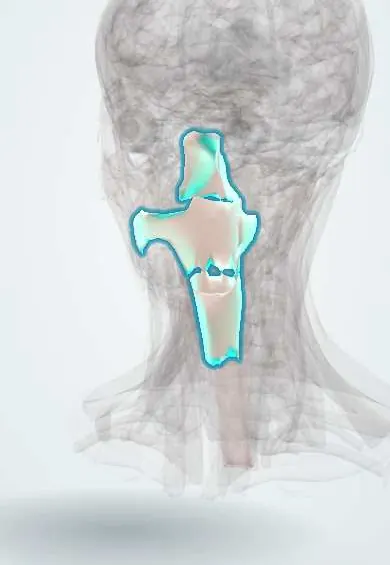
Tap one to see what it is and open it in 3D.
- Pharynx
- Epiglottis
- Pharyngeal constrictors
- Tongue
- Soft palate
- Hyoid bone
- Esophagus
- Vocal folds
- Thyroid cartilage
- Cricoid cartilage
- Glossopharyngeal nerve (IX)
- Vagus nerve
- Hypoglossal nerve (XII)
- Medulla oblongata
Why it happens
What it is
A swallowing disorder of the oral or pharyngeal phase, in which food, liquid or saliva are not moved safely and efficiently from the mouth past the pharynx and upper oesophageal sphincter. It differs from oesophageal dysphagia, in which food sticks lower down in the chest.
Who gets it
Frequent in older adults, especially after a stroke, in Parkinson disease and dementia, and in people living in care homes or admitted to hospital. It is often unrecognised. In Colombia and Latin America, stroke and dementia are leading causes, and aspiration pneumonia is an important cause of death in frail older people.
Causes
- Stroke, especially brainstem and bilateral hemispheric strokes
- Neurodegenerative disease: Parkinson disease, dementia, amyotrophic lateral sclerosis
- Neuromuscular disease: myasthenia gravis, myopathies
- Structural causes: Zenker diverticulum, cricopharyngeal bar, head and neck cancer and its treatment
- Presbyphagia and sarcopenia of the swallowing muscles
- Medicines that cause dry mouth or sedation, and poor oral health
Risk factors
- Advanced age and frailty
- Previous stroke or neurological disease
- Dementia and delirium
- Sedating drugs and antipsychotics
- Tracheostomy or prolonged intubation
- Poor dentition and oral hygiene
Pathophysiology
Swallowing needs coordinated action of the lips, tongue, soft palate, pharyngeal constrictors and larynx, controlled by cranial nerves (V, VII, IX, X, XII) and the brainstem swallowing centre. When tongue propulsion, laryngeal elevation, epiglottic closure or pharyngeal contraction are weak or delayed, food enters the airway (penetration or aspiration) or remains in the vallecula and piriform sinuses. A weak cough may allow silent aspiration.
Classification
- Oral phase versus pharyngeal phase dysphagia
- Neurogenic, structural or age-related (presbyphagia)
- Severity by safety (penetration, aspiration, silent aspiration) and efficiency (residue, prolonged meals)
Symptoms and signs
- Coughing, throat clearing or choking during or just after swallowing
- Wet or gurgly voice after eating or drinking
- Food or liquid coming out of the nose
- Drooling or food left in the mouth
- Needing several swallows for each mouthful, and long meals
- Avoiding certain foods, weight loss and dehydration
Diagnosis
- Clinical
- History (which foods, timing of cough, weight loss), examination of the mouth and cranial nerves, and bedside swallowing screening before oral intake in high-risk patients (for example, after a stroke): water swallow tests, questionnaires such as EAT-10, and volume-viscosity testing. Clinical screening does not reliably detect silent aspiration.
- Tests
- Instrumental studies by a speech and swallowing therapist and physician: videofluoroscopic swallowing study (modified barium swallow) or flexible endoscopic evaluation of swallowing (FEES). Pulse oximetry, blood count and electrolytes to look for dehydration or infection.
- Imaging
- Videofluoroscopy shows all swallowing phases and aspiration; a barium swallow, CT or MRI of the brain or neck and endoscopy are used to find structural or neurological causes.
Differential diagnosis
- Oesophageal dysphagia (achalasia, stricture, oesophageal cancer)
- Globus sensation without true dysphagia
- Odynophagia from infection or ulcers
- Xerostomia with difficulty forming the bolus
- Functional or psychogenic swallowing difficulty
Goal of treatment
Make swallowing safe and efficient, prevent aspiration pneumonia, maintain nutrition and hydration, and respect the person's quality of life and wishes.
Treatment
- Rehabilitation
- Swallowing therapy by a speech and language therapist: exercises for the tongue and pharyngeal muscles and swallowing manoeuvres.
- Conservative
- Compensatory strategies: upright posture at 90 degrees for meals and for some time afterwards, chin tuck, small mouthfuls, slow pace, supervision while eating, and texture-modified diets or thickened liquids using standard scales (such as IDDSI).
- Conservative
- Oral hygiene care to reduce the bacterial load of aspirated saliva, and review of sedating medicines; medicines in a form that can be swallowed safely.
- Procedure
- Tube feeding (nasogastric or gastrostomy) when oral intake is unsafe or insufficient and the condition may improve; in advanced dementia, careful hand feeding is usually preferred.
- Surgical
- Treatment of structural causes, such as cricopharyngeal myotomy or treatment of a Zenker diverticulum, in selected patients.
- Follow-up
- Nursing monitoring of meals, weight, hydration, temperature and respiratory signs; repeat swallowing assessment when the condition changes.
Complications
- Aspiration pneumonia and pneumonitis
- Choking and airway obstruction
- Malnutrition and weight loss
- Dehydration
- Social isolation, anxiety at mealtimes and lower quality of life
Prognosis
Depends on the cause: dysphagia after a stroke often improves in the following weeks, while in neurodegenerative disease it usually progresses. Aspiration pneumonia from dysphagia is linked to high mortality in older adults.
Prevention
- Swallowing screening before giving food or drink after a stroke or in at-risk patients
- Good oral and dental hygiene in older and bedbound people
- Upright position during meals and avoidance of over-sedation
Test yourself
Think of the answer, then tap the question to see it.
What is the gold-standard group of tests to assess oropharyngeal dysphagia and aspiration?
Instrumental studies: videofluoroscopic swallowing study (modified barium swallow) or flexible endoscopic evaluation of swallowing (FEES).
Why can a normal bedside swallow screen miss aspiration?
Because aspiration can be silent: food or liquid enters the airway without coughing, especially after a stroke.
Which position is recommended for a patient with dysphagia during meals?
Sitting upright at about 90 degrees, often with a chin-tuck posture, and staying upright for some time after eating.
Which pouch above the upper oesophageal sphincter causes dysphagia, regurgitation and bad breath in older adults?
Zenker diverticulum (pharyngeal pouch).
Related conditions
- Ischaemic stroke
- Parkinson disease
- Dementia (major neurocognitive disorder)
- Achalasia
- Oesophageal cancer
- Malnutrition and unintentional weight loss in older adults
- Sarcopenia
Educational information, not medical advice. For any symptom, see a health professional.
Sources: Swallowing Disorders (MedlinePlus (U.S. National Library of Medicine), 2025); Adult Dysphagia (American Speech-Language-Hearing Association (ASHA) Practice Portal, 2025).
Spotted a mistake?We are always improving for the community. Tell us what is wrong and our team will review it.Report a mistake
Representative model, for educational purposes only.