Immobility syndrome and hospital-associated deconditioning !
Older adults who stay in bed or a chair lose strength fast. This can cause pressure sores, clots, pneumonia and lasting loss of independence.
Updated 2026-11-01
Structures involved
Tap one to see what it is and open it in 3D.
- Gluteus maximus
- Femoral vein
- Sacrum
- Calcaneus
- Popliteal vein
- Coccyx
- Rectus femoris
- Gastrocnemius (inner head)
- Femur
Why it happens
- Atrophy
- Thrombosis and Virchow's triad
- Muscle hypertrophy, atrophy and remodeling
- The response to standing up
- Bone remodeling
What it is
A geriatric syndrome in which a marked reduction in the ability to move leads to a decline in function and complications in many organs. Hospital-associated deconditioning or disability is the loss of independence in basic daily activities (bathing, dressing, transferring, toileting, eating, walking) that develops during an acute hospital stay.
Who gets it
About a third of older adults admitted for an acute medical illness leave hospital with a new loss of function, and the risk rises steeply after 80 years of age. Geriatrics teaching in Colombia and Latin America treats the síndrome de inmovilidad as a core geriatric syndrome, often seen in bedbound patients cared for at home or in long-term care.
Causes
- Bed rest and restraints during hospital stays, urinary catheters, drips and other tethers
- Pain from osteoarthritis, fractures or other conditions
- Neurological disease: stroke, Parkinson disease, dementia
- Weakness from acute illness, heart failure or COPD
- Fear of falling and environments that do not invite movement
- Sedating medicines and delirium
Risk factors
- Age over 80 and prior frailty or dependence
- Cognitive impairment and delirium
- Severity of the acute illness and length of stay
- Malnutrition and sarcopenia
- Lack of help to get out of bed and walk during admission
- Depression and poor social support
Pathophysiology
Bed rest quickly reduces muscle mass and strength, especially in the legs, and lowers aerobic capacity. Venous stasis promotes thrombosis, constant pressure over bony points damages skin, shallow breathing and pooled secretions favour atelectasis and pneumonia, and bone loss, constipation, urinary retention and orthostatic intolerance follow. Each complication further limits movement, creating a vicious circle.
Classification
- Relative immobility (reduced mobility) versus absolute immobility (bedbound)
- Acute (from a hospital stay or acute illness) versus chronic
- Severity by functional scales (for example, the Barthel index or the ability to transfer and walk)
Symptoms and signs
- Inability or reluctance to get out of bed or walk
- Weakness, fatigue and dizziness on standing
- Joint stiffness and early contractures (hips, knees, ankles)
- Redness over the sacrum, heels or hips
- Constipation, urinary retention or incontinence
- Low mood, apathy and confusion
Diagnosis
- Clinical
- Comparison of current function with function before the illness (activities of daily living, Barthel index), gait and balance tests when possible, and systematic search for complications: skin examination, leg examination, chest examination, bowel and bladder function, mood and cognition (delirium screening).
- Tests
- Directed by complications: D-dimer when appropriate, blood count, electrolytes, kidney function and nutritional markers; urine tests if infection is suspected.
- Imaging
- Compression ultrasound of the legs for suspected deep vein thrombosis, chest X-ray for pneumonia or atelectasis, CT pulmonary angiography for suspected pulmonary embolism, and bone densitometry for bone loss.
Differential diagnosis
- Acute stroke or spinal cord lesion
- Hip or vertebral fracture after an unnoticed fall
- Delirium from infection or medicines
- Parkinson disease or other neurodegenerative disease
- Myopathy or neuropathy from critical illness
Goal of treatment
Restore mobility and independence as early as possible, prevent and treat complications, and avoid unnecessary bed rest.
Treatment
- Rehabilitation
- Early mobilisation from the first days of admission: sitting out of bed, standing, walking programmes and physiotherapy with progressive strength and balance training; occupational therapy for daily activities.
- Conservative
- Nursing care: repositioning at least every two hours in bedbound patients, pressure-relieving mattresses, skin inspection, positioning to avoid contractures, scheduled toileting and good hydration.
- Medical
- Thromboprophylaxis with anticoagulants or mechanical methods according to risk, pain control, treatment of constipation and review of sedating medicines.
- Follow-up
- Daily assessment of function, skin, legs, lungs and mental state; follow-up in the first month after discharge, when lost function is most likely to recover.
Complications
- Pressure injuries
- Deep vein thrombosis and pulmonary embolism
- Atelectasis and pneumonia
- Joint contractures, muscle atrophy and bone loss
- Constipation, faecal impaction, urinary retention, incontinence and urinary infection
- Orthostatic hypotension, falls, delirium and depression
- Permanent loss of independence, institutionalisation and death
Prognosis
Function lost in hospital often does not fully recover, and new disability after discharge predicts readmission and death. Early mobilisation and geriatric care models (such as acute care for elders units) reduce functional decline.
Prevention
- Avoiding unnecessary bed rest, restraints and urinary catheters
- Walking several times a day during a hospital stay when safe
- Comprehensive geriatric assessment on admission
- Good nutrition, hydration and pain control
Test yourself
Think of the answer, then tap the question to see it.
What is hospital-associated disability in older adults?
A new loss of independence in basic activities of daily living that develops during an acute hospital stay.
Which venous complication must be prevented in immobile patients, and how?
Deep vein thrombosis, by early mobilisation and pharmacological or mechanical thromboprophylaxis according to risk.
How often should a bedbound patient at risk of pressure injuries usually be repositioned?
At least every two hours, with pressure-relieving surfaces and daily skin checks over bony areas such as the sacrum and heels.
Which three respiratory or gastrointestinal complications are typical of prolonged immobility?
Atelectasis, pneumonia (including aspiration) and constipation with faecal impaction.
Related conditions
- Deep vein thrombosis
- Pulmonary embolism
- Sarcopenia
- Urinary tract infection (acute cystitis)
- Urinary incontinence in older adults (urge, overflow, functional)
- Osteoporosis
- Falls in older adults
- Frailty syndrome
Educational information, not medical advice. For any symptom, see a health professional.
Sources: Unravelling the potential mechanisms behind hospitalization-associated disability in older patients; the Hospital-Associated Disability and impact on daily Life (Hospital-ADL) cohort study protocol (BMC Geriatrics, 2016); Hospitalization-Associated Disability in Adults Admitted to a Safety-Net Hospital (Journal of General Internal Medicine, 2015).
Spotted a mistake?We are always improving for the community. Tell us what is wrong and our team will review it.Report a mistake
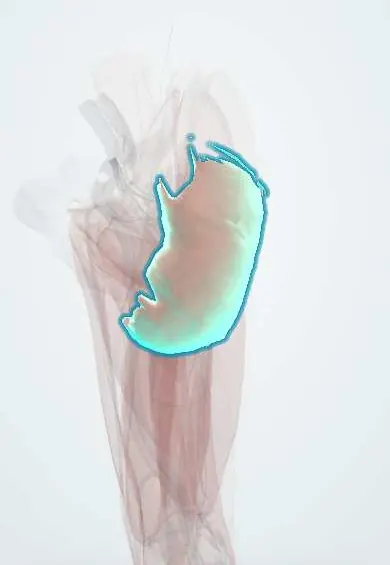
Representative model, for educational purposes only.