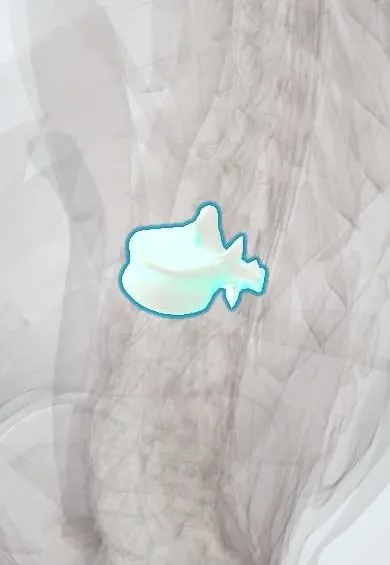
Spinal tuberculosis (Pott disease) !
Spinal tuberculosis (Pott disease) is a tuberculosis infection of the vertebrae and discs; it causes slowly worsening back pain and can deform the spine.
Updated 2026-10-29
Structures involved
Tap one to see what it is and open it in 3D.
- T11 vertebra
- T12 vertebra
- L1 vertebra
- T12–L1 disc
- Endplates
- Anterior longitudinal ligament
- Psoas major
- Iliopsoas fascia
- Spinal cord
Microorganisms that cause it
Why it happens
- Granulomatous inflammation: caseating vs non-caseating, the causes to know
- Patterns of necrosis: coagulative, liquefactive, caseous, fat, fibrinoid, gangrenous
- Bone tissue: cells, compact and spongy bone
What it is
Infection of the vertebrae and discs by Mycobacterium tuberculosis, usually spread through the blood from another focus. It is the most common form of bone and joint tuberculosis.
Who gets it
Seen mostly where tuberculosis is common, including Colombia and other parts of Latin America, and in people with HIV. It affects children and adults; a lung focus is often not active at diagnosis.
Causes
- Mycobacterium tuberculosis spread through the blood (often via the paravertebral venous plexus) from a lung or other focus
- Reactivation of a dormant focus years later
Risk factors
- Living in or coming from an area where tuberculosis is common
- HIV infection and other immunosuppression, including biologic therapy
- Malnutrition, diabetes and alcohol use
- Contact with a person with active tuberculosis; prison or crowded housing
Pathophysiology
Infection usually starts in the front of the vertebral body next to the endplate and spreads under the anterior longitudinal ligament to nearby vertebrae; the disc is affected later than in pyogenic infection. Collapse of the front of the bodies produces angular kyphosis (gibbus). Caseous pus forms cold abscesses that may track along the psoas; pus, debris or deformity can compress the cord.
Classification
- Paradiscal (most common), central, anterior or posterior element involvement
- Without or with neurological deficit (Pott paraplegia, early from active disease or late from deformity)
Symptoms and signs
- Chronic, slowly worsening back pain, most often at the lower thoracic and upper lumbar spine
- Local tenderness, muscle spasm and stiffness
- Fever, night sweats, weight loss and malaise (may be mild or absent)
- Gibbus: a sharp, angular hump of the spine
- Cold abscess: a swelling without heat or redness in the flank, groin or thigh (psoas abscess)
- Leg weakness, numbness or sphincter changes when the cord is compressed
Diagnosis
- Clinical
- Long history of back pain with constitutional symptoms in a person at risk; exam for gibbus, abscesses and neurology. Look for tuberculosis elsewhere, especially the lungs.
- Tests
- CT- or ultrasound-guided biopsy of bone or abscess for acid-fast stain, mycobacterial culture with drug susceptibility, rapid molecular tests and histology (caseating granulomas). ESR and CRP are usually raised. HIV testing is offered to everyone.
- Imaging
- MRI is the study of choice: vertebral body destruction with relative disc sparing, subligamentous spread over several levels and paraspinal abscesses with thin walls. X-rays show late collapse and kyphosis; chest X-ray looks for lung disease.
Differential diagnosis
- Pyogenic vertebral osteomyelitis
- Brucellar spondylitis
- Spinal metastases or myeloma
- Fungal spinal infection
- Osteoporotic vertebral fracture
Goal of treatment
Cure the infection, prevent or reverse neurological deficit, and prevent progressive deformity and instability.
Treatment
- Medical
- Standard multidrug anti-tuberculosis therapy, given for longer than for lung tuberculosis (durations vary between guidelines), with adherence support and susceptibility-guided changes. Most patients are cured with drugs alone.
- Conservative
- Bracing and protected activity in selected patients while the bone heals.
- Procedure
- Image-guided drainage of large paraspinal or psoas abscesses.
- Surgical
- Surgery for neurological deficit, instability, severe or progressive kyphosis, failure of drug treatment, or when a diagnosis is needed: debridement, decompression and stabilisation.
- Rehabilitation
- Rehabilitation and nutritional support during recovery.
Drugs for this condition
Complications
- Paraplegia (Pott paraplegia)
- Severe kyphotic deformity
- Spinal instability
- Drug-resistant tuberculosis
- Drug side effects such as hepatotoxicity
Prognosis
Usually good with early diagnosis and complete treatment; many patients with neurological deficit recover with treatment. Late diagnosis, severe deformity and drug resistance worsen the outcome.
Prevention
- Early detection and complete treatment of lung tuberculosis
- BCG vaccination at birth, which protects children against severe forms
- HIV testing and treatment; tuberculosis screening before immunosuppressive therapy
Test yourself
Think of the answer, then tap the question to see it.
Which spinal region is most commonly affected by Pott disease?
The lower thoracic and upper lumbar spine (thoracolumbar junction).
What is a gibbus?
A sharp, angular kyphosis caused by collapse of the front of one or more vertebral bodies.
What is a cold abscess in spinal tuberculosis?
A collection of caseous pus without the heat and redness of a pyogenic abscess, often tracking along the psoas to the groin or thigh.
On MRI, how does Pott disease usually differ from pyogenic spondylodiscitis?
Tuberculosis tends to spare the disc relatively, spreads under the anterior longitudinal ligament over several levels and forms large, thin-walled paraspinal abscesses.
What is the mainstay of treatment for spinal tuberculosis?
Prolonged multidrug anti-tuberculosis therapy; surgery is reserved for deficit, instability, deformity or failure of drugs.
Related conditions
- Tuberculosis
- Pulmonary tuberculosis
- HIV infection and AIDS
- Vertebral osteomyelitis
- Spinal epidural abscess
- Spinal cord injury
Educational information, not medical advice. For any symptom, see a health professional.
Sources: Tuberculous Spondylitis (Pott Disease) (StatPearls (NCBI Bookshelf), 2026).
Spotted a mistake?We are always improving for the community. Tell us what is wrong and our team will review it.Report a mistake
Representative model, for educational purposes only.