
Toxic megacolon
A badly inflamed colon stops working and balloons while the patient becomes septic. It can burst, so it is an emergency.
Quick facts
- Key signs
- Severe bloody diarrhoea in a known · High fever
- Diagnosis
- CT with contrast
Red flags ↓
No doses: the clinician sets them by the current guideline.
What it is
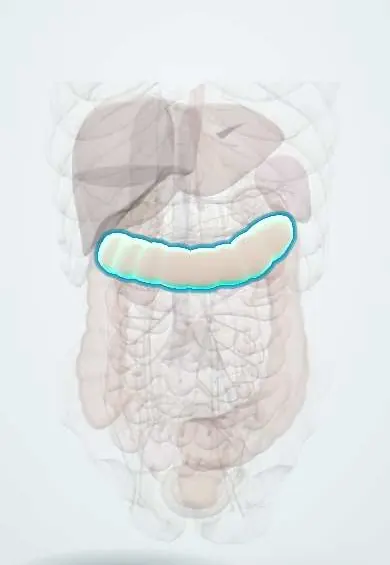
Acute dilatation of the colon (wider than 6 cm, usually the transverse colon, with loss of haustra) in a patient with severe colitis and signs of systemic toxicity such as fever, tachycardia and low blood pressure. It complicates ulcerative colitis, Crohn colitis and infectious colitis, above all C. difficile.
Who gets it
Occurs in about 5% of severe attacks of ulcerative colitis; reported rates in inflammatory bowel disease vary widely between studies for both ulcerative colitis and Crohn disease. About half of the cases related to inflammatory bowel disease appear within three months of diagnosis. The share caused by C. difficile has risen. In-hospital mortality in recent large data sets is about 7–9%.
Causes
- Inflammatory bowel disease: ulcerative colitis and Crohn colitis, usually extensive colitis
- Infectious colitis, above all Clostridioides difficile; cytomegalovirus colitis, especially in immunosuppressed people
- Any severe inflammation of the colon can lead to it
Risk factors
- A severe flare of extensive colitis (pancolitis)
- Inflammatory bowel disease diagnosed in the last few months
- Opioids, anticholinergic and antidiarrhoeal (antimotility) drugs
- Hypokalaemia and other electrolyte disturbances
- Barium enema or colonoscopy during a severe attack
- Recent antibiotics (C. difficile)
Pathophysiology
Severe mucosal inflammation extends through the full thickness of the wall → inflammatory mediators, nitric oxide among them, relax colonic smooth muscle and lower its tone → the colon dilates over hours to days, most often the transverse colon → the thinned, ulcerated wall lets bacteria and toxins through, causing systemic toxicity → the wall can perforate, which sharply raises mortality. The nerves are thought to be inhibited rather than destroyed.
Classification
- By cause: inflammatory (ulcerative colitis, Crohn colitis) or infectious (C. difficile, cytomegalovirus)
- Jalan criteria: colon wider than 6 cm on X-ray, plus at least three of fever above 38.6 °C, heart rate above 120 per minute, white cell count above 10 500 per µL or anaemia, plus at least one of dehydration, altered consciousness, electrolyte disturbance or hypotension
Symptoms and signs
- Severe bloody diarrhoea in a known or new colitis
- Abdominal distension, pain and tenderness
- High fever, fast pulse and feeling very unwell
- Confusion, low blood pressure and dehydration in severe cases
Diagnosis
- Clinical
- Severe colitis plus a distended, tender abdomen and signs of toxicity (Jalan criteria). High-dose steroids can mask peritoneal signs, so the abdomen is examined at least daily, including percussion over the liver.
- Tests
- Full blood count (leucocytosis, anaemia), electrolytes (low potassium, metabolic alkalosis), albumin, CRP and ESR; stool tests for C. difficile toxin; limited flexible sigmoidoscopy without bowel preparation, with biopsies to look for cytomegalovirus. A full colonoscopy is avoided because of the risk of perforation.
- Imaging
- Plain abdominal X-ray shows a colon wider than 6 cm, usually the transverse or right colon, with loss of haustra; it is repeated regularly (twice a day at first in some protocols) to follow the diameter and look for free air. CT with contrast confirms the diagnosis and shows perforation, abscess or ischaemia.
Differential diagnosis
- Mechanical large bowel obstruction (tumour, volvulus)
- Acute colonic pseudo-obstruction: dilatation without colitis
- Chronic megacolon (Hirschsprung disease, Chagas megacolon): long-standing dilatation without toxicity
- Acute severe colitis without dilatation
A wide colon: toxic or not?
| Condition | Colon | Patient | Key clue |
|---|---|---|---|
| Toxic megacolon | Wider than 6 cm, mostly transverse; thin, inflamed wall, haustra lost | Toxic: fever, tachycardia, low blood pressure | Severe bloody colitis came first |
| Mechanical large bowel obstruction | Dilated up to a transition point (tumour, volvulus) | Not toxic until ischaemia or perforation | No stool or gas passed; a cause seen on CT |
| Chronic megacolon (Hirschsprung, Chagas) | Very wide for months or years; wall not inflamed | Usually well | Long-standing constipation, no acute colitis |
| Acute severe colitis without dilatation | Normal width but deep ulcers | Can be toxic, and can still perforate | Same emergency care; repeat films watch for dilatation |
Goal of treatment
Control the colitis, support the circulation, stop anything that paralyses the bowel, and operate before the colon perforates.
Treatment
- Acute
- Stop opioids, anticholinergic and antidiarrhoeal drugs; nothing by mouth, nasogastric or long intestinal tube decompression, intravenous fluids and correction of potassium and other electrolytes; blood transfusion if needed; prophylaxis against venous thrombosis.
- Medical
- Inflammatory bowel disease: intravenous corticosteroids, then rescue therapy with infliximab or ciclosporin if there is no response. C. difficile: stop the antibiotic that triggered it and treat the infection; steroids are not used for infectious causes. Antibiotics are often added because of the risk of sepsis and perforation.
- Conservative
- Changing position (rolling prone, knee–elbow position) helps redistribute colonic gas; a rectal tube is used only with great care.
- Follow-up
- Joint medical and surgical review at least daily, with repeated examination, blood tests and plain films.
- Surgical
- Urgent subtotal colectomy with end ileostomy for perforation, peritonitis, ischaemia, worsening despite treatment, or no clear improvement within about 2–3 days (some guides say 24–48 hours); the rectum is left for later surgery.
Complications
- Perforation with faecal peritonitis
- Sepsis and multi-organ failure
- Massive bleeding
- Abdominal compartment syndrome
- Emergency colectomy with a stoma, and its complications (wound infection, abscess, small bowel obstruction)
Common traps
- A dilated colon on X-ray means toxic megacolon: the diagnosis also needs systemic toxicity; a wide colon in a well patient points to obstruction or chronic megacolon
- Loperamide or opioids are fine for comfort in severe colitis: antimotility drugs can trigger toxic dilatation and are stopped
- Colonoscopy will clarify the cause: a full colonoscopy can perforate the thin wall; a limited sigmoidoscopy without preparation is used instead
- A soft abdomen excludes perforation: high-dose steroids mask peritoneal signs, so check for loss of liver dullness and repeat the films
- Steroids treat every toxic colitis: they treat the inflammatory bowel disease cause, but not C. difficile, where the culprit antibiotic is stopped and the infection treated
Prognosis
Most cases respond to intensive medical treatment, but many of these patients still need a colectomy later. Mortality rises sharply once the colon perforates (about 40% against about 8% when surgery comes before perforation, in older series) and is higher with C. difficile than with inflammatory bowel disease.
Prevention
- Avoid opioids, anticholinergic and antidiarrhoeal drugs in severe colitis
- Correct low potassium
- Avoid barium enema and full colonoscopy during a severe attack
- Test for C. difficile and cytomegalovirus in every severe colitis flare
- Prescribe antibiotics prudently to lower the risk of C. difficile
Test yourself
Think of the answer, then tap the question to see it.
Which two findings together define toxic megacolon?
A colon dilated beyond 6 cm (usually the transverse colon) on imaging, plus systemic toxicity such as fever, tachycardia, hypotension or confusion.
Why are opioids and antidiarrhoeal drugs stopped in severe colitis?
They further reduce colonic motility and can trigger or worsen toxic dilatation.
Why is a full colonoscopy avoided in suspected toxic megacolon?
The thin, inflamed wall can perforate; a limited sigmoidoscopy without bowel preparation is safer for biopsies.
Which sign may be the first clue to a free perforation in a patient on high-dose steroids?
Loss of liver dullness on percussion, because steroids can mask peritoneal signs.
When is colectomy needed in toxic megacolon?
For perforation, peritonitis, ischaemia or worsening, and when intensive medical treatment brings no clear improvement within about 2–3 days.
Connections
Educational information, not medical advice. For any symptom, see a health professional.
Sources: Toxic Megacolon: Background, Pathophysiology, Management Challenges and Solutions (Clinical and Experimental Gastroenterology, 2020); Ulcerative Colitis - Gastroenterology - MSD Manual Professional Edition (MSD Manual Professional Edition, 2025).
Spotted a mistake?We are always improving for the community. Tell us what is wrong and our team will review it.Report a mistake
Representative model, for educational purposes only.