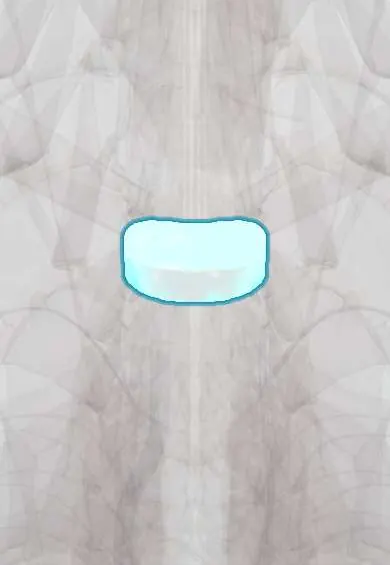
T11–T12 disc !
The T11-T12 disc is the thin cushion between the T11 and T12 vertebrae in the mid-back; it allows the small movement the ribs permit.
Official name: T11-T12
Opens in the Durgical app, no sign-up needed.
What it is
The cushion between T11 and T12: a tough outer ring of fibres (annulus fibrosus) around a soft centre.
What it does
Absorbs load and allows the small amount of movement the rib cage permits.
Key facts
- Where
- Between T11 and T12 bodies; thin thoracic disc; no rib head attaches
- Attaches
- Annulus fibrosus anchored to the endplates and ring apophyses of T11 and T12; anterior and posterior longitudinal ligaments
- Function
- Absorbs and spreads load; herniation rare (most at T8–T12), often central onto the cord; lateral herniation may irritate the T11 root
Relations
- In front
- Thoracic aorta reaching the aortic hiatus, the azygos vein and thoracic duct to its right, and the crura of the diaphragm starting just below
- Lateral
- Ribs 11 and 12 articulate only with their own vertebrae, leaving the disc free at the sides; the sympathetic trunk and the least splanchnic nerve on the bodies
- Behind
- Posterior longitudinal ligament and the lower spinal cord, close to the conus medullaris
How to find it
Follow the 12th rib inward to the T12 vertebra; the disc lies just above, close to the tip of the T11 spinous process. The 12th rib can be short and hard to feel.
On imaging
A lateral radiograph centred on the thoracolumbar junction shows disc height, Schmorl nodes and wedged bodies. After trauma, CT shows the fractures and MRI shows tears of the disc and of the posterior ligaments.
Common problems
- Thoracic disc herniations are uncommon; many are found by chance on MRI and cause no symptoms.
- A large one can press on the spinal cord, or cause band-like pain around the chest.
How it is diagnosed
MRI; CT shows whether the herniation is calcified (hardened), which matters for surgery.
Treatment
- Usually physical therapy and pain medicine; surgery only if the spinal cord is pressed.
Clinical notes
- Atypical (thoracolumbar) Scheuermann disease and Schmorl nodes are common here; nucleus pushed through the endplate into the body forms a Schmorl node rather than pressing on the canal
- Reached through the chest, detaching part of the diaphragm when needed (thoracoabdominal or retropleural route), or posterolaterally
Anatomical variants
- Transitional anatomy (a short or absent 12th rib, a rib on L1, or six lumbar-type vertebrae) changes the count here; in doubt the level is numbered from C2 downward
Test yourself
Think of the answer, then tap the question to see it.
Why is the T11–T12 disc the most often herniated thoracic disc in many series?
At the thoracolumbar junction the stiff rib-bearing spine meets the mobile lumbar spine, so bending and twisting concentrate there.
Which artery is mapped before surgery near the T11–T12 disc, and why?
The artery of Adamkiewicz, usually from a left lower posterior intercostal artery (about T9–T12); losing it can infarct the lower spinal cord.
Why do thoracolumbar fractures cluster at T11–L2, around the T11–T12 disc?
The facet joints turn from the thoracic (coronal) to the lumbar (sagittal) orientation around this level.
What is a Schmorl node, common at the T11–T12 disc?
Nucleus pushed through the endplate into the vertebral body, rather than back toward the canal; common in atypical (thoracolumbar) Scheuermann disease.
Educational information, not medical advice. For any symptom, see a health professional.
Its names
- Official Latin (TA2)
- discus intervertebralis T11-T12 TA2 1684
- Official Spanish (DeCS)
- Disco T11-T12 DeCS D007403
- English (TA2)
- T11-T12
- Also called
- fibrous ring · fibrocartilago intervertebralis
Related
Sources: Terminologia Anatomica (TA2); DeCS; Anatomy, Back, Intervertebral Discs; 7.3 The Vertebral Column (OpenStax (Rice University), 2022) · adapted, CC BY 4.0.
Spotted a mistake?We are always improving for the community. Tell us what is wrong and our team will review it.Report a mistake
Representative model, for educational purposes only.