Autoimmune encephalitis (including anti-NMDA receptor encephalitis) !
The immune system attacks proteins on brain cells, causing psychosis, seizures, memory loss and abnormal movements. Most improve with early immunotherapy.
Updated 2026-11-01
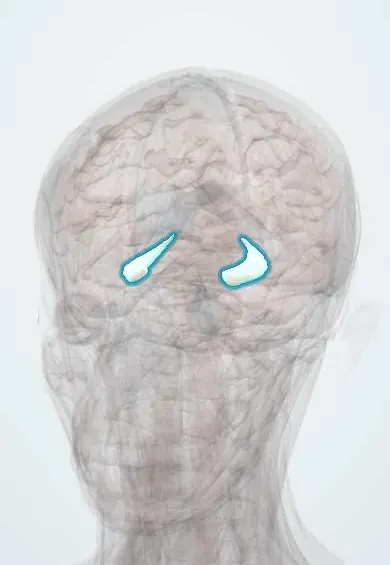
Structures involved
Tap one to see what it is and open it in 3D.
Why it happens
- Paraneoplastic syndromes: the table to know
- Synaptic transmission
- The limbic system, emotion and reward
What it is
A group of brain inflammations caused by antibodies or T cells directed against neuronal proteins, rather than by direct infection. The best-known form, anti-NMDA receptor encephalitis, targets a glutamate receptor; other forms (LGI1, CASPR2, GABA-B, AMPA receptor antibodies) mainly cause limbic encephalitis with memory loss and seizures. Some forms are paraneoplastic, triggered by a tumour elsewhere in the body.
Who gets it
Considered one of the most frequent causes of non-infectious encephalitis, with an incidence comparable to that of viral encephalitis in some series. Anti-NMDA receptor encephalitis mostly affects children and young adults, about four out of five of them female. LGI1 encephalitis predominates in men over 50. Cases are reported across Latin America, including Colombia, where access to antibody testing is limited outside large referral centres, so diagnosis is often delayed or the patient is first treated as a primary psychiatric disorder.
Causes
- Antibodies against neuronal surface proteins: NMDA receptor (most common), LGI1, CASPR2, AMPA receptor, GABA-A or GABA-B receptor
- Paraneoplastic trigger: ovarian teratoma in anti-NMDA receptor encephalitis in young women; small-cell lung cancer, thymoma or testicular tumours in other forms
- Post-infectious trigger: anti-NMDA receptor encephalitis can follow herpes simplex encephalitis
- Antibodies against intracellular antigens (Hu, Ma2) with cytotoxic T-cell damage, almost always linked to cancer
- Immune checkpoint inhibitor therapy for cancer
Risk factors
- Female sex and young age (anti-NMDA receptor encephalitis)
- Ovarian teratoma
- Recent herpes simplex encephalitis
- Known or hidden cancer (lung, thymus, testis, breast, ovary)
- Treatment with immune checkpoint inhibitors
- Older male sex (LGI1 encephalitis)
Pathophysiology
In antibody-mediated forms, IgG antibodies bind a receptor or channel on the neuron surface. Anti-NMDA receptor antibodies cross-link the receptors and cause them to be internalised, so glutamate signalling falls; this explains psychosis, catatonia, dyskinesias and autonomic instability, and why the damage is largely reversible once antibodies are removed. In teratoma-associated cases, nervous tissue within the tumour expresses NMDA receptors and breaks immune tolerance. Forms with antibodies against intracellular antigens are driven by cytotoxic T cells that kill neurons, so they respond poorly to treatment. The medial temporal lobes (hippocampus and amygdala) are most often involved, hence memory loss and seizures.
Classification
- Antibodies against neuronal surface antigens (NMDA receptor, LGI1, CASPR2, AMPA, GABA-B): usually respond to immunotherapy
- Antibodies against intracellular antigens (Hu, Ma2, GAD): T-cell mediated, often paraneoplastic, poorer response
- Paraneoplastic vs non-paraneoplastic
- Clinical syndrome: limbic encephalitis, diffuse encephalitis, brainstem encephalitis
Symptoms and signs
- Prodrome resembling a viral illness: fever, headache, malaise
- Abrupt psychiatric symptoms: anxiety, agitation, hallucinations, delusions, bizarre behaviour
- Short-term memory loss and confusion
- Seizures, sometimes evolving to status epilepticus
- Orofacial and limb dyskinesias, catatonia
- Reduced level of consciousness and mutism
- Autonomic instability: swings in heart rate and blood pressure, hyperthermia, central hypoventilation
- Faciobrachial dystonic seizures (brief jerks of the face and arm) and low sodium in LGI1 encephalitis
Diagnosis
- Clinical
- Suspected when memory deficits, altered mental status or psychiatric symptoms develop over less than three months together with seizures, focal signs, CSF inflammation or suggestive MRI or EEG, after reasonable exclusion of infection. Treatment should not wait for antibody results.
- Tests
- Testing for neuronal antibodies in both CSF and serum (CSF is more sensitive for anti-NMDA receptor antibodies). CSF often shows lymphocytic pleocytosis, raised protein and oligoclonal bands. HSV PCR and other infectious tests are done in parallel. EEG is often abnormal; the "extreme delta brush" pattern is characteristic of anti-NMDA receptor encephalitis. Serum sodium is low in LGI1 disease.
- Imaging
- Brain MRI may be normal in anti-NMDA receptor encephalitis or show T2/FLAIR hyperintensity in the medial temporal lobes in limbic encephalitis. Tumour search: pelvic ultrasound or MRI for ovarian teratoma in women; CT of chest, abdomen and pelvis, testicular ultrasound or PET when indicated.
Differential diagnosis
- Herpes simplex and other viral encephalitis
- Primary psychotic disorder (schizophrenia, brief psychotic disorder)
- Neuroleptic malignant syndrome and serotonin syndrome
- Toxic or metabolic encephalopathy
- Prion disease and other rapidly progressive dementias
- Non-convulsive status epilepticus
- Primary CNS vasculitis or lymphoma
Goal of treatment
Remove the antibodies and calm the immune attack quickly, remove any tumour, control seizures and support vital functions until the brain recovers.
Treatment
- Acute
- First-line immunotherapy started early: high-dose intravenous corticosteroids, intravenous immunoglobulin and/or plasma exchange.
- Medical
- Second-line immunotherapy (rituximab or cyclophosphamide) when there is no improvement after first-line treatment; long-term steroid-sparing agents in some patients to prevent relapse.
- Surgical
- Removal of an ovarian teratoma or other associated tumour as soon as it is found, which speeds recovery and lowers the chance of relapse.
- Follow-up
- Intensive care when needed for airway, ventilation, autonomic instability and seizures; continuous EEG; careful use of antipsychotics because of the risk of rigidity and hyperthermia. Nursing priorities: safety from agitation and falls, seizure precautions, nutrition and pressure-injury prevention.
- Rehabilitation
- Prolonged cognitive, psychiatric and physical rehabilitation; tumour screening may be repeated for years if none is found at first.
Complications
- Refractory status epilepticus
- Prolonged ventilation and ICU complications
- Cardiac arrhythmias and autonomic crises
- Lasting memory, behavioural or executive deficits
- Relapse (more common without a tumour or without second-line therapy)
- Death in a small minority
Prognosis
Most patients with antibodies against surface antigens improve substantially, although recovery may take months to years. Early immunotherapy and tumour removal are linked to better outcomes. Forms with intracellular antigens and cancer have a much poorer outlook.
Prevention
- No primary prevention exists
- Early recognition of new psychosis with neurological signs, especially in young women, shortens disability
- Early tumour screening and removal in paraneoplastic cases
Test yourself
Think of the answer, then tap the question to see it.
A young woman develops psychosis, seizures, orofacial dyskinesias and autonomic instability after a flu-like illness. What diagnosis and which tumour should be sought?
Anti-NMDA receptor encephalitis; an ovarian teratoma should be sought with pelvic imaging.
Where are anti-NMDA receptor antibodies best detected?
In the cerebrospinal fluid, which is more sensitive than serum.
What is first-line treatment?
Immunotherapy with corticosteroids, intravenous immunoglobulin or plasma exchange, plus removal of any tumour.
Which viral encephalitis can trigger anti-NMDA receptor encephalitis weeks later?
Herpes simplex encephalitis.
Which antibody causes faciobrachial dystonic seizures and hyponatraemia in older men?
Anti-LGI1 antibodies.
Related conditions
- Paraneoplastic syndromes
- Viral encephalitis (herpes simplex encephalitis)
- Genital herpes (herpes simplex infection)
- Schizophrenia
- Schizoaffective, schizophreniform, brief psychotic and delusional disorders
- Status epilepticus
- Epilepsy and seizures
- Catatonia
- Neuroleptic malignant syndrome
- Ovarian germ-cell and sex cord–stromal tumours
- Prion diseases (Creutzfeldt–Jakob)
- Delirium
- Bacterial meningitis
Educational information, not medical advice. For any symptom, see a health professional.
Sources: anti-NMDA receptor encephalitis - National Organization for Rare Disorders (National Organization for Rare Disorders (NORD), 2025).
Spotted a mistake?We are always improving for the community. Tell us what is wrong and our team will review it.Report a mistake
Representative model, for educational purposes only.