Conditions · Infectious and tropical diseases
Candidiasis: oral, oesophageal and invasive !
Candida yeasts normally live on the body; they can cause thrush and painful swallowing, or, in hospital patients, dangerous blood and organ infections.
Updated 2026-11-01
Structures involved
Tap one to see what it is and open it in 3D.
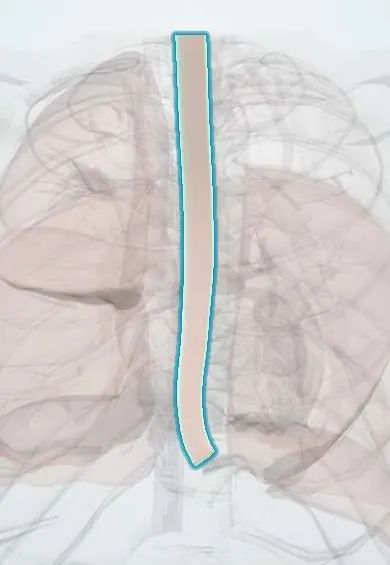
- Esophagus
- Tongue
- Right atrium
- Pharynx
- Soft palate
- Gums (gingiva)
- Retina
- Superior vena cava
- Tricuspid anterior leaflet
- Mitral anterior leaflet
Microorganisms that cause it
Why it happens
What it is
Infections caused by Candida yeasts when the normal balance with the host is disturbed. Mucosal disease includes oropharyngeal candidiasis (thrush) and oesophageal candidiasis; invasive candidiasis means candidaemia or deep organ infection (eye, heart valves, liver, spleen, kidney, bone, abdomen), mostly acquired in hospital. Vaginal and skin forms have their own pages.
Who gets it
Candida is one of the leading causes of bloodstream infection in hospitals, especially in intensive care units. Latin American surveillance shows a high share of C. parapsilosis and C. tropicalis, and Colombia has reported outbreaks of multidrug-resistant Candida auris since 2016, which led to national alerts from the INS. Oral and oesophageal candidiasis remain common markers of advanced HIV.
Causes
- Candida albicans (most frequent)
- Non-albicans species: C. glabrata (Nakaseomyces glabratus), C. parapsilosis, C. tropicalis, C. krusei
- Candida auris: multidrug resistant, spreads in hospitals and persists on surfaces
- Entry from the gut or skin through damaged mucosa or central venous catheters
Risk factors
- Central venous catheters and total parenteral nutrition
- Broad-spectrum antibiotics and prolonged ICU stay
- Abdominal surgery, especially with anastomotic leak, and acute necrotising pancreatitis
- Neutropenia, haematological cancer, transplantation and corticosteroids
- Very low birth weight preterm infants
- Kidney failure, haemodialysis and injection drug use
- Mucosal disease: HIV with low CD4 counts, inhaled corticosteroids, dentures, diabetes, infancy
Pathophysiology
Candida colonises the mouth, gut and skin. Antibiotics remove competing bacteria, while barrier damage, catheters and weak cell-mediated or neutrophil immunity let it switch to invasive hyphal forms and form biofilms on devices. From the bloodstream it seeds the eye, heart valves, kidneys, liver and spleen. Cell-mediated immunity defects (HIV) mainly allow mucosal disease, while neutropenia and catheters drive invasive disease.
Classification
- Oropharyngeal candidiasis (pseudomembranous, erythematous, angular cheilitis)
- Oesophageal candidiasis
- Candidaemia (bloodstream)
- Deep-seated: endophthalmitis, endocarditis, hepatosplenic, intra-abdominal, urinary, bone and joint
Symptoms and signs
- White plaques on the tongue and oral mucosa that scrape off, leaving red bleeding mucosa
- Burning mouth, altered taste and cracks at the corners of the mouth
- Painful swallowing and retrosternal pain with food (oesophageal disease)
- Fever that persists despite antibiotics in a hospitalised patient with a catheter
- Blurred vision or floaters (endophthalmitis)
- Abdominal pain and fever after recovery of neutrophils (hepatosplenic form)
Diagnosis
- Clinical
- Thrush is a clinical diagnosis. Odynophagia with thrush in a person with HIV is treated as oesophageal candidiasis. Invasive disease is suspected in a high-risk patient with fever despite antibiotics.
- Tests
- Blood cultures are the key test (any Candida in blood is treated, never considered a contaminant), with species identification and susceptibility; beta-D-glucan as an adjunct. Potassium hydroxide preparation or culture of mucosal scrapings. Upper endoscopy with biopsy when oesophageal disease does not respond. Dilated fundus examination in all candidaemia.
- Imaging
- Echocardiography when endocarditis is suspected or cultures stay positive; abdominal ultrasound, CT or MRI for hepatosplenic or intra-abdominal disease.
Differential diagnosis
- Oral leukoplakia, oral hairy leukoplakia and lichen planus
- Herpes simplex or cytomegalovirus oesophagitis
- Eosinophilic or reflux oesophagitis
- Bacterial sepsis and catheter infection
- Other fungal infections in neutropenia (aspergillosis)
Goal of treatment
Treat mucosal disease and its cause; in candidaemia, start early effective antifungals, remove the source, look for and treat deep foci, and stop spread of resistant species in the hospital.
Treatment
- Medical
- Oropharyngeal disease: topical antifungals (nystatin, clotrimazole) for mild cases or oral fluconazole; oesophageal disease needs systemic fluconazole, with other azoles or echinocandins if refractory.
- Acute
- Candidaemia and invasive disease: an echinocandin as initial therapy for most adults, stepping down to fluconazole when the patient is stable, cultures clear and the isolate is susceptible; amphotericin B for some sites, neonates and resistant species.
- Procedure
- Early removal of central venous catheters and drainage of infected collections (source control).
- Follow-up
- Repeat blood cultures until negative, eye examination, treatment continued for a set period after the first negative culture, contact precautions and environmental cleaning for C. auris, and catheter-care bundles.
- Surgical
- Valve replacement for Candida endocarditis and surgery for some intra-abdominal or bone infections.
Drugs for this condition
- Amphotericin B
- Fluconazole
- Nystatin
- Voriconazole
- Caspofungin
- Flucytosine
- Posaconazole
- Micafungin
- Clotrimazole
- Miconazole
Complications
- Septic shock and multiorgan failure
- Endophthalmitis with loss of vision
- Endocarditis with emboli
- Hepatosplenic abscesses, osteomyelitis and kidney infection
- Oesophageal stricture (rare)
Prognosis
Mucosal disease responds well but recurs if immunosuppression persists. Candidaemia has a crude mortality of about 30–40%; early antifungals and catheter removal improve survival, while C. auris and C. glabrata resistance make treatment harder.
Prevention
- Careful insertion and care of central lines and early removal when not needed
- Antibiotic stewardship
- Antifungal prophylaxis in selected high-risk groups (some transplant, ICU and very preterm patients)
- Antiretroviral therapy in HIV, rinsing the mouth after inhaled corticosteroids, denture hygiene
Test yourself
Think of the answer, then tap the question to see it.
How is oral thrush told apart from leukoplakia on examination?
Thrush plaques scrape off and leave red, sometimes bleeding mucosa; leukoplakia does not scrape off.
Can Candida in a blood culture be dismissed as a contaminant?
No, Candida in blood is always treated as a true infection.
What is the recommended initial antifungal class for candidaemia in most adults?
An echinocandin.
Which examination is done in every patient with candidaemia?
A dilated fundus examination to look for endophthalmitis.
Which Candida species caused hospital outbreaks in Colombia and is multidrug resistant?
Candida auris.
Related conditions
- Infectious and pill-induced oesophagitis (Candida, HSV, CMV)
- Vulvovaginal candidiasis
- Cutaneous and mucocutaneous candidiasis
- Sepsis and septic shock
- Febrile neutropenia
- HIV infection and AIDS
- Infective endocarditis
- Endophthalmitis
- Type 2 diabetes mellitus
- Aspergillosis
- Pyogenic liver abscess
Educational information, not medical advice. For any symptom, see a health professional.
Sources: Candidiasis Basics | Candidiasis | CDC (Centers for Disease Control and Prevention, 2024); Clinical Overview of Invasive Candidiasis (Centers for Disease Control and Prevention, 2024).
Spotted a mistake?We are always improving for the community. Tell us what is wrong and our team will review it.Report a mistake
Representative model, for educational purposes only.