Friedreich ataxia !
An inherited disease that starts in childhood, causing worsening clumsiness, loss of reflexes and position sense, scoliosis and heart disease.
Updated 2026-11-01
Structures involved
Tap one to see what it is and open it in 3D.
Why it happens
- Mendelian inheritance: autosomal dominant, recessive and X-linked
- Nonclassic inheritance: repeat expansions, mitochondrial genes, imprinting, mosaicism
- Trinucleotide repeat expansion disorders
- Somatosensory pathways: dorsal column and anterolateral
What it is
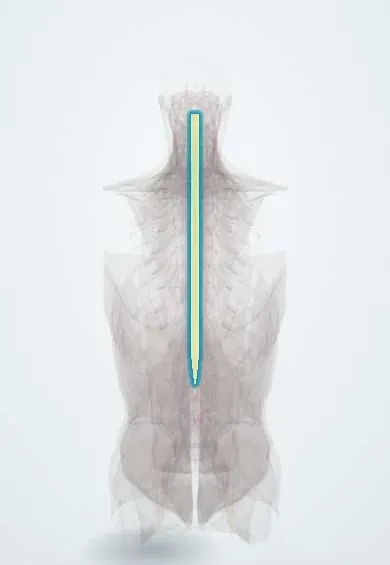
The most common inherited ataxia, an autosomal recessive neurodegenerative disease caused by GAA repeat expansion in the FXN gene. It damages the dorsal root ganglia, spinal cord tracts and cerebellar connections, and also affects the heart and pancreas.
Who gets it
About 1 in 40,000 to 50,000 people of European ancestry, less common in other populations; carrier frequency is about 1 in 100. It is present in Latin America, mainly in families of European ancestry. Symptoms usually start between 5 and 15 years, although about a quarter of patients have later onset.
Causes
- Homozygous GAA trinucleotide repeat expansion in intron 1 of the FXN gene on chromosome 9 (about 96% of cases)
- Compound heterozygosity for an expansion and a point mutation in the remaining cases
- Autosomal recessive inheritance
Risk factors
- Both parents carriers of an FXN expansion
- Affected sibling
- Consanguinity
Pathophysiology
The expanded GAA repeat silences the FXN gene and reduces frataxin, a mitochondrial protein needed to make iron-sulfur clusters. Iron accumulates in mitochondria, energy production fails and oxidative damage builds up. The most affected cells are large sensory neurons in the dorsal root ganglia and their dorsal columns, the spinocerebellar and corticospinal tracts, the dentate nucleus, cardiomyocytes and pancreatic beta cells. Longer repeats are associated with earlier onset and more severe disease.
Classification
- Typical early-onset form (before 25 years)
- Late-onset form (after 25 years) and very late-onset form (after 40 years)
- Form with retained reflexes (less common)
Symptoms and signs
- Progressive gait and limb ataxia, often the first sign in childhood
- Loss of vibration and joint position sense with a positive Romberg sign
- Absent knee and ankle reflexes with extensor plantar responses (Babinski)
- Dysarthria and nystagmus or fixation instability
- Weakness of the legs that worsens over time
- Pes cavus and scoliosis
- Palpitations, chest pain or breathlessness from cardiomyopathy
- Hearing and vision loss, and diabetes in later stages
Diagnosis
- Clinical
- A young person with progressive ataxia, absent leg reflexes, loss of proprioception and vibration, Babinski signs and dysarthria, often with pes cavus and scoliosis.
- Tests
- Genetic testing for GAA repeat expansion in FXN confirms the diagnosis. Nerve conduction studies show a sensory axonal neuropathy. ECG and echocardiography for cardiomyopathy; glucose and HbA1c for diabetes; vitamin E level to exclude ataxia with vitamin E deficiency.
- Imaging
- MRI shows atrophy of the cervical spinal cord, with little cerebellar atrophy early. Echocardiography or cardiac MRI shows concentric left ventricular hypertrophy. Spine X-rays follow scoliosis.
Differential diagnosis
- Ataxia with vitamin E deficiency and abetalipoproteinemia
- Ataxia-telangiectasia
- Charcot-Marie-Tooth disease
- Spinocerebellar ataxias (dominant inheritance)
- Subacute combined degeneration (vitamin B12 deficiency)
- Multiple sclerosis
Goal of treatment
Slow functional decline, keep the person mobile and independent as long as possible, and detect and treat heart disease, diabetes and scoliosis early.
Treatment
- Medical
- Omaveloxolone, an Nrf2 activator, is the first disease-specific drug approved in some countries for adolescents and adults. Standard treatment of cardiomyopathy, arrhythmias, heart failure and diabetes.
- Rehabilitation
- Physiotherapy for balance, strength and flexibility, occupational therapy, speech and swallowing therapy, and mobility aids.
- Surgical
- Spinal fusion for severe progressive scoliosis and foot surgery for disabling pes cavus.
- Follow-up
- Regular ECG, echocardiography and glucose checks, hearing and vision assessment, and genetic counselling for the family.
Complications
- Hypertrophic cardiomyopathy, arrhythmias and heart failure
- Diabetes mellitus
- Severe scoliosis
- Loss of walking (wheelchair use, often 10 to 20 years after onset)
- Dysphagia with aspiration pneumonia
- Hearing and vision loss
Prognosis
Slowly progressive. Most people need a wheelchair within about 10 to 20 years of onset, and life expectancy is shortened, mainly by cardiomyopathy. Late-onset forms progress more slowly.
Test yourself
Think of the answer, then tap the question to see it.
What mutation causes Friedreich ataxia?
A GAA trinucleotide repeat expansion in the FXN gene, which reduces frataxin.
What is the inheritance pattern of Friedreich ataxia?
Autosomal recessive.
What is the most common cause of death in Friedreich ataxia?
Hypertrophic cardiomyopathy with arrhythmias and heart failure.
Which combination of reflex findings is characteristic?
Absent ankle and knee reflexes with extensor plantar (Babinski) responses.
Which two non-neurological problems should be screened for regularly?
Cardiomyopathy (ECG and echocardiography) and diabetes mellitus (glucose).
Related conditions
- Hypertrophic cardiomyopathy
- Heart failure
- Atrial fibrillation
- Type 2 diabetes mellitus
- Scoliosis
- Charcot-Marie-Tooth disease
- Spinal muscular atrophy
- Subacute combined degeneration (vitamin B12)
- Ataxia-telangiectasia
- Abetalipoproteinemia (Bassen–Kornzweig syndrome)
- Multiple sclerosis
Educational information, not medical advice. For any symptom, see a health professional.
Sources: Friedreich ataxia: MedlinePlus Genetics (MedlinePlus (U.S. National Library of Medicine), 2025).
Spotted a mistake?We are always improving for the community. Tell us what is wrong and our team will review it.Report a mistake
Representative model, for educational purposes only.