
Laryngomalacia
Floppy tissue above the vocal cords that falls inward when a baby breathes in, causing noisy breathing. It is the commonest cause of stridor in infants.
Quick facts
- Key signs
- Noise louder when feeding · Normal cry · Coughing
- Diagnosis
- Awake flexible fibreoptic laryngoscopy
Red flags ↓
No doses: the clinician sets them by the current guideline.
What it is
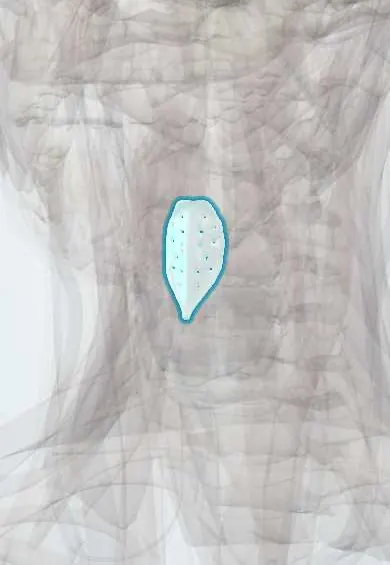
Laryngomalacia is a dynamic collapse of the supraglottic tissues (epiglottis, aryepiglottic folds and the mucosa over the arytenoid cartilages) into the airway during inspiration. It causes inspiratory stridor that starts in the first weeks of life and usually resolves on its own.
Who gets it
The most common cause of stridor in newborns and infants and the most common congenital laryngeal anomaly. Noise usually appears within the first two weeks, peaks around 6 to 8 months and settles by 12 to 24 months. Most cases are mild; a minority are severe enough to affect feeding and growth.
Causes
- Immature neuromuscular control of the larynx (the leading theory)
- Anatomical factors: omega-shaped or curled epiglottis, short aryepiglottic folds, redundant arytenoid mucosa
- Gastro-oesophageal or laryngopharyngeal reflux, which swells the supraglottis and worsens collapse
Risk factors
- Prematurity
- Reflux disease
- Neurological conditions with low tone (for example cerebral palsy)
- Down syndrome and other genetic syndromes
- A second airway lesion (synchronous lesion), such as subglottic stenosis or tracheomalacia
Pathophysiology
On inspiration the negative pressure in the airway pulls the soft supraglottic tissues inward. Poor sensorimotor integration of the larynx lets them collapse instead of staying open, producing turbulent airflow and a high-pitched inspiratory noise. Effort of breathing, feeding and lying on the back increase the collapse; reflux adds swelling that narrows the inlet further.
Classification
- Mild: stridor only, normal feeding and growth
- Moderate: stridor with feeding symptoms such as coughing, choking, regurgitation or reflux
- Severe: retractions, apnoeas, cyanosis, failure to thrive, pulmonary hypertension or cor pulmonale
Symptoms and signs
- High-pitched inspiratory stridor beginning in the first weeks of life
- Noise louder when feeding, crying, agitated or lying supine, and softer when prone or calm
- Normal cry (the vocal folds are not affected)
- Coughing, choking or regurgitation during feeds
- Slow feeding and poor weight gain in more severe cases
Diagnosis
- Clinical
- Typical history of inspiratory stridor from the first weeks, changing with position and activity, with a normal cry. Severity is judged by feeding, growth, work of breathing and sleep.
- Tests
- Awake flexible fibreoptic laryngoscopy confirms the diagnosis by showing supraglottic collapse on inspiration. Microlaryngoscopy and bronchoscopy under anaesthesia look for synchronous lesions in moderate or severe cases or atypical features; polysomnography and swallowing studies when apnoeas or aspiration are suspected.
- Imaging
- Not needed in typical cases. Airway radiographs or CT are reserved for suspected other lesions; echocardiography if pulmonary hypertension is a concern.
Differential diagnosis
- Vocal fold paralysis
- Subglottic stenosis or subglottic haemangioma
- Tracheomalacia and vascular rings
- Laryngeal cyst, web or cleft
- Croup or an inhaled foreign body (acute onset)
Goal of treatment
Reassure and follow mild cases until the larynx matures, treat reflux and feeding problems, and correct the airway surgically when breathing, feeding or growth are compromised.
Treatment
- Follow-up
- Mild disease: observation with regular follow-up of feeding, weight and breathing; positioning and feeding adjustments (upright feeds, paced feeding).
- Medical
- Acid suppression therapy for reflux in moderate disease or when reflux signs are present.
- Surgical
- Supraglottoplasty (endoscopic trimming of the aryepiglottic folds and redundant arytenoid mucosa) for severe disease: apnoeas, failure to thrive, cyanosis or cor pulmonale. Tracheostomy is rarely needed.
- Acute
- Refer urgently to paediatric ENT for any red flag; acute respiratory distress needs oxygen and airway support in hospital.
Complications
- Failure to thrive
- Aspiration and recurrent chest infections
- Obstructive sleep apnoea
- Pulmonary hypertension and cor pulmonale in severe disease
- After surgery: supraglottic stenosis or aspiration (uncommon)
Prognosis
Most children outgrow the condition without surgery by about 18 to 24 months. Supraglottoplasty is successful in most severe cases; results are poorer when there are neurological conditions or syndromes.
Test yourself
Think of the answer, then tap the question to see it.
What is the most common cause of stridor in infants?
Laryngomalacia.
How does the stridor of laryngomalacia change with position?
It is louder when the infant lies supine, feeds or cries, and quieter when prone or calm.
Which test confirms the diagnosis?
Awake flexible fibreoptic laryngoscopy showing inspiratory collapse of the supraglottis.
What are two indications for supraglottoplasty?
Any two of: apnoeas or cyanosis, failure to thrive, severe retractions, pulmonary hypertension or cor pulmonale.
In anaesthesia
Connections
Educational information, not medical advice. For any symptom, see a health professional.
Sources: Laryngomalacia (StatPearls (NCBI Bookshelf), 2024).
Spotted a mistake?We are always improving for the community. Tell us what is wrong and our team will review it.Report a mistake
Representative model, for educational purposes only.