
Acute exacerbation of COPD
A sudden flare-up of COPD, usually after a chest cold, when breathlessness, cough and sputum get worse. Each one harms the lungs, and some kill.
What it is
An acute worsening of breathlessness, cough or sputum (more volume or purulence) in a person with COPD, beyond their usual day-to-day variation, that needs a change in treatment. It usually lasts days to a few weeks.
Who gets it
Exacerbations cause most of the admissions, costs and deaths of COPD, and frequent exacerbators lose lung function faster. In Colombia the PREPOCOL study found COPD in 8.9% of adults over 40 in five cities. Wood smoke from cooking is a major cause, mostly in rural women, and many patients live at altitude, where more people with COPD have low oxygen at baseline.
Causes
- Respiratory viruses (rhinovirus, influenza, RSV, SARS-CoV-2), the most common trigger
- Bacteria (Haemophilus influenzae, Streptococcus pneumoniae, Moraxella catarrhalis), suggested by purulent sputum
- Outdoor air pollution and indoor wood or coal smoke
- Stopping maintenance inhalers or using them with poor technique
Risk factors
- Previous exacerbations, the strongest predictor of the next one
- Severe airflow limitation and chronic mucus production
- Raised blood eosinophils
- Continued smoking or wood-smoke exposure
- Comorbidities: heart failure, diabetes, reflux, anxiety and depression
- No influenza, pneumococcal or COVID-19 vaccination
Pathophysiology
A trigger (virus, bacteria, smoke) → more airway inflammation, oedema, bronchospasm and mucus → narrower airways empty more slowly, so each breath starts before the last one has left (air trapping and dynamic hyperinflation) → the diaphragm is flattened and works at a mechanical disadvantage while the work of breathing rises → fast, shallow breaths ventilate mostly dead space, and ventilation–perfusion mismatch worsens → oxygen falls; if the respiratory muscles tire, CO2 rises and the blood becomes acidic (acute hypercapnic respiratory failure) → drowsiness, which further reduces breathing. Bronchodilators and steroids reverse the narrowing; non-invasive ventilation rests the muscles and blows off CO2.
Classification
- Mild: treated with short-acting bronchodilators alone
- Moderate: also needs systemic corticosteroids and/or antibiotics
- Severe: needs emergency care or hospital admission
- By gas exchange: no respiratory failure, acute hypoxaemic failure, or acute hypercapnic failure (pH 7.35 or less with PaCO2 above 45 mmHg)
Symptoms and signs
- More breathlessness than usual
- More cough and more sputum, which may turn yellow or green
- Wheeze and chest tightness
- Fast breathing and use of neck and chest muscles to breathe
- Headache, drowsiness or confusion when CO2 rises
- Ankle swelling when the right heart is strained
Diagnosis
- Clinical
- A clinical diagnosis in a person with known or likely COPD: more breathlessness, cough or sputum than usual. Severity is judged at the bedside (respiratory rate, speech, accessory muscles, mental state, and saturation compared with the patient's usual value), and the mimics are looked for every time: pneumonia, pulmonary embolism, heart failure, pneumothorax and acute coronary syndrome. Admission is needed for severe symptoms, new cyanosis or confusion, failure of initial treatment, acidosis, serious comorbidity or poor support at home.
- Tests
- Pulse oximetry in everyone. Arterial blood gas when saturation is low, the patient is drowsy or CO2 retention is suspected: a pH of 7.35 or less with a PaCO2 above 45 mmHg is acute hypercapnic respiratory failure. At altitude, gases are read against local reference values. Blood count (eosinophils, infection), CRP, kidney function, electrolytes and glucose; ECG, troponin or natriuretic peptide when a cardiac cause is possible; sputum culture in severe or repeated exacerbations. Spirometry is not done during the flare-up.
- Imaging
- Chest X-ray to look for pneumonia, pneumothorax, effusion or pulmonary oedema. CT pulmonary angiography when pulmonary embolism is suspected. Point-of-care ultrasound for pneumothorax, effusions and heart function.
Differential diagnosis
- Community-acquired pneumonia
- Pulmonary embolism
- Acute heart failure
- Pneumothorax
- Acute coronary syndrome or arrhythmia
- Asthma attack
- Bronchiectasis exacerbation
A breathless COPD patient: flare-up or something else?
| Condition | Clue | Key test | What changes |
|---|---|---|---|
| COPD exacerbation | More, often purulent sputum and wheeze after a cold | Clinical; blood gas for severity | Bronchodilators, steroids, antibiotics if purulent |
| Pneumonia | Fever, focal crackles, pleuritic pain | Chest X-ray with a new opacity | Full pneumonia treatment |
| Pulmonary embolism | Sudden breathlessness, no change in sputum | CT pulmonary angiography | Anticoagulation |
| Heart failure | Orthopnoea, oedema, raised jugular pressure | Natriuretic peptide, echocardiography | Diuretics and heart failure care |
| Pneumothorax | Sudden one-sided pain, quiet side on auscultation | Chest X-ray or ultrasound | Drainage may be needed |
Goal of treatment
Reverse the flare-up, avoid intubation and death, and prevent the next exacerbation.
Treatment
- Acute
- Short-acting inhaled bronchodilators for all: a beta-2 agonist (salbutamol), with or without a short-acting antimuscarinic (ipratropium), by inhaler with a spacer or by nebuliser. Methylxanthines are not recommended: more adverse effects and no benefit.
- Acute
- Systemic corticosteroids in moderate and severe exacerbations, as a short course set by the guideline; oral works as well as intravenous. They speed recovery and reduce treatment failure. Blood glucose is monitored.
- Acute
- Antibiotics in moderate and severe exacerbations with purulent sputum, and in patients who need ventilation; the drug and course are set by the guideline and local resistance. Most exacerbations without purulent sputum are viral and do not need them.
- Acute
- Controlled oxygen through a Venturi mask or low-flow nasal cannula to a target saturation of about 88–92% (around 88% when there is hypercapnia, per the Colombian guideline), with a repeat blood gas. Uncontrolled high-flow oxygen can worsen hypercapnia.
- Acute
- Non-invasive ventilation (bilevel positive pressure) for acute hypercapnic respiratory failure (pH 7.35 or less) or severe breathlessness with fatigue despite treatment; it lowers intubation and death. Intubation when NIV fails or cannot be used: respiratory arrest, coma, inability to protect the airway or haemodynamic instability.
- Rehabilitation
- Airway clearance physiotherapy during the admission, and pulmonary rehabilitation soon after discharge.
- Follow-up
- Before discharge: stable on maintenance inhalers that include a long-acting bronchodilator, inhaler technique checked, a written action plan, vaccines updated, help to stop tobacco or wood smoke, and early follow-up.
Complications
- Acute hypercapnic respiratory failure and need for ventilation
- Pneumonia
- Cardiovascular events (arrhythmia, myocardial infarction, heart failure), more frequent in the weeks after a flare-up
- Pulmonary embolism and pneumothorax
- Steroid-induced hyperglycaemia
- Faster loss of lung function, readmission and death
Common traps
- A breathless COPD patient needs as much oxygen as possible: uncontrolled oxygen can raise CO2 and cause acidosis and drowsiness; titrate to about 88–92% and recheck the blood gas
- Every exacerbation needs antibiotics: most are viral; antibiotics help in moderate or severe flare-ups with purulent sputum, or when ventilation is needed
- Worse breathlessness in COPD is always an exacerbation: pulmonary embolism, heart failure, pneumonia and pneumothorax look alike; look for them, especially when sputum has not changed
- Sea-level saturation rules apply unchanged in Bogotá: at altitude, baseline saturation is lower in healthy people and in COPD, so compare with the patient's usual value and read gases against local reference values
- Once the patient goes home the job is done: one exacerbation predicts the next; check inhaler technique, step up maintenance therapy, vaccinate, refer to rehabilitation and stop tobacco or wood smoke
Prognosis
A flare-up that needs admission is a turning point: readmission and death in the following year are common, and each further exacerbation raises the risk. Acidosis, older age, poor baseline lung function and comorbidity carry the worst outlook.
Prevention
- Stopping smoking and ending wood-smoke exposure (improved stoves, ventilated kitchens, cleaner fuels)
- Vaccination against influenza, pneumococcus and COVID-19
- Long-acting bronchodilators with correct inhaler technique; an inhaled corticosteroid added for frequent exacerbations with raised eosinophils
- Pulmonary rehabilitation and a written action plan
- Long-term oxygen for chronic severe hypoxaemia, which improves survival
Test yourself
Think of the answer, then tap the question to see it.
A 70-year-old woman with wood-smoke COPD arrives drowsy, saturation 84%, pH 7.28 with a high PaCO2. What are the two key steps, and why?
Controlled oxygen to about 88–92% (not high-flow) and non-invasive ventilation: a pH below 7.35 with high CO2 is acute hypercapnic respiratory failure, and NIV cuts intubation and death.
When are antibiotics indicated in a COPD exacerbation?
In moderate or severe exacerbations with purulent sputum, and when the patient needs ventilation. Most others are viral, so purulence is the key sign.
Why can high-flow oxygen raise PaCO2 in COPD?
It releases hypoxic vasoconstriction, so blood flows to poorly ventilated lung (worse V/Q mismatch), and it displaces CO2 from haemoglobin (Haldane effect); a blunted hypoxic drive plays a smaller part.
Which bronchodilator class is not recommended in COPD exacerbations, and why?
Methylxanthines (theophylline, aminophylline): they add adverse effects without improving symptoms or reducing treatment failure.
Which measures prevent the next exacerbation?
Stopping tobacco and wood smoke, vaccination (influenza, pneumococcal, COVID-19), long-acting bronchodilators with good inhaler technique, pulmonary rehabilitation and a written action plan.
Why it happens
In rehabilitation
Connections
In physiology11
- Reading an arterial blood gas step by step
- Respiratory acidosis and alkalosis
- Lung volumes, capacities and spirometry
- Dead space and alveolar ventilation
- CO₂ transport and the Haldane effect
- Oxygenation: SpO₂, PaO₂, cyanosis and oxygen therapy
- Airway resistance
- The work of breathing
- Hypoxemic and hypercapnic respiratory failure
- Hypercapnia and dyspnea: what excess CO₂ does and why breathlessness is felt
- Physiology of positive-pressure ventilation
Educational information, not medical advice. For any symptom, see a health professional.
Sources: Guía de práctica clínica basada en la evidencia para la prevención, diagnóstico, tratamiento y seguimiento de la enfermedad pulmonar obstructiva crónica (EPOC) en población adulta. Guía No. 28 (Ministerio de Salud y Protección Social, Colciencias (Colombia), 2014); Guía de práctica clínica basada en la evidencia para la prevención, diagnóstico, tratamiento y seguimiento de la EPOC en población adulta: para pacientes y cuidadores (Ministerio de Salud y Protección Social, Colciencias (Colombia), 2014); Chronic obstructive pulmonary disease (COPD) (World Health Organization, 2026); Management of Chronic Obstructive Pulmonary Disease (COPD) Exacerbations in Hospitalized Patients From Admission to Discharge: A Comprehensive Review of Therapeutic Interventions (Cureus (open access, PMC), 2023); Diagnostic Challenges and Pathogenetic Differences in Biomass-Smoke-Induced versus Tobacco-Smoke-Induced COPD: A Comparative Review (Diagnostics (open access, PMC), 2024); Validation of new predictors of mortality and BODE index variants in patients with COPD at moderate altitude (ERJ Open Research (open access, PMC), 2025).
Spotted a mistake?We are always improving for the community. Tell us what is wrong and our team will review it.Report a mistake
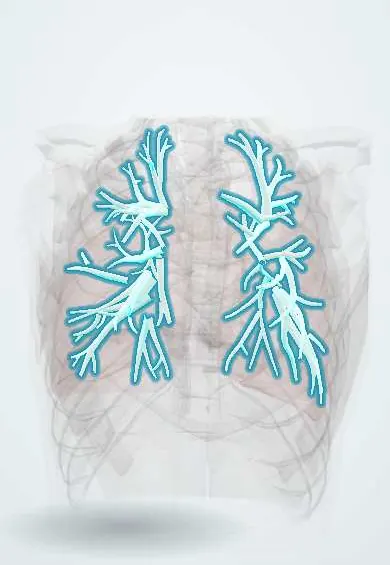
Representative model, for educational purposes only.