Conditions · Surgery and trauma
Subclavian steal syndrome !
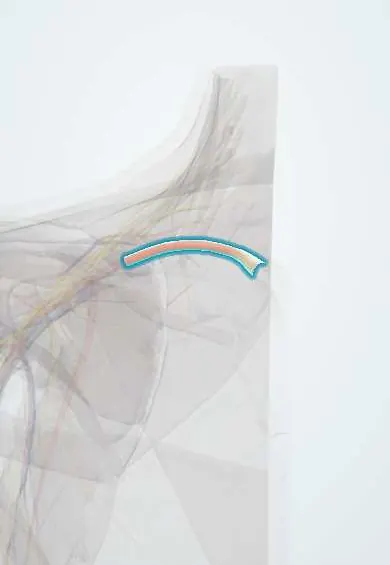
A blocked artery near the shoulder makes the arm borrow blood from an artery that feeds the brain, causing dizziness when the arm is used.
Updated 2026-11-01
Structures involved
Tap one to see what it is and open it in 3D.
- Subclavian artery
- Vertebral artery
- Basilar artery
- Posterior cerebral artery
- Cerebellum
- Axillary artery
- Brachial artery
- Radial artery
- Brachiocephalic trunk
- Internal thoracic artery
Why it happens
- Flow, pressure and resistance: Poiseuille and turbulent flow
- Cerebral blood flow, brain metabolism and intracranial pressure
What it is
A narrowing or blockage of the subclavian artery before the origin of the vertebral artery makes blood flow backwards down the vertebral artery to supply the arm. The flow reversal itself is the 'steal phenomenon'; it becomes a syndrome when it causes symptoms of brainstem or arm ischaemia.
Who gets it
Flow reversal is found in a small percentage of people on vascular imaging, but most are asymptomatic. The left side is affected in most cases. It is commoner in older smokers with atherosclerosis; in young women in Latin America, Takayasu arteritis is an important cause.
Causes
- Atherosclerosis of the proximal subclavian artery (most common)
- Takayasu arteritis and giant cell arteritis
- Thoracic outlet compression or a cervical rib
- Congenital aortic arch anomalies and complications of coarctation repair
- Aortic dissection or radiation arteritis
Risk factors
- Smoking
- Arterial hypertension
- Dyslipidaemia
- Diabetes mellitus
- Atherosclerosis in other territories
- Internal thoracic artery coronary bypass graft (coronary-subclavian steal)
Pathophysiology
With a proximal subclavian stenosis, pressure in the distal subclavian falls below that of the basilar system. Blood then flows from the opposite vertebral artery into the basilar junction and down the ipsilateral vertebral artery to the arm. Arm exercise lowers resistance in the arm and increases this steal, which can reduce posterior circulation flow. After an internal thoracic artery bypass, the same mechanism can steal blood from the heart and cause angina.
Classification
- Grade I: reduced antegrade flow in the vertebral artery
- Grade II: alternating (to-and-fro) flow
- Grade III: permanently reversed flow
- Variant: coronary-subclavian steal after internal thoracic artery bypass
Symptoms and signs
- Dizziness or vertigo, especially with arm exercise
- Blurred or double vision
- Unsteadiness (ataxia) or fainting
- Arm pain, fatigue, coldness or tingling with use (arm claudication)
- Often no symptoms at all
Diagnosis
- Clinical
- Blood pressure in both arms: a difference of 15 mmHg or more points to subclavian stenosis. Weak or delayed radial pulse on the affected side and a supraclavicular bruit support the diagnosis.
- Tests
- Laboratory tests help find causes and risk factors (lipids, glucose, inflammatory markers when vasculitis is suspected).
- Imaging
- Duplex ultrasound shows reversed or alternating vertebral artery flow and is the first test. CT or MR angiography maps the stenosis and the aortic arch; catheter angiography is used for treatment.
Differential diagnosis
- Vertebrobasilar transient ischaemic attack from other causes
- Benign paroxysmal positional vertigo and other vestibular disorders
- Cardiac arrhythmia causing syncope
- Thoracic outlet syndrome
- Orthostatic hypotension
Goal of treatment
Relieve symptoms by restoring forward flow in the subclavian artery when needed, and reduce cardiovascular risk from the underlying atherosclerosis or vasculitis.
Treatment
- Medical
- Antiplatelet agents, statins and control of blood pressure and diabetes for all patients; immunosuppressive treatment when the cause is vasculitis.
- Lifestyle
- Stopping smoking, regular exercise and a heart-healthy diet.
- Procedure
- Endovascular angioplasty and stenting of the subclavian artery for symptomatic patients, and before or after an internal thoracic artery coronary bypass.
- Surgical
- Open surgery (carotid-subclavian bypass or subclavian transposition) for occlusions unsuitable for stenting or failed endovascular treatment.
- Follow-up
- Nursing priorities: measure blood pressure in the unaffected arm (or both arms), check radial pulses, and avoid blood pressure cuffs and venous lines on the affected arm when possible; teach to report neurological symptoms.
Complications
- Vertebrobasilar transient ischaemic attack or stroke
- Arm ischaemia and digital embolism
- Angina or myocardial ischaemia in coronary-subclavian steal
- Restenosis after stenting
Prognosis
Most people with the steal phenomenon remain asymptomatic and do well with risk-factor control. Revascularisation relieves symptoms in most symptomatic patients, with good long-term patency. Overall prognosis depends on the extent of atherosclerosis elsewhere.
Prevention
- Not smoking
- Control of blood pressure, cholesterol and diabetes
- Regular physical activity
Test yourself
Think of the answer, then tap the question to see it.
Where must the subclavian lesion lie to cause subclavian steal?
Proximal to the origin of the vertebral artery, so the distal subclavian pressure falls and vertebral flow reverses.
Which side is most often affected in subclavian steal syndrome?
The left subclavian artery.
What simple bedside finding suggests subclavian stenosis?
A systolic blood pressure difference of 15 mmHg or more between the arms, with a weaker radial pulse on the affected side.
Why do symptoms worsen with arm exercise?
Exercise lowers resistance in the arm and increases reversed vertebral flow, diverting blood from the posterior circulation.
What is coronary-subclavian steal?
Reversed flow in an internal thoracic artery coronary bypass graft caused by proximal subclavian stenosis, producing myocardial ischaemia.
Related conditions
- Transient ischaemic attack
- Ischaemic stroke
- Peripheral artery disease
- Carotid artery stenosis
- Takayasu arteritis
- Thoracic outlet syndrome
- Atherosclerosis and dyslipidaemia
- Coarctation of the aorta
- Stable angina
- Chronic mesenteric ischemia
Educational information, not medical advice. For any symptom, see a health professional.
Sources: Subclavian Steal Syndrome (SSS): Symptoms & Causes (Cleveland Clinic, 2024).
Spotted a mistake?We are always improving for the community. Tell us what is wrong and our team will review it.Report a mistake
Representative model, for educational purposes only.