Takayasu arteritis !
An inflammation of the aorta and its main branches that mostly affects young women. Narrowed arteries can leave weak or absent arm pulses.
Updated 2026-11-01
Structures involved
Tap one to see what it is and open it in 3D.
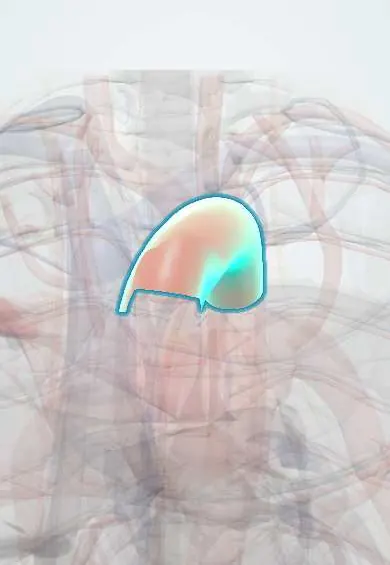
- Aortic arch
- Subclavian artery
- Thoracic aorta
- Ascending aorta
- Brachiocephalic trunk
- Common carotid artery
- Axillary artery
- Brachial artery
- Radial artery
- Abdominal aorta
- Left renal artery
Why it happens
- Granulomatous inflammation: caseating vs non-caseating, the causes to know
- Flow, pressure and resistance: Poiseuille and turbulent flow
- Blood vessels: artery, vein and capillary layers
What it is
A chronic granulomatous large-vessel vasculitis of the aorta and its major branches, especially the subclavian, carotid and renal arteries. Inflammation thickens and narrows the arteries, causing stenoses, occlusions and sometimes aneurysms. It is known as «pulseless disease».
Who gets it
Rare, with a strong female predominance; it usually begins before age 40. It is more frequent in Asia and is well described in Latin America, including Mexico and Colombia, where it is among the important causes of renovascular hypertension and absent pulses in young women.
Causes
- Autoimmune, cell-mediated inflammation of the arterial wall; cause unknown
- Genetic susceptibility (HLA-B*52 association)
- A link with prior tuberculosis has been proposed but not proven
Risk factors
- Female sex
- Age under 40
- Asian or Latin American ancestry
Pathophysiology
T cells and macrophages infiltrate the adventitia and media around the vasa vasorum, forming granulomas. The media is destroyed and the intima thickens with fibrosis, producing long smooth stenoses or occlusions; where the wall is weakened, aneurysms form. Narrowing of the subclavian arteries reduces arm pulses and pressure, renal artery stenosis causes hypertension, and aortic root dilation causes aortic regurgitation.
Classification
- Early systemic (pre-pulseless) inflammatory phase
- Late occlusive (pulseless) phase
- Angiographic types by territory (aortic arch and branches, thoracoabdominal aorta, renal arteries, mixed)
Symptoms and signs
- Early: fever, night sweats, weight loss, joint and muscle pain
- Arm claudication (pain and fatigue on using the arms)
- Weak or absent radial or brachial pulses; a difference in systolic pressure of more than 10 mmHg between the arms
- Bruits over the subclavian arteries, carotids or abdominal aorta
- Dizziness, visual disturbances, syncope or carotid pain (carotidynia)
- Hypertension, sometimes severe, from renal artery stenosis
Diagnosis
- Clinical
- Suspected in a young woman with absent or asymmetric arm pulses, unequal blood pressures between arms, vascular bruits or unexplained hypertension. Blood pressure should be measured in all four limbs; arm readings may underestimate central pressure.
- Tests
- ESR and CRP are often raised in active disease but may be normal. No specific antibody exists; tuberculosis and syphilis serology help exclude infectious aortitis.
- Imaging
- Diagnosis rests on imaging: CT or MR angiography shows wall thickening and long tapered stenoses of the aorta and branches; Doppler ultrasound of the carotids and subclavians and PET-CT can show active inflammation. Echocardiography for aortic regurgitation.
Differential diagnosis
- Giant cell arteritis (age over 50, temporal artery involvement)
- Atherosclerosis
- Fibromuscular dysplasia (renal artery stenosis in young women)
- Infectious aortitis (tuberculosis, syphilis)
- Coarctation of the aorta and other congenital vascular anomalies
- Connective tissue disorders with aortic disease (Marfan, Ehlers-Danlos)
Goal of treatment
Control vascular inflammation to stop progression of stenoses, protect brain, heart and kidneys, control blood pressure and restore blood flow where it is critical.
Treatment
- Medical
- Glucocorticoids are first line to induce remission of active disease.
- Medical
- Steroid-sparing agents (methotrexate, azathioprine, mycophenolate) or biologics (TNF inhibitors, tocilizumab) for relapsing or refractory disease.
- Medical
- Blood-pressure control and antiplatelet therapy for ischaemic risk; statins as cardiovascular protection.
- Surgical
- Angioplasty, stenting or surgical bypass for critical stenoses (renal, carotid, coronary), aortic valve repair for severe regurgitation; done ideally when inflammation is quiet.
- Follow-up
- Long-term follow-up with clinical examination, inflammatory markers and periodic vascular imaging; nursing teaching to measure blood pressure in the unaffected arm or legs.
Complications
- Renovascular hypertension and chronic kidney disease
- Stroke and transient ischaemic attacks
- Aortic regurgitation and heart failure
- Coronary ischaemia and myocardial infarction
- Aortic aneurysm
- Pregnancy complications (pre-eclampsia, growth restriction)
Prognosis
A chronic relapsing disease; with treatment and revascularisation when needed, long-term survival is good, but organ damage from hypertension, stroke and heart involvement determines the outlook.
Test yourself
Think of the answer, then tap the question to see it.
Who is typically affected by Takayasu arteritis?
Young women, usually under 40 years, more often of Asian or Latin American ancestry.
Why is it called «pulseless disease»?
Stenosis of the subclavian and other aortic branches weakens or abolishes the arm pulses.
Which key bedside finding should prompt suspicion?
A difference of more than 10 mmHg in systolic blood pressure between the arms, often with subclavian bruits.
How is Takayasu arteritis distinguished from giant cell arteritis?
By age: Takayasu begins before 40 and involves the aorta and its branches; giant cell arteritis occurs after 50 and typically involves the temporal arteries.
What is the first-line treatment?
Glucocorticoids, with steroid-sparing agents or biologics for relapsing disease.
Related conditions
- Giant cell arteritis
- Aortic regurgitation
- Renovascular hypertension (renal artery stenosis)
- Arterial hypertension
- Ischaemic stroke
- Transient ischaemic attack
- Heart failure
- Myocardial Infarction (Heart Attack)
- Coarctation of the aorta
- Tuberculosis
- Syncope (vasovagal, orthostatic hypotension, cardiac)
Educational information, not medical advice. For any symptom, see a health professional.
Sources: Takayasu arteritis (MedlinePlus (U.S. National Library of Medicine), 2025).
Spotted a mistake?We are always improving for the community. Tell us what is wrong and our team will review it.Report a mistake
Representative model, for educational purposes only.