
Coronary revascularisation: PCI or bypass surgery
A narrowed coronary artery can be opened from inside with a stent or bypassed with surgery. Which one a patient gets changes how long and how well they live.
What it is
Restoring blood flow to heart muscle beyond a coronary narrowing, either by percutaneous coronary intervention (PCI: a balloon and usually a drug-eluting stent, placed by catheter from the wrist or groin) or by coronary artery bypass grafting (CABG: surgery that attaches arteries or veins to carry blood past the blockages).
Who gets it
PCI is now far more common than CABG, but CABG remains one of the most frequent major operations worldwide. Emergency revascularisation of an ST-elevation infarction is mostly primary PCI.
Causes
- Acute coronary syndromes: urgent PCI of the culprit artery in ST-elevation infarction and in high-risk non-ST-elevation syndromes
- Chronic coronary disease with angina that persists despite optimal medical therapy
- Anatomy where revascularisation improves survival: significant left main disease, multivessel disease with reduced left ventricular function, and selected proximal LAD disease
- Ischaemic left ventricular dysfunction with viable myocardium (CABG in selected patients)
Risk factors
- For stent thrombosis: early stopping of antiplatelet therapy, diabetes, an acute coronary syndrome at the time of PCI, reduced ejection fraction, and long or small stented segments
- For a poor result after CABG: older age, reduced ejection fraction, kidney disease, diabetes, chronic lung disease and previous heart surgery
- For restenosis: diabetes, small vessels and long lesions
Pathophysiology
Atherosclerotic plaque narrows the artery → flow falls below demand on exertion (angina), or a plaque ruptures and clot blocks the artery (infarction) → PCI: a balloon compresses and cracks the plaque, a metal stent holds the artery open, and a drug coating slows the scar regrowth that would narrow it again (restenosis) → bare metal attracts clot until the vessel lining covers it, so two antiplatelet drugs are needed for a period (dual antiplatelet therapy) → stopping them too early risks sudden stent thrombosis, usually a new heart attack. CABG: an internal thoracic (mammary) artery, usually to the LAD, and other arterial or vein grafts deliver blood beyond the narrowings → the protection holds even if the native artery later closes upstream → internal thoracic artery grafts stay open for many years; vein grafts fail sooner.
Classification
- PCI: balloon angioplasty, drug-eluting stent (standard today), bare-metal stent (largely historical), drug-coated balloon in selected lesions
- Primary PCI in ST-elevation infarction versus planned (elective) PCI
- CABG: on-pump (heart-lung machine, arrested heart) or off-pump; arterial grafts (internal thoracic, radial) and saphenous vein grafts
- Hybrid revascularisation: internal thoracic artery graft to the LAD plus PCI of other vessels
Symptoms and signs
- Recurrent chest pain after PCI: stent thrombosis (sudden, usually an infarction) or restenosis (gradual return of angina)
- After CABG: sternal wound pain, breathlessness, palpitations from postoperative atrial fibrillation, low mood or poor concentration in the first weeks
Diagnosis
- Clinical
- The decision starts from symptoms, ischaemia and anatomy: angina despite medical therapy, or anatomy where revascularisation improves survival. For complex disease, a heart team (interventional cardiologist and cardiac surgeon) decides together with the patient.
- Tests
- Stress testing or invasive pressure-wire measurement (FFR or iFR) to show that a narrowing causes ischaemia; HbA1c, kidney function and surgical risk scores. The SYNTAX score, calculated from the angiogram, grades anatomical complexity (number, site and features of the lesions): the higher it is, the more CABG is favoured.
- Imaging
- Coronary angiography maps the disease; CT coronary angiography in selected stable patients; echocardiography for left ventricular function and valve disease; cardiac MRI or other viability imaging in ischaemic cardiomyopathy.
Differential diagnosis
- Optimal medical therapy alone, in stable disease without high-risk anatomy
- Vasospastic angina (no fixed narrowing to stent)
- Coronary microvascular dysfunction (angina without obstructive narrowing)
- Spontaneous coronary artery dissection (usually managed without a stent)
PCI or CABG: who usually gets which (in principle)
| Situation | Usually favoured | Why |
|---|---|---|
| One- or two-vessel disease with simple lesions | PCI | Less invasive, with similar results for simple anatomy |
| ST-elevation myocardial infarction | Primary PCI of the culprit artery | The fastest way to reopen the artery |
| Multivessel disease with diabetes | CABG | Fewer deaths and infarctions than with PCI in trials of patients with diabetes |
| Left main disease with low anatomical complexity | PCI or CABG | Similar results; the heart team and the patient's preference decide |
| Three-vessel or left main disease with a high SYNTAX score | CABG | More complete and more durable revascularisation |
| Multivessel disease with reduced left ventricular function | CABG, in suitable surgical candidates | Better long-term survival |
| Very high surgical risk (frailty, severe lung disease, no usable grafts) | PCI | Avoids sternotomy and the heart-lung machine |
Goal of treatment
Relieve angina, prevent infarction and improve survival where the anatomy allows, with the method that gives the most complete and durable revascularisation at acceptable risk, always on top of optimal medical therapy.
Treatment
- Procedure
- PCI with a drug-eluting stent, usually through the radial artery; pressure wires and intravascular imaging guide complex cases.
- Surgical
- CABG with the left internal thoracic artery to the LAD and further arterial or vein grafts, on or off the heart-lung machine.
- Medical
- Dual antiplatelet therapy (aspirin plus a P2Y12 inhibitor such as clopidogrel, prasugrel or ticagrelor) after PCI, for a duration set by the guideline according to the clinical setting and bleeding risk, then single antiplatelet therapy long term.
- Medical
- Optimal medical therapy for everyone, before and after the procedure: high-intensity statin, antianginal drugs, and control of blood pressure and diabetes.
- Rehabilitation
- Cardiac rehabilitation after either procedure, with support to stop smoking.
Complications
- PCI: bleeding or haematoma at the access site, coronary dissection or perforation, contrast-associated kidney injury, periprocedural infarction
- Stent thrombosis: acute (within 24 hours), subacute (up to 1 month), late (1–12 months) or very late (after 12 months); usually presents as an acute coronary syndrome
- In-stent restenosis: gradual return of angina
- CABG: postoperative atrial fibrillation, stroke, bleeding, sternal wound infection, kidney injury, cognitive changes, and graft failure (vein grafts more than arterial grafts)
Common traps
- A stent cures coronary disease: it treats one narrowing; the atherosclerosis continues elsewhere, so statins, risk-factor control and rehabilitation decide the long-term course
- Stent thrombosis and restenosis are the same problem: thrombosis is a sudden clot, usually an infarction, often after antiplatelet drugs are stopped; restenosis is slow scar regrowth with returning angina
- PCI is always better because it is less invasive: with diabetes and multivessel disease, and with complex anatomy (high SYNTAX score), CABG gives better long-term results
- Antiplatelet drugs can simply be stopped before a procedure: early interruption after a stent is the main cause of stent thrombosis; the decision is made with the cardiologist
- Revascularising a stable patient always prolongs life: in stable disease without high-risk anatomy it mainly relieves angina; optimal medical therapy is the foundation
Prognosis
In stable disease without high-risk anatomy, revascularisation mainly relieves angina; a survival benefit is seen with high-risk anatomy and in acute coronary syndromes. Long-term results depend on how complete the revascularisation is, adherence to antiplatelet therapy and risk-factor control, because the disease keeps progressing in the native arteries.
Prevention
- Never stopping antiplatelet therapy after a stent without talking to the treating cardiologist
- Risk-factor control: smoking, lipids, blood pressure, diabetes, weight and physical activity
- Cardiac rehabilitation
Test yourself
Think of the answer, then tap the question to see it.
Which patients with multivessel coronary disease usually do better with CABG than with PCI?
Those with diabetes, complex anatomy (high SYNTAX score), complex left main disease, and reduced left ventricular function suitable for surgery.
What is the difference between stent thrombosis and in-stent restenosis?
Thrombosis is a sudden clot in the stent, usually causing a heart attack, often after antiplatelet therapy stops. Restenosis is gradual scar regrowth that brings angina back.
Why is the internal thoracic artery usually grafted to the LAD?
Arterial grafts stay open much longer than vein grafts, and the LAD supplies the largest area of the left ventricle, so this graft gives the greatest lasting benefit.
A 64-year-old man with type 2 diabetes has angina despite full medical treatment, complex three-vessel disease and an ejection fraction of 40%. Which procedure is favoured, and who decides?
CABG is usually favoured (diabetes, complex three-vessel disease, reduced function). A heart team of cardiologist and cardiac surgeon decides with the patient, on top of optimal medical therapy.
Why it happens
- Vessel wall response to injury
- Pathology after angioplasty, stents and grafts
- Myocardial infarction: pathogenesis
- Ischaemic heart disease
- Consequences of atherosclerosis
Connections
Educational information, not medical advice. For any symptom, see a health professional.
Sources: Coronary Artery Bypass Graft (StatPearls (NCBI Bookshelf), 2023); Percutaneous Coronary Intervention (StatPearls (NCBI Bookshelf), 2023); Stent Thrombosis (StatPearls (NCBI Bookshelf), 2023); Heart bypass surgery: MedlinePlus Medical Encyclopedia (MedlinePlus, US National Library of Medicine, 2025); Angioplasty and stent placement - heart: MedlinePlus Medical Encyclopedia (MedlinePlus, US National Library of Medicine, 2024); Mortality After Multivessel Revascularization in Patients With Diabetes and Acute Coronary Syndromes (JACC: Advances (Europe PMC), 2024).
Spotted a mistake?We are always improving for the community. Tell us what is wrong and our team will review it.Report a mistake
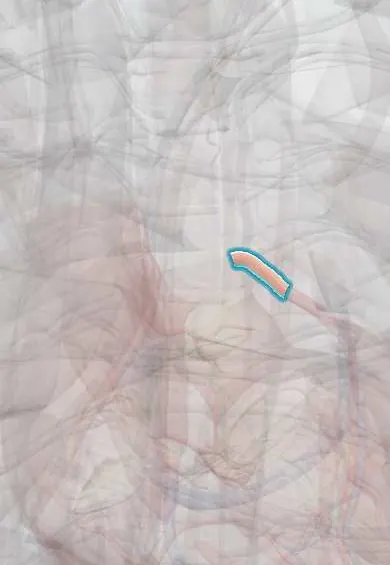
Representative model, for educational purposes only.