
Lung complications of liver disease (hepatopulmonary syndrome, portopulmonary hypertension, hepatic hydrothorax)
Liver disease with portal hypertension can harm the lungs in three ways: lung vessels too wide, lung arteries too narrow, or ascites leaking into the chest.
What it is
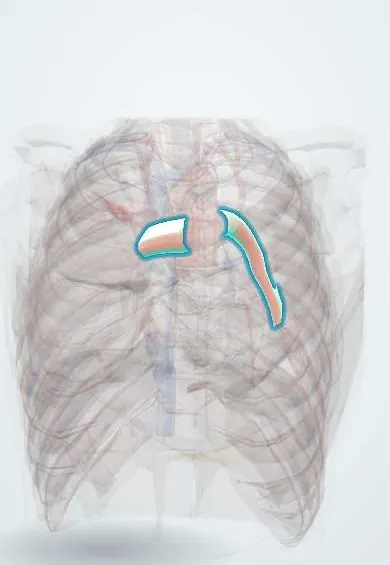
Three lung complications of portal hypertension. Hepatopulmonary syndrome is hypoxaemia from dilated lung capillaries; portopulmonary hypertension is pulmonary arterial hypertension from narrowed, remodelled arteries; hepatic hydrothorax is a transudative pleural effusion from ascites crossing the diaphragm, without heart or lung disease.
Who gets it
Hepatopulmonary syndrome affects about 10–30% of people with advanced cirrhosis or portal hypertension; portopulmonary hypertension about 2–6% of liver transplant candidates. Hepatic hydrothorax occurs in about 5–10% of people with cirrhosis and is right-sided in about 85%.
Causes
- Portal hypertension, with or without cirrhosis, is the shared background
- Hepatopulmonary syndrome: excess nitric oxide, carbon monoxide and prostacyclin, and new abnormal vessels, dilate the lung capillaries
- Portopulmonary hypertension: endothelin-driven vasoconstriction and remodelling of the pulmonary arteries, with less nitric oxide
- Hepatic hydrothorax: ascitic fluid drawn through small defects, mainly in the right diaphragm, by negative intrathoracic pressure
Risk factors
- Cirrhosis with portal hypertension
- Portal hypertension without cirrhosis (portopulmonary hypertension)
- Ascites, especially refractory ascites (hydrothorax)
- Being evaluated for liver transplantation, when these are usually found
Pathophysiology
Hepatopulmonary syndrome: vasodilators that the diseased liver no longer clears, plus new vessels → lung capillaries dilate, mostly at the bases → blood passes too fast and too far from the alveoli to be fully oxygenated (ventilation–perfusion mismatch and shunt) → hypoxaemia; standing sends more blood to the bases → more breathlessness (platypnoea) and lower oxygen (orthodeoxia). Portopulmonary hypertension: the balance tips towards vasoconstrictors such as endothelin → pulmonary arteries narrow and remodel → pulmonary vascular resistance rises → the right ventricle strains and can fail. Hepatic hydrothorax: ascites forms → negative pressure in the chest pulls it through diaphragmatic defects → the pleural space fills faster than it can absorb → breathlessness, sometimes with little visible ascites.
Classification
- Hepatopulmonary syndrome by room-air PaO2: mild, moderate, severe, very severe
- Portopulmonary hypertension by mean pulmonary artery pressure and resistance: mild, moderate, severe
- Hepatic hydrothorax: uncomplicated, refractory, or complicated by spontaneous bacterial empyema
Symptoms and signs
- Progressive breathlessness
- Platypnoea (worse upright, better lying down) and orthodeoxia in hepatopulmonary syndrome
- Cyanosis and spider angiomas in hepatopulmonary syndrome
- Fatigue, exertional breathlessness, syncope, a loud P2 and a tricuspid regurgitation murmur in portopulmonary hypertension
- Breathlessness with a pleural effusion, usually right-sided, in hepatic hydrothorax
Diagnosis
- Clinical
- In any person with liver disease and breathlessness, check pulse oximetry lying and upright, and look for spider angiomas, cyanosis, signs of right heart strain and a pleural effusion. All liver transplant candidates are screened with echocardiography.
- Tests
- Arterial blood gas on room air: hepatopulmonary syndrome needs PaO2 below 80 mmHg or a raised alveolar–arterial gradient, proof of intrapulmonary vasodilation, and exclusion of other causes. Right heart catheterisation is mandatory to confirm portopulmonary hypertension: mean pulmonary artery pressure above 20 mmHg, pulmonary vascular resistance of at least 2 Wood units and a wedge pressure of 15 mmHg or less. Diagnostic thoracentesis in hydrothorax: a transudate with a low cell count, similar to ascitic fluid; infection is excluded.
- Imaging
- Contrast (bubble) echocardiography: in hepatopulmonary syndrome agitated saline bubbles appear in the left atrium after 3–6 cardiac cycles; an intracardiac shunt such as a patent foramen ovale must be excluded. Doppler echocardiography estimates pulmonary pressure and right ventricular function. Technetium-99m macroaggregated albumin scanning quantifies the shunt (uptake in brain and kidneys). Chest radiograph or ultrasound shows the effusion; a radiotracer injected into the peritoneum that appears in the chest confirms hydrothorax.
Differential diagnosis
- Intracardiac shunt (patent foramen ovale, atrial septal defect)
- High-output circulation raising pulmonary pressure with normal resistance
- Pulmonary hypertension from left heart or lung disease
- Pleural effusion from heart failure, infection or cancer
- COPD or pneumonia in a person with cirrhosis
Breathless with liver disease: which of the three?
| Feature | Hepatopulmonary syndrome | Portopulmonary hypertension | Hepatic hydrothorax |
|---|---|---|---|
| Problem | Lung capillaries too wide | Lung arteries too narrow | Ascites leaked into the pleural space |
| Oxygen and posture | Low oxygen, worse upright (orthodeoxia) | Exertional breathlessness, syncope, right heart failure | Breathless from a compressed lung |
| Pulmonary pressure | Normal or low | Raised, with high resistance | Not the problem |
| Key test | Bubble echo: bubbles in the left atrium after 3–6 cycles | Right heart catheterisation | Thoracentesis: transudate |
| Liver transplant | Indication; usually resolves; MELD exception points | Severe untreated disease can contraindicate it; treat first | Most are candidates; TIPS for refractory cases |
Goal of treatment
Support oxygenation, lower pulmonary vascular resistance or control fluid as needed, and prepare the patient for liver transplantation, which is the definitive treatment.
Treatment
- Medical
- Hepatopulmonary syndrome: supplemental oxygen; no drug has shown a lasting benefit.
- Medical
- Portopulmonary hypertension: pulmonary arterial hypertension drugs (endothelin receptor antagonists, phosphodiesterase-5 inhibitors, prostacyclin analogues) to lower resistance before transplant; some endothelin antagonists are hepatotoxic.
- Procedure
- Hepatic hydrothorax: treat the ascites (sodium restriction, diuretics, paracentesis); therapeutic thoracentesis for breathlessness; TIPS for refractory cases. Long-term chest drains are avoided because of infection, fluid and protein loss and kidney injury.
- Surgical
- Liver transplantation: the only cure for hepatopulmonary syndrome (oxygenation usually normalises within 6–12 months); in portopulmonary hypertension only once pressures and resistance are controlled; the definitive option for refractory hydrothorax.
- Follow-up
- Serial oximetry and blood gases while on the transplant list, and repeat echocardiography. Nursing care: oxygen therapy, positioning (lying flat may ease breathlessness in hepatopulmonary syndrome) and fluid balance.
Complications
- Respiratory failure
- Right ventricular failure, especially during transplant surgery in untreated portopulmonary hypertension
- Severe hypoxaemia around transplant reperfusion in hepatopulmonary syndrome
- Spontaneous bacterial empyema of a hydrothorax
- Pneumothorax or infection after repeated thoracentesis or chest drains
Common traps
- Hypoxaemia in cirrhosis is always from ascites or lung disease: if oxygen falls when upright, think of hepatopulmonary syndrome and order a bubble echo
- Both lung vascular complications argue against transplant: hepatopulmonary syndrome is an indication for transplant, which cures it, whereas severe portopulmonary hypertension can contraindicate it
- A high pulmonary pressure on echo in cirrhosis is portopulmonary hypertension: a high-output circulation can raise pressure with normal resistance, and only right heart catheterisation confirms it
- A large right effusion in cirrhosis needs a chest drain: drains in hepatic hydrothorax cause infection, fluid and protein loss and kidney injury; treat the ascites and tap when needed
Prognosis
Hepatopulmonary syndrome about doubles mortality compared with cirrhosis alone, but after transplant oxygenation usually normalises and five-year survival is about 70–75%. Untreated portopulmonary hypertension carries a very high perioperative risk; patients who reach target pressures with treatment can be transplanted with good results. Median survival with hepatic hydrothorax is about 8–12 months.
Prevention
- Screening of all liver transplant candidates with echocardiography and oximetry
- Good control of ascites
Test yourself
Think of the answer, then tap the question to see it.
What are platypnoea and orthodeoxia, and which lung complication of liver disease do they suggest?
Breathlessness and a fall in oxygen when upright that improve lying down; they suggest hepatopulmonary syndrome, with dilated vessels at the lung bases.
Which test is mandatory to confirm portopulmonary hypertension?
Right heart catheterisation: raised mean pulmonary artery pressure and resistance with a normal wedge pressure.
How does liver transplantation affect hepatopulmonary syndrome compared with portopulmonary hypertension?
It is the only cure for hepatopulmonary syndrome, which usually resolves; severe untreated portopulmonary hypertension can make the transplant too dangerous.
Why is hepatic hydrothorax usually right-sided?
Ascites passes through small defects mainly in the right diaphragm, pulled into the chest by negative intrathoracic pressure.
In a bubble echo for hepatopulmonary syndrome, when do bubbles appear in the left atrium?
After about 3–6 cardiac cycles, having crossed dilated lung capillaries; an intracardiac shunt must be excluded.
Connections
Educational information, not medical advice. For any symptom, see a health professional.
Sources: Hepatopulmonary Syndrome - Pulmonology - MSD Manual Professional Edition (MSD Manual Professional Edition, 2024); Systemic Abnormalities in Liver Disease - Hepatology - MSD Manual Professional Edition (MSD Manual Professional Edition, 2025); Portopulmonary Hypertension and Hepatopulmonary Syndrome: Contrasting Pathophysiology and Implications for Liver Transplantation (Journal of Clinical Medicine, 2025); Hepatic hydrothorax: An update and review of the literature (World Journal of Hepatology, 2017).
Spotted a mistake?We are always improving for the community. Tell us what is wrong and our team will review it.Report a mistake
Representative model, for educational purposes only.