
Liver transplantation and the liver transplant recipient
A new liver is the only cure when one's own liver fails for good. Who gets one, when, and what can go wrong afterwards follow a few clear rules.
Quick facts
- Key signs
- Before transplant · Primary non-function
- Diagnosis
- Liver biopsy
Red flags ↓
No doses: the clinician sets them by the current guideline.
What it is
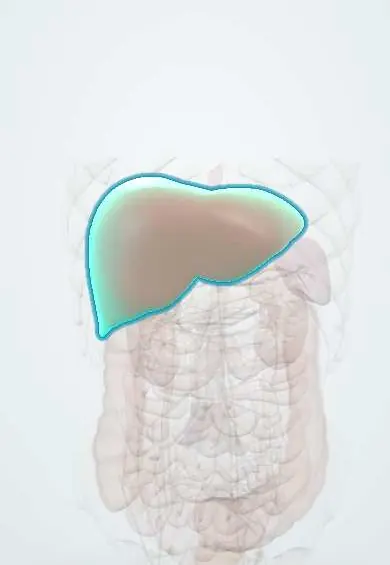
Replacement of a diseased liver with a whole or partial liver from a deceased or living donor. It treats end-stage chronic liver disease, acute liver failure, selected liver cancers and some inherited metabolic diseases, at the price of lifelong immunosuppression.
Who gets it
Liver transplantation is a routine operation in specialised centres worldwide, and MASLD and alcohol-related disease are now leading indications as hepatitis C becomes curable. Organs are scarce everywhere. In Colombia, Ley 1805 de 2016 extended the presumed legal consent to donation: a person who did not oppose donation during life is presumed to be a donor; opposition is registered in writing with the Instituto Nacional de Salud (INS) or when joining an EPS, and a donation wish expressed in life cannot be overridden by the family. The INS coordinates the national donation and transplant network, and transplants to non-resident foreigners are restricted by law.
Causes
- Decompensated cirrhosis (ascites, variceal bleeding, encephalopathy, jaundice) from MASLD, alcohol, hepatitis B or C, autoimmune hepatitis, primary biliary cholangitis or primary sclerosing cholangitis
- Hepatocellular carcinoma within accepted size criteria in a cirrhotic liver
- Acute liver failure (paracetamol overdose, viral hepatitis, drug reactions, Wilson disease) meeting prognostic criteria for poor survival without transplant
- Children: biliary atresia (the commonest paediatric indication), metabolic diseases and liver tumours such as hepatoblastoma
- Inherited metabolic diseases where the liver makes the faulty protein: Wilson disease, alpha-1 antitrypsin deficiency, primary hyperoxaluria (often with a kidney), familial amyloid polyneuropathy
- Refractory symptoms with a poor quality of life, such as intractable itching in cholestatic disease or recurrent cholangitis in sclerosing cholangitis
Risk factors
- For listing too late: delayed referral after the first decompensation, hepatorenal syndrome, frailty and sarcopenia
- For early graft problems: older or fatty donor livers, long cold ischaemia time, donation after circulatory death, small partial grafts
- For hepatic artery thrombosis: small arteries (children, living donor grafts), technical difficulty, hypercoagulability
- For infection: high MELD at transplant, prolonged ICU stay, reoperation, donor-positive and recipient-negative cytomegalovirus status
- For late problems: alcohol relapse, metabolic syndrome, calcineurin inhibitor exposure, sun exposure, smoking
Pathophysiology
End-stage liver disease → falling synthesis (low albumin, high INR), failed excretion (rising bilirubin) and portal hypertension, often with kidney failure → the MELD score combines bilirubin, INR and creatinine (newer versions add sodium, albumin and sex) to predict death within about three months → the sickest are offered organs first. At transplant the new liver is joined by four connections: hepatic artery, portal vein, the hepatic veins or vena cava, and the bile duct (duct to duct, or to a jejunal Roux limb). The bile duct depends only on the hepatic artery for its blood → if the artery clots, the ducts die → bile leaks, abscesses and strictures. The liver is relatively tolerant immunologically, so it can be transplanted across HLA mismatch, but T cells still attack it unless immunosuppressed.
Classification
- By donor: deceased donor after brain death, deceased donor after circulatory death, living donor (right lobe for adults, left lateral segment for children), split liver from one deceased donor for two recipients
- MELD score: from bilirubin, INR and creatinine (MELD-Na adds sodium; MELD 3.0 adds albumin and sex); higher means sicker; children use the PELD score; exception points exist for hepatocellular carcinoma and some other conditions
- Milan criteria for hepatocellular carcinoma: one tumour up to 5 cm, or up to 3 tumours none larger than 3 cm, with no invasion of major vessels and no spread outside the liver
- Absolute contraindications: cancer outside the liver, uncontrolled infection, severe heart or lung disease that makes surgery unsurvivable (including severe uncontrolled portopulmonary hypertension), active alcohol or drug use without engagement in treatment, inability to follow lifelong treatment without support
- Relative contraindications: advanced age with frailty, morbid obesity, complete portal and mesenteric vein thrombosis, poor social support
- Complications by time: early (primary non-function, hepatic artery or portal vein thrombosis, bleeding, bile leak, acute rejection, bacterial infection, kidney injury) and late (biliary strictures, chronic rejection, recurrent disease, infections, cancers, kidney disease, metabolic and cardiovascular disease)
Symptoms and signs
- Before transplant: jaundice, ascites, confusion, variceal bleeding, muscle wasting and itching
- Primary non-function: in the first days, no bile, rising INR and lactate, falling glucose, encephalopathy and shock
- Acute rejection: often silent, found as rising liver enzymes and bilirubin, sometimes with fever or malaise
- Biliary leak or stricture: fever, jaundice, abdominal pain, cholangitis
- Opportunistic infection: fever, cough, diarrhoea or hepatitis in the first months
Diagnosis
- Clinical
- Evaluation for transplant is multidisciplinary: hepatology, surgery, anaesthesia, cardiology, psychiatry or psychology, social work and nutrition. Refer early, at the first decompensation or when the MELD score passes about 15, when transplant begins to improve survival. After transplant, ask how long ago it was, why it was done, and which immunosuppressants the patient takes, then use the time clock to rank causes.
- Tests
- Before transplant: MELD components (bilirubin, INR, creatinine, sodium, albumin), blood group, viral serologies (hepatitis B and C, HIV, cytomegalovirus, Epstein–Barr virus), tumour markers, and cardiac and lung assessment. After transplant: liver tests and INR, immunosuppressant blood levels, kidney function, glucose and lipids, cytomegalovirus viral load; liver biopsy confirms rejection and distinguishes it from recurrent disease.
- Imaging
- Doppler ultrasound is the first test after transplant for hepatic artery and portal vein flow, collections and bile duct dilation. Magnetic resonance cholangiography for biliary strictures, with ERCP to treat them. CT or MRI to stage hepatocellular carcinoma against the Milan criteria and to plan living donor surgery (liver volume and vascular anatomy).
Differential diagnosis
- Rising liver enzymes after transplant: rejection versus hepatic artery thrombosis versus biliary obstruction versus cytomegalovirus or other viral hepatitis versus drug injury versus recurrent original disease
- Fever after transplant: surgical site or abdominal collection, cholangitis, pneumonia, cytomegalovirus, fungal infection
- Confusion after transplant: drug toxicity (calcineurin inhibitors), infection, metabolic disturbance, graft dysfunction
Abnormal liver tests after transplant: which cause?
| Cause | Typical timing | Clue | Key test |
|---|---|---|---|
| Primary non-function | First days | No bile, rising INR and lactate, low glucose, shock | Clinical; urgent listing for retransplantation |
| Hepatic artery thrombosis | First weeks (also later) | Sudden enzyme rise, bile leak or abscesses, biliary necrosis | Doppler ultrasound, then CT angiography |
| Acute cellular rejection | Weeks to first months | Enzymes and bilirubin rise, often no symptoms; low drug levels | Liver biopsy |
| Biliary leak or stricture | Leak early; stricture months | Pain, fever, jaundice, cholangitis | MR cholangiography, ERCP |
| Cytomegalovirus infection | About months 1–6, or after prophylaxis stops | Fever, low white cells, hepatitis or colitis | Cytomegalovirus viral load; biopsy |
| Recurrent disease | Months to years | Same pattern as the original disease (hepatitis, cholestasis, fatty liver, alcohol) | Biopsy, serology, history |
Goal of treatment
Transplant the right patient at the right time, protect the new liver from technical failure, rejection and infection, and keep the recipient healthy for decades by balancing immunosuppression against its harms.
Treatment
- Surgical
- Orthotopic transplantation: the diseased liver is removed and the graft joined at the hepatic artery, portal vein, vena cava or hepatic veins and bile duct; living donor and split-liver grafts use one part of a liver, which regrows in both donor and recipient.
- Medical
- Lifelong immunosuppression combining drug classes: calcineurin inhibitors as the backbone, antiproliferative agents, corticosteroids (often tapered off), mTOR inhibitors in selected patients to spare the kidneys or after transplantation for cancer, and antibody induction in some centres; regimens are individualised by the transplant team.
- Medical
- Infection prevention: prophylaxis against Pneumocystis and, according to donor and recipient status, against cytomegalovirus and fungi; antiviral treatment to prevent hepatitis B recurrence and cure of hepatitis C; vaccination before transplant, and no live vaccines afterwards.
- Acute
- Acute cellular rejection: corticosteroid pulses and adjustment of maintenance immunosuppression; primary non-function and early hepatic artery thrombosis: urgent revascularisation or retransplantation.
- Procedure
- ERCP with dilation and stenting for anastomotic biliary strictures and leaks; percutaneous drainage of collections; percutaneous biliary drainage when ERCP is not possible (Roux limb).
- Follow-up
- Lifelong transplant clinic follow-up: liver tests, drug levels and interactions, kidney function, blood pressure, glucose, lipids, bone density, cancer screening including yearly skin examination; alcohol relapse prevention and psychological support.
- Lifestyle
- Taking immunosuppressants on time, never stopping them, checking every new medicine or herbal product with the team, no alcohol, no smoking, sun protection, food and water safety, healthy weight and exercise.
Complications
- Primary non-function and early graft dysfunction
- Hepatic artery thrombosis (most feared vascular complication) and portal vein thrombosis
- Bile leaks and anastomotic or ischaemic-type biliary strictures
- Acute cellular, antibody-mediated and chronic (ductopenic) rejection
- Infections: bacterial early, cytomegalovirus, Pneumocystis and fungi in the first months, community infections later
- Recurrence of the original disease (hepatitis B or C, autoimmune and cholestatic diseases, fatty liver, alcohol, hepatocellular carcinoma)
- Chronic kidney disease from calcineurin inhibitors; diabetes, hypertension, dyslipidaemia, obesity and cardiovascular disease
- De novo cancers: skin cancers and post-transplant lymphoproliferative disorder
Common traps
- The waiting list is first come, first served: allocation follows the MELD score, the risk of dying soon, not the time spent waiting
- Any liver cancer rules out a transplant: hepatocellular carcinoma within the Milan criteria has excellent results; transplant treats both the tumour and the cirrhosis that made it
- Rising liver enzymes after transplant mean rejection: hepatic artery thrombosis, biliary problems, cytomegalovirus and drug injury look the same; Doppler first, then biopsy
- A low or normal creatinine reassures about the kidneys in cirrhosis: muscle wasting lowers creatinine and hides kidney failure, so MELD can underestimate how sick a frail patient is
- Once transplanted, the original disease is gone: hepatitis, autoimmune and cholestatic diseases, fatty liver and alcohol use can all return in the new liver
Prognosis
Most recipients in experienced centres are alive at one year, and around three in four are alive at five years, with good quality of life. Patients transplanted for hepatocellular carcinoma within the Milan criteria have survival similar to those without cancer. Late deaths are mostly from cardiovascular disease, cancer, infection and recurrent disease rather than rejection.
Prevention
- Preventing the diseases that lead to transplant: hepatitis B vaccination, hepatitis C cure, alcohol treatment, control of obesity and diabetes
- Early referral at the first decompensation or when the MELD score rises
- Hepatocellular carcinoma surveillance in cirrhosis so tumours are found within criteria
- Registering and discussing donation wishes with the family
- After transplant: adherence, vaccination, infection prophylaxis and cardiovascular risk control
Test yourself
Think of the answer, then tap the question to see it.
What does the MELD score measure, and why does it decide the order of the waiting list?
It combines bilirubin, INR and creatinine (plus sodium and more in newer versions) to predict the risk of death within about three months, so organs go first to those most likely to die without one.
A man with cirrhosis has one 4 cm hepatocellular carcinoma and no vascular invasion or spread. Is he a transplant candidate?
Yes: he is within the Milan criteria (one tumour up to 5 cm, or up to 3 tumours none over 3 cm, no vascular invasion, no spread outside the liver), where results match transplants without cancer.
Why does hepatic artery thrombosis after transplant damage the bile ducts in particular?
After transplant the bile ducts receive blood only from the hepatic artery; when it clots they become ischaemic, which causes bile leaks, abscesses and strictures.
Three months after transplant a patient has fever, low white cells and rising liver enzymes. Which infection is classic in this period, and how is it confirmed?
Cytomegalovirus, typical in months 1 to 6 or after prophylaxis ends. Confirm with a blood cytomegalovirus viral load, and a biopsy if needed.
Under Ley 1805 de 2016 in Colombia, who is presumed to be an organ donor?
Anyone who did not register opposition during life, in writing with the INS or when joining an EPS. A wish to donate expressed in life cannot be overridden by the family.
Why it happens
- Wilson disease
- Alpha-1 antitrypsin deficiency: the liver
- Autosomal recessive polycystic kidney disease
- Hereditary hyperbilirubinemias
- Hepatoblastoma: the liver tumour of early childhood
- Primary sclerosing cholangitis
Show 9 more
- Autoimmune hepatitis: plasma cells, interface injury and types 1 and 2
- Neonatal cholestasis: biliary atresia and neonatal hepatitis
- Primary biliary cholangitis: the florid duct lesion and AMA
- Vanishing bile duct syndrome
- Hepatic venous outflow obstruction
- Alcohol-associated liver disease
- Hepatocellular carcinoma
- Liver failure: acute, chronic and acute-on-chronic
- Cirrhosis: morphology
Connections
Educational information, not medical advice. For any symptom, see a health professional.
Sources: Liver Transplantation (StatPearls (NCBI Bookshelf), 2025); Liver Transplantation | Liver Transplant | MedlinePlus (MedlinePlus (U.S. National Library of Medicine), 2025); Red Nacional de Donación y Trasplante de Órganos y Tejidos (Instituto Nacional de Salud (Colombia), 2025).
Spotted a mistake?We are always improving for the community. Tell us what is wrong and our team will review it.Report a mistake
Representative model, for educational purposes only.