Takotsubo (stress) cardiomyopathy !
A sudden, usually temporary weakening of the heart's main pump after intense stress. It mimics a heart attack but arteries are open.
Updated 2026-11-01
Structures involved
Tap one to see what it is and open it in 3D.
- Left ventricle
- Interventricular septum
- Mitral anterior leaflet
- Left ventricle papillary muscles
- LAD (anterior descending artery)
- Right coronary artery
- Circumflex artery
Why it happens
- The adrenal medulla and catecholamines
- Adrenergic and cholinergic receptors
- The endocrine stress response
What it is
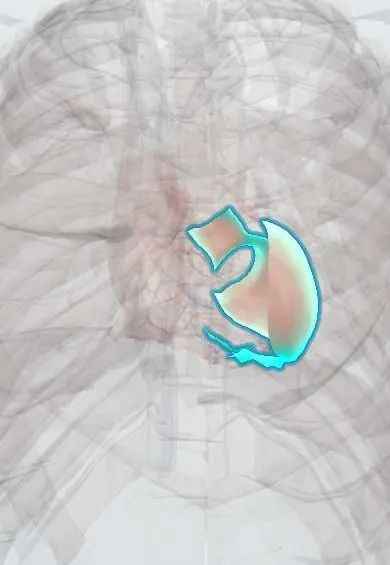
Takotsubo cardiomyopathy, also called stress cardiomyopathy, broken heart syndrome or apical ballooning syndrome, is an acute and usually reversible left ventricular dysfunction, typically triggered by intense emotional or physical stress. The classic pattern is akinesia and ballooning of the apex with a hypercontractile base, a shape that resembles a Japanese octopus trap (takotsubo). It presents like an acute coronary syndrome, but coronary angiography shows no culprit obstructive lesion.
Who gets it
Found in a small percentage of patients investigated for suspected acute coronary syndrome. Around nine in ten patients are women, mostly after menopause. Physical triggers (surgery, sepsis, acute neurological events) are common in men and inpatients and carry a worse outlook. Cases are reported across Latin America, but no Colombian prevalence data are available.
Causes
- Emotional triggers: bereavement, conflict, fear, financial loss, and sometimes happy events
- Physical triggers: surgery, sepsis, asthma or COPD attacks, trauma, severe pain
- Neurological events: subarachnoid haemorrhage, stroke, seizures
- Catecholamine excess: pheochromocytoma, administration of catecholamines or beta-agonists, stimulant use
- In about a third of cases no clear trigger is found
Risk factors
- Female sex and postmenopausal status (loss of oestrogen protection)
- Psychiatric disorders such as anxiety and depression
- Neurological disease
- Critical illness and recent surgery
- Previous episode of takotsubo
Pathophysiology
A surge of catecholamines from the sympathetic system and adrenal medulla is thought to stun the myocardium. The apex has a higher density of beta-adrenergic receptors, so it is most affected; excessive stimulation can switch receptor signalling and cause direct myocyte toxicity, microvascular dysfunction and spasm. The result is a regional wall motion abnormality that extends beyond a single coronary territory. Basal hypercontraction can cause dynamic left ventricular outflow tract obstruction and systolic anterior motion of the mitral valve, worsening hypotension. Function usually recovers over days to weeks.
Classification
- Apical (typical) ballooning, the most frequent form
- Midventricular
- Basal (inverted or reverse takotsubo)
- Focal
- Primary (presenting cardiac event) versus secondary (arising during another illness)
Symptoms and signs
- Sudden chest pain, similar to a heart attack
- Shortness of breath
- Palpitations, dizziness or fainting
- Sweating and nausea
- In critically ill patients: unexplained hypotension, pulmonary oedema or new ECG changes
Diagnosis
- Clinical
- Consider takotsubo in a postmenopausal woman with acute coronary-type chest pain after a stressful event, but treat it as an acute coronary syndrome until coronary angiography is done. Diagnosis requires transient regional wall motion abnormality beyond one coronary territory, no culprit obstructive coronary disease, new ECG changes or modest troponin rise, and exclusion of myocarditis and pheochromocytoma.
- Tests
- 12-lead ECG: ST elevation in the acute phase, then deep, widespread T-wave inversion with QT prolongation over the following days. Troponin is raised but usually less than expected for the extent of dysfunction; natriuretic peptides are often markedly raised. Plasma or urine metanephrines when pheochromocytoma is suspected.
- Imaging
- Coronary angiography with left ventriculography shows no culprit lesion and the typical ballooning. Echocardiography identifies the pattern, outflow tract obstruction, mitral regurgitation and apical thrombus, and is repeated to document recovery. Cardiac magnetic resonance shows oedema without late gadolinium enhancement, helping to exclude infarction and myocarditis.
Differential diagnosis
- Acute myocardial infarction (especially of the left anterior descending artery)
- Acute myocarditis
- Vasospastic angina
- Pheochromocytoma crisis
- Aortic dissection and pulmonary embolism
- Stress-related myocardial injury in sepsis
Goal of treatment
Support the circulation until the myocardium recovers, prevent and treat complications, and address the trigger.
Treatment
- Acute
- Initial management as acute coronary syndrome until angiography excludes coronary occlusion; continuous ECG monitoring for arrhythmias and QT prolongation.
- Medical
- Heart failure without outflow obstruction: diuretics, ACE inhibitors or ARBs and beta-blockers as tolerated; avoid QT-prolonging drugs.
- Acute
- Shock with outflow tract obstruction: avoid inotropes and nitrates, give careful fluids and a beta-blocker if possible; mechanical circulatory support in refractory shock.
- Medical
- Anticoagulation when an apical thrombus is found or the risk is high because of extensive apical akinesia.
- Follow-up
- Nursing: telemetry, vital signs and urine output, daily weight and fluid balance, signs of shock or pulmonary oedema, neurological checks, and emotional support with attention to the triggering stress.
- Lifestyle
- Follow-up with repeat echocardiography to confirm recovery, treatment of anxiety or depression and stress management.
Complications
- Acute heart failure and pulmonary oedema
- Cardiogenic shock and left ventricular outflow tract obstruction
- Ventricular arrhythmias, including torsades de pointes with long QT
- Left ventricular thrombus and stroke
- Ventricular wall rupture (rare)
- Recurrence
Prognosis
Ventricular function usually recovers within weeks, and the outlook for most patients with an emotional trigger is good. In-hospital complications are similar to those of myocardial infarction, especially in men and in secondary forms after physical triggers. A minority have recurrence over the following years.
Prevention
- No proven preventive therapy; treatment of anxiety and depression and stress management are reasonable
- Careful use of catecholamines and stimulants in susceptible patients
Test yourself
Think of the answer, then tap the question to see it.
Which patient group is most typically affected by takotsubo cardiomyopathy?
Postmenopausal women after an emotional or physical stressor.
What does coronary angiography show?
No culprit obstructive coronary lesion, with apical ballooning on ventriculography.
What is the proposed mechanism?
Catecholamine surge causing myocardial stunning, most marked at the apex.
In shock with left ventricular outflow obstruction, which drugs should be avoided?
Inotropes and nitrates (vasodilators).
What is the usual course of ventricular function?
Recovery within days to weeks.
Related conditions
- Myocardial Infarction (Heart Attack)
- Vasospastic (Prinzmetal) angina
- Myocarditis
- Heart failure
- Cardiogenic shock
- Ventricular tachycardia
- Long QT syndrome and torsades de pointes
- Ischaemic stroke
- Phaeochromocytoma
- Panic disorder
- Generalized anxiety disorder
- Sepsis and septic shock
- Aortic dissection
- Pulmonary embolism
Educational information, not medical advice. For any symptom, see a health professional.
Sources: Cardiomyopathy - Types | NHLBI, NIH (National Heart, Lung, and Blood Institute (NHLBI), NIH, 2026).
Spotted a mistake?We are always improving for the community. Tell us what is wrong and our team will review it.Report a mistake
Representative model, for educational purposes only.