Temporomandibular disorder !
Temporomandibular disorder is a group of problems of the jaw joint and chewing muscles, causing jaw pain, clicking and trouble opening the mouth.
Updated 2026-10-29
Structures involved
Tap one to see what it is and open it in 3D.
- TMJ disc
- TMJ capsule
- Masseter
- Lateral pterygoid
- Temporalis
- Medial pterygoid
- Mandible
- Temporal bones
- Jaw ligaments
- V3 mandibular
In embryology
What it is
A group of painful or dysfunctional conditions of the temporomandibular joint and the chewing muscles, causing jaw pain, joint sounds and limited mouth opening.
Who gets it
Common, especially in young and middle-aged adults; more often reported by women. Most cases are muscular and self-limiting.
Causes
- Myofascial pain of the masticatory muscles
- Internal derangement: displacement of the articular disc
- Degenerative joint disease (osteoarthritis) or inflammatory arthritis
- Trauma to the jaw
Risk factors
- Bruxism (teeth grinding or clenching)
- Stress, anxiety and poor sleep
- Other chronic pain conditions (headache, fibromyalgia)
- Previous jaw trauma
- Joint hypermobility
Pathophysiology
Overload of the joint and muscles causes muscle pain and inflammation. In disc displacement the disc slips forward of the condyle: it may reduce on opening (click) or stay displaced and block opening (closed lock). Long-standing overload can lead to degenerative change of the joint surfaces.
Classification
- Muscle disorders (myalgia, myofascial pain)
- Disc displacement with or without reduction
- Degenerative joint disease
- Criteria vary; research diagnostic criteria (DC/TMD) are widely used
Symptoms and signs
- Pain in front of the ear, jaw or temple, worse with chewing
- Clicking or crepitus of the joint
- Limited or deviated mouth opening, or jaw locking
- Headache and ear fullness without ear disease
- Tenderness of the masseter and temporalis
Diagnosis
- Clinical
- History and examination: joint palpation and sounds, mouth opening range, deviation and masticatory muscle tenderness.
- Tests
- Usually none; inflammatory markers if arteritis or inflammatory arthritis is suspected.
- Imaging
- Not needed in typical cases; MRI shows disc position, CT or cone-beam CT shows bony change.
Differential diagnosis
- Dental pain (pulpitis, impacted wisdom tooth)
- Otitis media or externa
- Trigeminal neuralgia
- Giant cell arteritis
- Parotitis
Goal of treatment
Reduce pain, restore jaw function and prevent recurrence, mainly with reversible conservative measures.
Treatment
- Conservative
- Education, soft diet, jaw rest, heat or cold, and avoiding wide yawning and gum chewing.
- Rehabilitation
- Jaw exercises and physiotherapy; occlusal splints for bruxism.
- Medical
- Simple analgesics and anti-inflammatories; muscle relaxants or low-dose tricyclic agents in chronic cases.
- Procedure
- Arthrocentesis or joint injection for persistent locking or pain.
- Surgical
- Arthroscopy or open joint surgery for a small group who fail conservative care.
Complications
- Chronic facial pain
- Persistent closed lock
- Degenerative joint change
Prognosis
Most cases improve with conservative care within months; a minority become chronic, often alongside other pain conditions.
Prevention
- Managing bruxism and stress
- Avoiding habitual jaw overuse
Test yourself
Think of the answer, then tap the question to see it.
What causes the click in a TMJ disc displacement with reduction?
The anteriorly displaced disc snapping back onto the condyle as the mouth opens.
Which muscle pulls the disc and condyle forward on opening?
The lateral pterygoid.
Which serious condition must be excluded in an older adult with new jaw claudication?
Giant cell arteritis.
What is first-line management of most temporomandibular disorders?
Reversible conservative care: education, soft diet, exercises, splints and simple analgesics.
Related conditions
- Migraine
- Acute otitis media
- Rheumatoid arthritis
- Trigeminal neuralgia
- Giant cell arteritis
- Mandible fracture
- Tension-type headache
Educational information, not medical advice. For any symptom, see a health professional.
Sources: Temporomandibular Syndrome (StatPearls (NCBI Bookshelf), 2023).
Spotted a mistake?We are always improving for the community. Tell us what is wrong and our team will review it.Report a mistake
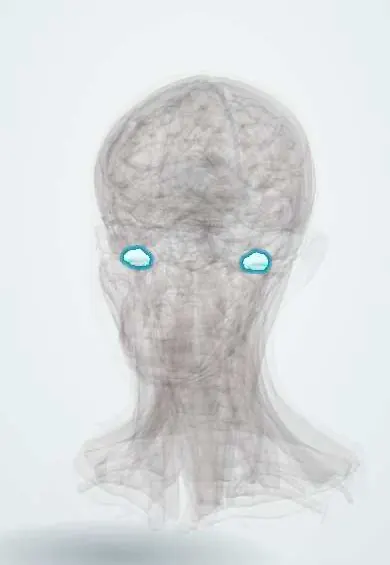
Representative model, for educational purposes only.