
Nasal septal perforation
A hole in the wall between the two sides of the nose, often after nose surgery, picking, cocaine or disease. It can cause crusts, nosebleeds and whistling.
What it is
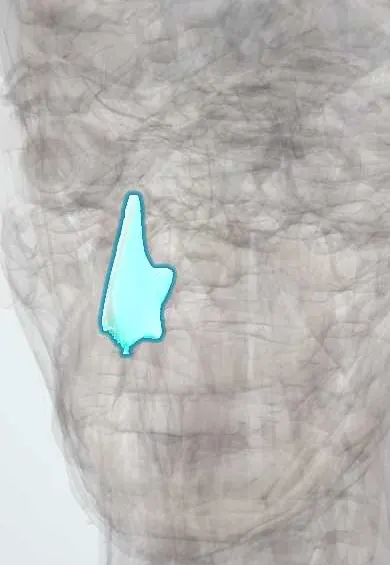
A full-thickness defect of the nasal septum that connects the two nasal cavities, most often in the anterior, cartilaginous part.
Who gets it
Found in about 1% of adults, often without symptoms. Prior septal surgery and nasal trauma are the most frequent causes; cocaine and nasal sprays are important causes in young adults. In Colombia and Latin America, mucocutaneous leishmaniasis, paracoccidioidomycosis, leprosy and tuberculosis are infectious causes to keep in mind.
Causes
- Iatrogenic: septoplasty and other nasal surgery, cautery for nosebleeds (especially on both sides), nasogastric tubes or nasal oxygen cannulas
- Trauma: nose picking, nasal fracture, an untreated septal haematoma or abscess
- Drugs and toxins: snorted cocaine and other drugs, overused decongestant or corticosteroid sprays aimed at the septum, chromium and other industrial fumes
- Inflammatory: granulomatosis with polyangiitis, sarcoidosis, relapsing polychondritis, lupus
- Infectious: syphilis, tuberculosis, leprosy, mucocutaneous leishmaniasis, paracoccidioidomycosis, invasive fungal infection
- Neoplastic: squamous cell carcinoma, extranodal NK/T-cell lymphoma
- Idiopathic
Risk factors
- Previous nasal surgery or cautery
- Cocaine use
- Long-term decongestant or corticosteroid nasal spray
- Habitual nose picking
- Occupational exposure to chromium, cement or glass dust
- Autoimmune or granulomatous disease
- Living in or travel to areas where leishmaniasis is endemic
Pathophysiology
Septal cartilage has no blood vessels of its own and is nourished by the mucoperichondrium covering both sides. When the lining of both sides is injured at the same point (opposed tears during surgery, bilateral cautery, a haematoma lifting the lining, or vasoconstriction from cocaine), the cartilage dies and a hole forms. Turbulent airflow over the edges dries the mucosa, causing crusts and bleeding, and the hole can slowly enlarge.
Classification
- By site: anterior (cartilaginous; most common and most symptomatic) or posterior (bony; often silent)
- By size: small (under about 1 cm), medium (1 to 2 cm) or large (over 2 cm)
- By cause: iatrogenic, traumatic, drug-related, inflammatory, infectious, neoplastic or idiopathic
Symptoms and signs
- Crusting
- Recurrent nosebleeds
- Nasal obstruction despite a wider airway
- Whistling when breathing (small anterior perforations)
- Dryness, foul discharge and discomfort
- Saddle nose deformity with large loss of support
- Many patients have no symptoms
Diagnosis
- Clinical
- Anterior rhinoscopy and nasal endoscopy show the defect, its size, site and edges; light shone into one nostril is seen through the other. The history covers surgery, trauma, cocaine and spray use, occupational exposure and systemic symptoms.
- Tests
- When the cause is unclear: blood count, ESR and CRP, ANCA (granulomatosis with polyangiitis), ACE (sarcoidosis), syphilis serology, urinalysis and urine toxicology; biopsy of an active-looking edge when inflammation, infection or cancer is suspected, with stains and cultures for mycobacteria, fungi and Leishmania.
- Imaging
- Not usually needed; sinus CT when sinonasal disease or a destructive lesion is suspected, and chest imaging when granulomatous disease is suspected.
Differential diagnosis
- Septal deviation
- Septal ulcer or erosion from sprays
- Rhinitis medicamentosa
- Atrophic rhinitis
- Anterior epistaxis from the Kiesselbach area
Goal of treatment
Control the cause, relieve crusting and bleeding, and close the hole only in symptomatic patients once the cause is controlled.
Treatment
- Conservative
- Most patients are managed with nasal hygiene: saline irrigation, humidification and emollient ointments to reduce crusts and bleeding, plus stopping cocaine, spray overuse and nose picking.
- Medical
- Treatment of the cause: immunosuppression for granulomatosis with polyangiitis and antimicrobials for syphilis, tuberculosis, leprosy or leishmaniasis; topical antibiotic ointment for infected crusts.
- Procedure
- A silicone septal button (obturator) closes the hole in patients who are not surgical candidates or prefer to avoid surgery; it can be custom-made from CT.
- Surgical
- Surgical repair with local mucosal advancement or rotation flaps, with or without an interposition graft, by otolaryngology or facial plastic surgery; results are best for perforations under about 2 cm and only after the cause is controlled and drug use has stopped.
- Follow-up
- Referral to otolaryngology for any symptomatic perforation, an unexplained cause, a growing defect, or suspected systemic or malignant disease.
Complications
- Recurrent nosebleeds
- Crusting with secondary infection
- Enlargement of the perforation
- Saddle nose deformity
- Persistent whistling and nasal obstruction
- Failure of the repair
Prognosis
Small, silent perforations may need nothing. Surgical closure succeeds in most well-selected patients, but large perforations and those with ongoing cocaine use or active vasculitis do poorly.
Test yourself
Think of the answer, then tap the question to see it.
Which part of the septum does tertiary syphilis destroy, and which part do cocaine and tuberculosis usually affect?
Syphilis destroys the bony septum; cocaine and tuberculosis typically affect the anterior cartilaginous septum.
Why does a small anterior septal perforation whistle?
Air passing through a small hole near the nostril creates turbulent flow that produces a whistling sound.
Why can an untreated septal haematoma end in a perforation?
Blood lifts the mucoperichondrium off cartilage that has no blood supply of its own, so the cartilage necroses (often with an abscess), leaving a hole and sometimes a saddle nose.
A patient has a septal perforation, sinusitis, haemoptysis and haematuria. What is the likely diagnosis and key test?
Granulomatosis with polyangiitis; PR3-ANCA (c-ANCA) and a tissue biopsy.
Which infections that destroy the nasal septum matter in Colombia?
Mucocutaneous leishmaniasis, paracoccidioidomycosis, leprosy, tuberculosis and syphilis.
In ENT
- Granulomatous diseases of the nose: leishmaniasis, leprosy, TB, syphilis, rhinoscleroma, rhinosporidiosis, GPA
- Septal surgery: septoplasty and submucous resection
Connections
Educational information, not medical advice. For any symptom, see a health professional.
Sources: Septal Perforation (StatPearls (NCBI Bookshelf), 2023).
Spotted a mistake?We are always improving for the community. Tell us what is wrong and our team will review it.Report a mistake
Representative model, for educational purposes only.