
Central sleep apnoea
During sleep the brain briefly stops sending the signal to breathe, so breathing pauses with no effort. It is common in heart failure and with opioids.
What it is
A sleep-related breathing disorder in which airflow stops or falls repeatedly during sleep because the respiratory drive from the brainstem pauses, with no breathing effort during the events. It is diagnosed when at least 5 central events per hour make up more than half of all events, with symptoms or a related condition.
Who gets it
Much less common than obstructive sleep apnoea in the general population, but frequent in certain groups: a large share of people with heart failure with reduced ejection fraction (Cheyne-Stokes breathing), people with atrial fibrillation or after stroke, many long-term opioid users, and nearly everyone sleeping at high altitude. It is more common in men and older adults. Colombia has large cities at high altitude, such as Bogotá.
Causes
- Heart failure, atrial fibrillation, stroke and kidney failure (Cheyne-Stokes breathing)
- Opioids and other respiratory depressants (sodium oxybate, sedatives)
- High altitude (periodic breathing)
- Brainstem lesions: stroke, tumour, Chiari malformation, multiple system atrophy and other neurodegenerative disease
- Treatment-emergent central apnoea when obstructive sleep apnoea is treated with positive airway pressure
- Neuromuscular disease and hypoventilation disorders (hypercapnic central events)
- Primary (idiopathic) central sleep apnoea, and central apnoea of prematurity and infancy
Risk factors
- Heart failure with reduced ejection fraction
- Atrial fibrillation
- Stroke
- Long-term opioid use, especially combined with benzodiazepines
- Sleeping at high altitude
- Male sex and older age
- Chronic kidney disease
Pathophysiology
Sleep removes the wakefulness drive, so breathing follows carbon dioxide alone, sensed by central chemoreceptors in the medulla and peripheral chemoreceptors in the carotid bodies → when arterial carbon dioxide falls below the apnoeic threshold, the brainstem stops the breathing signal until it rises again → high loop gain: in heart failure, congested lungs and sensitive chemoreceptors drive over-breathing and a slow circulation delays the feedback, so breathing overshoots, carbon dioxide falls below the threshold, a pause follows, carbon dioxide climbs, and the cycle repeats as crescendo-decrescendo Cheyne-Stokes breathing (periodic breathing at altitude works the same way, driven by low oxygen) → low drive: opioids, brainstem disease or neuromuscular disease blunt the controller, so breathing fades and carbon dioxide rises (hypercapnic form) → each event ends with an arousal and a sympathetic surge, which fragments sleep and strains the heart.
Classification
- Non-hypercapnic (high loop gain): Cheyne-Stokes breathing, high-altitude periodic breathing, primary central apnoea, treatment-emergent central apnoea
- Hypercapnic (low drive): opioid- or drug-induced, brainstem lesions, neuromuscular disease
- International Classification of Sleep Disorders groups: with Cheyne-Stokes breathing, due to a medical disorder without Cheyne-Stokes, high-altitude periodic breathing, due to a medication or substance, primary, treatment-emergent, and of infancy or prematurity
Symptoms and signs
- Frequent awakenings, insomnia and unrefreshing sleep
- Waking breathless at night (can be mistaken for paroxysmal nocturnal dyspnoea)
- Daytime sleepiness and fatigue, often milder than in obstructive apnoea
- Pauses in breathing seen by a bed partner, often with little or no snoring
- Poor concentration and morning headaches (more with hypercapnia)
- Cheyne-Stokes breathing, which can also appear while awake in severe heart failure
Diagnosis
- Clinical
- Suspected with insomnia, nocturnal awakenings or observed pauses in people with heart failure, atrial fibrillation, stroke, opioid use or recent ascent to altitude. The history checks medicines, heart disease and neurological symptoms.
- Tests
- Attended in-laboratory polysomnography with effort sensors (chest and abdominal belts, ideally oesophageal pressure) is the reference test: airflow stops without any breathing effort; Cheyne-Stokes breathing shows a crescendo-decrescendo cycle usually lasting 40 seconds or more. Home sleep tests cannot reliably separate central from obstructive events. Arterial blood gas or transcutaneous or end-tidal carbon dioxide separates hypercapnic from non-hypercapnic forms. Natriuretic peptides, an electrocardiogram and kidney function screen for heart and kidney disease; a drug screen or medication review checks opioids.
- Imaging
- Echocardiography to look for heart failure and measure ejection fraction, which changes treatment. Brain and cervical spine MRI when no cause is found or with neurological signs (Chiari malformation, brainstem lesion).
Differential diagnosis
- Obstructive sleep apnoea (breathing effort continues during the events)
- Obesity hypoventilation syndrome and sleep-related hypoventilation from neuromuscular disease
- Paroxysmal nocturnal dyspnoea from heart failure
- Insomnia disorder
- Nocturnal panic attacks
- Narcolepsy and other causes of daytime sleepiness
Pauses in sleep: central or obstructive?
| Condition | Breathing effort during events | Carbon dioxide | Typical patient |
|---|---|---|---|
| Central apnoea, high loop gain (Cheyne-Stokes) | Absent; crescendo-decrescendo cycles lasting 40 seconds or more | Normal or low | Heart failure, atrial fibrillation, stroke, high altitude |
| Central apnoea, low drive | Absent or weak; slow, irregular, shallow breathing | High (hypercapnic) | Opioids with sedatives, brainstem lesion, neuromuscular disease |
| Obstructive sleep apnoea | Present and rising against a closed airway | Normal while awake | Obesity, loud snoring, large neck |
| Obesity hypoventilation syndrome | Present but too little | High while awake (PaCO2 above 45 mmHg) | Severe obesity, raised bicarbonate, often with obstructive apnoea |
Goal of treatment
Treat the cause first, stabilise breathing during sleep to improve sleep and daytime function, and choose therapies that are safe for the heart.
Treatment
- Medical
- Optimise the underlying disease: full guideline treatment of heart failure (including cardiac resynchronisation when indicated), control of atrial fibrillation, and treatment of kidney failure; Cheyne-Stokes breathing often improves as heart function improves.
- Medical
- Reduce or taper opioids and stop other respiratory depressants where possible.
- Conservative
- Continuous positive airway pressure is a common first step in non-hypercapnic central apnoea, especially with coexisting obstructive events; bilevel pressure with a backup rate is used for hypercapnic forms.
- Conservative
- Adaptive servo-ventilation stabilises breathing in Cheyne-Stokes, opioid-induced and treatment-emergent central apnoea, but it is contraindicated in symptomatic heart failure with an ejection fraction of 45% or less, where a large trial showed higher cardiovascular death.
- Medical
- Nocturnal oxygen can reduce Cheyne-Stokes breathing in heart failure; acetazolamide helps high-altitude periodic breathing and some primary central apnoea; theophylline is rarely used.
- Surgical
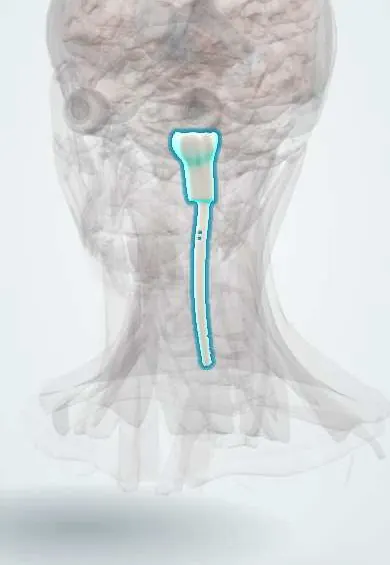
- Transvenous phrenic nerve stimulation: an implanted device stimulates a phrenic nerve during sleep to restore diaphragm contraction, for moderate to severe central apnoea in selected adults.
- Lifestyle
- Descend from altitude or acclimatise gradually; avoid alcohol and sedatives at night; sleeping on the side can reduce events in some people.
Complications
- Worsening heart failure, with higher hospital admission and death rates
- Atrial and ventricular arrhythmias
- Insomnia, daytime sleepiness and accidents
- Hypertension and sympathetic overactivity
- Opioid-related respiratory depression and death when drugs are combined
Common traps
- Central apnoea is obstructive apnoea without snoring: the defining sign is absent breathing effort on the chest and abdominal belts during the event
- A home sleep test is enough to diagnose it: most home devices cannot reliably measure effort; attended polysomnography with effort sensors is needed
- Adaptive servo-ventilation is the best device for Cheyne-Stokes breathing in heart failure: it is contraindicated in symptomatic heart failure with an ejection fraction of 45% or less, where it raised cardiovascular death
- Waking breathless at night in heart failure is always paroxysmal nocturnal dyspnoea: it can be the arousal and over-breathing after a central apnoea; a sleep study separates them
- Oxygen fixes every central apnoea: it can steady high-gain Cheyne-Stokes breathing, but low-drive hypercapnic forms need ventilatory support with a backup rate
Prognosis
Depends on the cause. Central apnoea in heart failure marks a worse cardiac outlook, and it improves as the heart failure is treated. Opioid-induced apnoea improves with dose reduction, high-altitude breathing settles on descent or with acclimatisation, and treatment-emergent apnoea often fades over a few months of continued positive airway pressure.
Test yourself
Think of the answer, then tap the question to see it.
On polysomnography, what separates a central apnoea from an obstructive one?
In a central apnoea there is no breathing effort (flat chest and abdominal belts); in an obstructive apnoea effort continues against a closed airway.
What is Cheyne-Stokes breathing?
A waxing-waning (crescendo-decrescendo) pattern of breathing alternating with central apnoeas, typical of heart failure with a long cycle.
In which group is adaptive servo-ventilation contraindicated?
Symptomatic heart failure with an ejection fraction of 45% or less, because it increased cardiovascular death in the SERVE-HF trial.
Why does a fall in arterial carbon dioxide during sleep stop breathing?
During sleep breathing depends on carbon dioxide; when it falls below the apnoeic threshold, the medulla stops the drive until it rises again.
A 68-year-old with heart failure (ejection fraction 30%) wakes breathless at night. Polysomnography shows waxing-waning breathing with pauses and flat effort belts. What is it, and what comes first?
Central apnoea with Cheyne-Stokes breathing. First optimise heart failure treatment; CPAP or nocturnal oxygen may help, but adaptive servo-ventilation is contraindicated at an ejection fraction of 45% or less.
In neurology
Connections
Educational information, not medical advice. For any symptom, see a health professional.
Sources: Central Sleep Apnea (StatPearls (NCBI Bookshelf), 2023); Cheyne-Stokes Respirations (StatPearls (NCBI Bookshelf), 2026).
Spotted a mistake?We are always improving for the community. Tell us what is wrong and our team will review it.Report a mistake
Representative model, for educational purposes only.