
Hypopharyngeal cancer
Throat cancer just behind the voice box, mostly from smoking and alcohol. It hides until late, so ongoing trouble swallowing or ear pain needs checking.
What it is
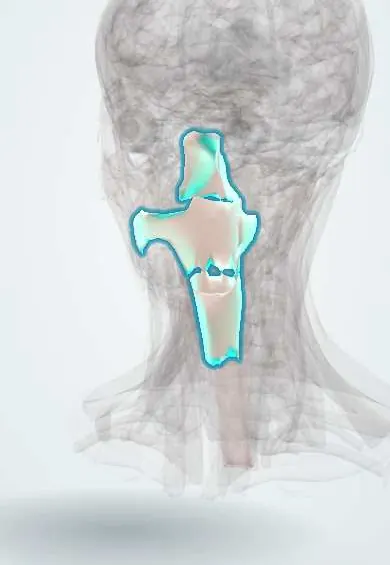
Malignant tumor, almost always squamous cell carcinoma, of the hypopharynx: the pyriform sinuses, the postcricoid area and the posterior pharyngeal wall, from the hyoid level to the lower border of the cricoid cartilage. It has the worst prognosis of head and neck sites because it is silent early and spreads to the neck nodes.
Who gets it
Accounts for a small share of head and neck cancers, mostly men aged 50 to 70 with heavy smoking and drinking. The pyriform sinus is the most common subsite in most regions; postcricoid cancer is classically seen in women with Plummer-Vinson syndrome, more often in regions with iron deficiency. Most patients present at stage III or IV.
Causes
- Tobacco and alcohol, with a synergistic effect
- Plummer-Vinson (Paterson-Brown-Kelly) syndrome: iron deficiency anemia, dysphagia and postcricoid esophageal webs, a precancerous condition for postcricoid cancer
- Field cancerization: second primary tumors in the head and neck, lung and esophagus
- Possible roles of gastroesophageal reflux and nutritional deficiency; HPV is much less relevant here than in the oropharynx
Risk factors
- Heavy smoking and alcohol use
- Male sex and age over 50
- Iron deficiency anemia with Plummer-Vinson syndrome (women, postcricoid)
- Previous head and neck cancer
- Poor diet and low socioeconomic status
Pathophysiology
The hypopharynx has a rich lymphatic network and no anatomic barriers, so tumors spread submucosally and early to levels II to IV neck nodes (often bilateral for posterior wall and postcricoid tumors) and paratracheal nodes. The pyriform sinus lies lateral to the larynx between the aryepiglottic fold and the thyroid cartilage, so tumors invade the larynx and the thyroid cartilage and fix the vocal cord. Referred otalgia arises through the vagus nerve (Arnold's nerve) and the glossopharyngeal nerve. Postcricoid and lower tumors extend into the cervical esophagus.
Classification
- Subsites: pyriform sinus (most common), postcricoid area, posterior pharyngeal wall
- T stage (AJCC): T1 one subsite and 2 cm or less; T2 more than one subsite or 2 to 4 cm without hemilarynx fixation; T3 more than 4 cm, hemilarynx fixation or esophageal extension; T4 invasion of cartilage, thyroid, soft tissue, prevertebral fascia or carotid
- Histology: squamous cell carcinoma in over 95%
Symptoms and signs
- Persistent sore throat or foreign-body sensation
- Progressive dysphagia for solids, then liquids, and odynophagia
- Referred otalgia with a normal ear examination
- Neck mass (often the first sign)
- Hoarseness from laryngeal invasion or recurrent laryngeal nerve involvement
- Weight loss, aspiration and cough when eating
- Hemoptysis or stridor in advanced cases
Diagnosis
- Clinical
- Flexible nasolaryngoscopy shows the lesion and pooling of saliva in the pyriform sinus; look for vocal cord fixation. Examine the neck: laryngeal crepitus can be lost in postcricoid cancer. A lymph node in the neck of an adult smoker must be investigated before excision.
- Tests
- Biopsy under general anesthesia with panendoscopy (laryngoscopy, esophagoscopy, sometimes bronchoscopy) to map extent and search for synchronous tumors. Fine-needle aspiration of neck nodes. Complete blood count and iron studies if Plummer-Vinson is suspected. Nutritional and dental assessment before treatment.
- Imaging
- Contrast CT or MRI of the neck for local extent and cartilage invasion; CT of the chest or PET-CT for distant metastasis and second primaries. A barium swallow can show the mass or the postcricoid web in Plummer-Vinson syndrome.
Differential diagnosis
- Laryngeal cancer (supraglottic) and cervical esophageal cancer
- Zenker diverticulum
- Plummer-Vinson web without cancer
- Gastroesophageal or laryngopharyngeal reflux
- Globus pharyngeus (diagnosis of exclusion)
- Neck node metastasis from another primary or lymphoma
Goal of treatment
Cure with the best possible preservation of swallowing, voice and airway, decided by a multidisciplinary head and neck tumor board.
Treatment
- Procedure
- Refer urgently to otolaryngology–head and neck surgery any adult with persistent dysphagia, otalgia with a normal ear, or a neck mass; secure the airway (sometimes tracheostomy) and nutrition (nasogastric tube or gastrostomy) when needed.
- Medical
- Early stage (T1–T2, small nodal burden): radiotherapy alone, or transoral surgery with neck dissection, aiming to preserve the larynx.
- Surgical
- Advanced resectable disease: total laryngectomy with partial or total pharyngectomy and bilateral neck dissection, with flap reconstruction, followed by radiotherapy or chemoradiotherapy; total pharyngolaryngo-esophagectomy for postcricoid tumors extending into the esophagus.
- Medical
- Larynx preservation: concurrent chemoradiotherapy with a platinum drug (cisplatin), or induction chemotherapy then radiotherapy in selected patients, keeping salvage surgery for residual disease.
- Rehabilitation
- Swallowing and voice rehabilitation with speech therapy; tracheoesophageal voice prosthesis after laryngectomy. Treat iron deficiency and dilate webs in Plummer-Vinson syndrome, with endoscopic surveillance.
- Follow-up
- Smoking and alcohol cessation, and follow-up with endoscopy for recurrence and second primaries, plus thyroid function after neck radiation.
Complications
- Airway obstruction
- Aspiration pneumonia and malnutrition
- Carotid blowout in advanced or irradiated disease
- Pharyngocutaneous fistula after surgery
- Hypothyroidism and stricture after radiotherapy
- Distant metastasis (lung) and second primary tumors
Prognosis
The poorest of head and neck squamous cell cancers: five-year survival around 30 to 40% overall, better in early stages. Nodal disease and late presentation drive outcomes.
Test yourself
Think of the answer, then tap the question to see it.
A 60-year-old heavy smoker and drinker has right otalgia with a normal otoscopy, dysphagia and a neck mass. Which site should be examined?
The hypopharynx, especially the pyriform sinus (referred otalgia through the vagus nerve).
Which syndrome predisposes to postcricoid carcinoma and what are its features?
Plummer-Vinson syndrome: iron deficiency anemia, dysphagia and esophageal webs, mostly in middle-aged women.
What is the most common subsite of hypopharyngeal cancer?
The pyriform sinus.
Why does hypopharyngeal cancer have a poor prognosis?
It is silent until late, spreads submucosally and has early, often bilateral, neck node metastasis.
Which nonsurgical strategy is used to try to preserve the larynx in advanced hypopharyngeal cancer?
Concurrent platinum-based chemoradiotherapy, or induction chemotherapy followed by radiotherapy, with salvage surgery if needed.
In ENT
Connections
Educational information, not medical advice. For any symptom, see a health professional.
Sources: Hypopharyngeal Cancer (StatPearls (NCBI Bookshelf), 2025); Plummer-Vinson Syndrome (StatPearls (NCBI Bookshelf), 2026).
Spotted a mistake?We are always improving for the community. Tell us what is wrong and our team will review it.Report a mistake
Representative model, for educational purposes only.