
Ingested foreign bodies: button batteries, magnets, sharp objects, food bolus and drug packets
Most swallowed objects pass on their own, but a button battery or two magnets can burn or pierce the gut within hours. What was swallowed sets the urgency.
What it is
Swallowing an object or food that does not pass normally through the gut. Most ingestions are accidental in children between about six months and six years; in adults they are mostly food boluses stuck above an oesophageal narrowing, and deliberate ingestions in people with psychiatric illness, intellectual disability, in prisons or by drug smugglers. Around four in five objects pass spontaneously; a minority need endoscopic removal and very few need surgery. The danger depends on what the object is (battery, magnet, sharp, long, drug packet) and where it stops.
Who gets it
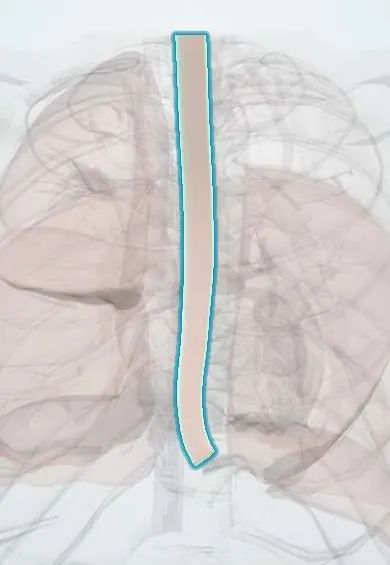
Foreign-body ingestion is one of the commonest paediatric emergencies; coins are the most frequent object in children, and button batteries and high-powered magnets cause most of the serious injuries and deaths. In adults, food bolus impaction, often with meat and an underlying oesophageal disease, is the most common presentation. In Colombia, internal drug smuggling (body packing) is seen at airports and ports, and fish and chicken bones are common causes in adults.
Causes
- Accidental ingestion by young children exploring with their mouths (coins, toys, button batteries, magnets)
- Food bolus impaction in adults over an oesophageal narrowing: eosinophilic oesophagitis, Schatzki ring, peptic stricture, cancer or a motility disorder
- Bones and dentures in older adults and denture wearers, who have poor palatal sensation
- Deliberate ingestion by people with psychiatric illness, intellectual disability, or in prisons, often of multiple or sharp objects
- Body packing: smuggling of wrapped drug packets (usually cocaine or heroin) in the gut; body stuffing: hasty swallowing of poorly wrapped drugs to avoid arrest
Risk factors
- Age between about six months and six years
- Underlying oesophageal disease (eosinophilic oesophagitis, strictures, achalasia, previous surgery)
- Psychiatric illness, intellectual disability, autism, dementia and alcohol intoxication
- Dentures and poorly chewed meat
- Imprisonment and drug trafficking
Pathophysiology
Button battery: moist mucosa closes the circuit → hydroxide forms at the negative pole → liquefactive (alkaline) burn within about two hours → full-thickness necrosis → perforation, mediastinitis, tracheo-oesophageal fistula or, days to weeks later, a fatal aorto-oesophageal fistula; the burn continues even after a 'dead' battery is removed. Several magnets (or a magnet and a metal object) in different loops → they attract through the bowel walls → pressure necrosis → fistula, perforation, obstruction or volvulus. Sharp or long objects → fail to turn the duodenal loop or ileocaecal valve → pierce the wall → perforation and abscess. Food bolus → complete oesophageal obstruction → cannot swallow saliva → aspiration risk and, if prolonged, pressure necrosis. Drug packet → obstruction or rupture → massive absorption of the drug → potentially fatal toxicity.
Classification
- By object: blunt (coins, small toys), button batteries, magnets, sharp-pointed (bones, pins, razor blades, toothpicks), long (over about 5 to 6 cm in adults), food bolus, drug packets, caustic or toxic substances
- By site: oropharynx and hypopharynx, oesophagus (upper, middle, lower), stomach, duodenum, small bowel, colon and rectum
- By urgency: emergency (oesophageal button battery, any object causing complete oesophageal obstruction, sharp object in the oesophagus, multiple magnets within reach), urgent, or non-urgent (small blunt object in the stomach in a well patient)
- Radio-opaque (metal, many bones, glass) versus radiolucent (fish bones, plastic, wood, aluminium, food)
Symptoms and signs
- Often none: the ingestion may be unwitnessed, especially in toddlers
- Oesophageal object: dysphagia, pain on swallowing, retrosternal pain, a feeling of something stuck, which the patient often localises
- Complete oesophageal obstruction: drooling and inability to swallow saliva, retching and spitting
- Children: refusal to eat, drooling, vomiting, irritability, stridor, cough or wheeze (the oesophagus presses on the trachea)
- Lower down: abdominal pain, vomiting, distension or blood in vomit or stool suggest obstruction, perforation or erosion
- Body packers: usually without symptoms until a packet obstructs (pain, vomiting) or ruptures (agitation, tachycardia, hyperthermia and seizures with cocaine; reduced consciousness and breathing with heroin)
Diagnosis
- Clinical
- Take the history from the patient or witnesses: what, when, how many, and since then any symptoms. Look for drooling, stridor, neck swelling or crepitus, and signs of peritonitis. In an unwitnessed toddler with sudden drooling, refusal of food or new wheeze, consider ingestion (and aspiration). Ask about previous food impactions, which suggest an underlying oesophageal disease.
- Tests
- Usually none are needed for uncomplicated ingestions. Blood tests and blood gas if perforation, sepsis or toxicity is suspected; toxicology screening in suspected body packers with symptoms. Biopsies of the oesophagus taken at endoscopy after a food bolus, to look for eosinophilic oesophagitis.
- Imaging
- Plain X-rays from neck to anus (front and side views) locate radio-opaque objects. A button battery shows a double ring or halo on the front view and a step-off at its edge on the side view, which tells it from a coin. A coin in the oesophagus lies face-on on the front view. A normal X-ray does not exclude fish bones, plastic, wood or food. CT finds radiolucent objects, perforation, abscess and drug packets. Barium swallows are avoided, as barium coats the oesophagus, hampers endoscopy and is dangerous if aspirated. Flexible endoscopy is both diagnostic and therapeutic.
Differential diagnosis
- Foreign-body aspiration into the airway (stridor, wheeze, unilateral reduced breath sounds)
- Caustic ingestion
- Pharyngitis, peritonsillar or retropharyngeal abscess (pain on swallowing, drooling)
- Oesophageal perforation or Boerhaave syndrome
- Eosinophilic oesophagitis, stricture or oesophageal cancer presenting with dysphagia
- Acute coronary syndrome (retrosternal pain)
What was swallowed sets the clock
| Object | Why it is dangerous | Classic clue | What to do |
|---|---|---|---|
| Button battery | Alkaline burn within about two hours; late aorto-oesophageal fistula | Double ring (halo) on front X-ray, step-off on side view | Oesophagus: emergency endoscopic removal; beyond: case-by-case, by age, size and symptoms |
| Two or more magnets | Attract across bowel walls: necrosis, fistula, perforation | Several metal objects stuck together on X-ray | Remove while within endoscopic reach; surgery if past it and not moving or symptomatic |
| Sharp or long object | Pierces the wall, especially at the duodenum and ileocaecal valve | Bone, pin, blade, toothpick; long object over about 5 to 6 cm | Endoscopic removal if within reach; serial X-rays, surgery if symptoms |
| Food bolus | Complete obstruction, aspiration, underlying oesophageal disease | Adult with meat, cannot swallow saliva | Endoscopy (urgent if obstruction complete), biopsies for eosinophilic oesophagitis |
| Coin or small blunt object | Usually passes once in the stomach | Face-on disc in the oesophagus on front X-ray | Remove from the oesophagus; in the stomach, usually observe |
| Drug packets | Rupture causes massive overdose; obstruction | Traveller, multiple uniform oval packets on X-ray or CT | Observe in hospital; never endoscopy; surgery for obstruction or rupture |
Goal of treatment
Protect the airway, identify the object and its position quickly, remove the dangerous ones before they cause damage, let the harmless ones pass safely, and treat the condition that made the food stick or the reason the object was swallowed.
Treatment
- Acute
- Airway first: a child or adult who cannot breathe or speak has an airway foreign body and needs choking manoeuvres, not an oesophageal work-up. Nil by mouth and suction for a patient who cannot swallow saliva.
- Procedure
- Button battery in the oesophagus: emergency endoscopic removal, ideally within two hours; in a child over one year seen within about twelve hours, honey or sucralfate by mouth on the way to the endoscopy may slow the burn, on poison-centre or specialist advice. After removal, inspect the burn and plan follow-up imaging for late fistula.
- Procedure
- Flexible (or rigid) endoscopy to remove sharp objects in the oesophagus, multiple magnets, long objects and objects stuck in the oesophagus, using nets, baskets, graspers and a protective overtube or hood for sharp edges. Food bolus: endoscopic removal or gentle push into the stomach, urgently if obstruction is complete.
- Follow-up
- Small blunt objects in the stomach or beyond in a well patient: allow normal diet and follow passage with serial X-rays; return at once for pain, vomiting, fever or bleeding. Body packers without symptoms: admission, observation and imaging until all packets have passed.
- Surgical
- Surgery for perforation, obstruction, failure of a dangerous object to progress beyond endoscopic reach, magnets causing symptoms, and body packers with obstruction or with a ruptured packet (urgent laparotomy to remove all packets).
- Medical
- After a food bolus: treat the underlying cause (acid suppression for peptic stricture or eosinophilic oesophagitis, topical corticosteroids or diet for eosinophilic oesophagitis, dilatation of a ring or stricture). Treat drug toxicity in a ruptured body packer (benzodiazepines and cooling for cocaine, naloxone for opioids).
Complications
- Oesophageal perforation, mediastinitis and abscess
- Tracheo-oesophageal and aorto-oesophageal fistula after button batteries (often fatal)
- Oesophageal stricture after a battery burn
- Bowel perforation, fistula, volvulus or obstruction from magnets or sharp objects
- Aspiration pneumonia
- Fatal drug toxicity after packet rupture
- Complications of endoscopy or surgery
Common traps
- A button battery on the X-ray is just a coin: look for the double ring (halo) on the front view and the step-off on the side view; a battery in the oesophagus needs removal within hours, a coin does not
- A child who looks well after swallowing a battery can wait for symptoms: the burn starts within about two hours and at first children often look normal; remove it now
- One magnet and two magnets are the same: a single small magnet usually passes, but two or more attract through bowel walls and can perforate, so they are removed while within reach
- A normal X-ray rules out a fish bone: fish bones, plastic, wood and food are often invisible; with persistent symptoms, CT or endoscopy is needed
- Drug packets should be removed with the endoscope: grasping a packet can rupture it and cause a fatal overdose; body packers are observed or operated on, never scoped for the packets
Prognosis
Excellent for most ingestions, which pass without harm. Button batteries and magnets are the exceptions, with lasting injuries and deaths in young children, often when the ingestion was unwitnessed or diagnosed late. Recurrent food boluses usually stop once the underlying oesophageal disease is treated.
Prevention
- Keep button batteries and high-powered magnets out of children's reach; use products with secured battery compartments
- Teach parents that a swallowed battery is an emergency, even if the child seems well
- Investigate every adult food bolus impaction with biopsies to find eosinophilic oesophagitis or a stricture
- Chew well, take small bites, and be careful with bony fish and chicken, especially with dentures
- Supervision and psychiatric care for people who ingest objects repeatedly
Test yourself
Think of the answer, then tap the question to see it.
A 2-year-old drools and refuses food. Front X-ray shows a round disc in the oesophagus with a double-ring edge. What is it and how urgent?
A button battery in the oesophagus. Emergency endoscopic removal, ideally within two hours, because the battery produces an alkaline burn that can perforate and later erode the aorta.
Why are two magnets far more dangerous than one?
Two magnets in different loops attract each other through the bowel walls, squeezing the tissue between them until it dies, causing fistula, perforation or volvulus; one magnet alone usually passes.
A 30-year-old man has a meat bolus stuck for the third time this year. What should be done at endoscopy beyond removing it?
Take oesophageal biopsies: recurrent food impaction in a young man is classic for eosinophilic oesophagitis, which needs treatment to stop recurrences.
A traveller is found to have many uniform oval packets in the bowel on CT. Why is endoscopic removal avoided?
Grasping or cutting a packet can rupture it, releasing a lethal drug dose. Asymptomatic body packers are observed until the packets pass; surgery is for obstruction or rupture.
Why is a barium swallow avoided when an oesophageal foreign body is suspected?
Barium coats the oesophagus and the object, making endoscopy harder, and it is harmful if aspirated or if there is a perforation; CT or direct endoscopy is preferred.
Connections
Educational information, not medical advice. For any symptom, see a health professional.
Sources: Gastrointestinal Foreign Body (StatPearls (NCBI Bookshelf), 2025); Disk Battery Ingestion (StatPearls (NCBI Bookshelf), 2023); Pediatric Foreign Body Ingestion (StatPearls (NCBI Bookshelf), 2025); Esophageal Foreign Body (StatPearls (NCBI Bookshelf), 2026); Foreign object - swallowed: MedlinePlus Medical Encyclopedia (MedlinePlus (U.S. National Library of Medicine), 2025).
Spotted a mistake?We are always improving for the community. Tell us what is wrong and our team will review it.Report a mistake
Representative model, for educational purposes only.