
Retropharyngeal abscess
A pus collection behind the throat, mainly in young children, that causes fever, neck stiffness and trouble swallowing and can block the airway.
Quick facts
- Key signs
- Fever and irritability · Pain or difficulty swallowing
- Diagnosis
- Contrast-enhanced CT of the neck
Red flags ↓
No doses: the clinician sets them by the current guideline.
What it is
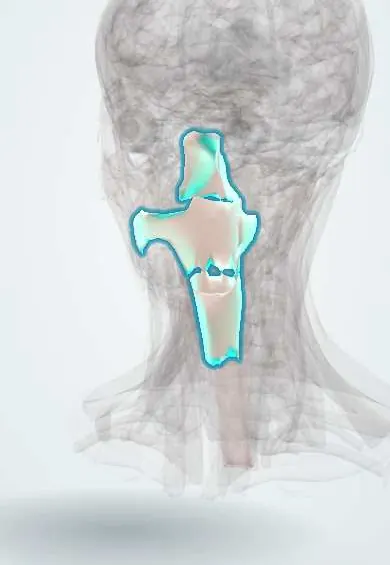
A retropharyngeal abscess is a collection of pus in the retropharyngeal space, between the pharyngeal constrictor muscles and the prevertebral fascia. It is a deep neck infection that can obstruct the airway and spread down into the mediastinum.
Who gets it
Mostly seen in children under 5 years, because the retropharyngeal lymph nodes are prominent at this age and later regress. In older children and adults it usually follows trauma to the back of the throat (falls with an object in the mouth, fish bones, instrumentation) or spreads from other neck infections. More common in boys.
Causes
- Suppuration of retropharyngeal lymph nodes after an upper respiratory infection, pharyngitis or otitis (most common in children)
- Penetrating injury of the posterior pharyngeal wall, foreign bodies or endoscopy and intubation
- Spread from dental, tonsillar or peritonsillar infections
- Usually polymicrobial: group A streptococcus, Staphylococcus aureus (including MRSA) and respiratory anaerobes; tuberculosis rarely
Risk factors
- Age under 5 years
- Recent upper respiratory infection, pharyngitis or otitis media
- Trauma to the posterior pharynx
- Immunosuppression, diabetes and poor dental health in adults
Pathophysiology
Retropharyngeal lymph nodes drain the nose, sinuses, adenoids, pharynx and middle ear. Infection of these nodes in early childhood can suppurate, first as cellulitis (phlegmon) and then as an abscess. The space extends from the skull base to the upper mediastinum, so pus can track down into the chest, and the bulge pushes the posterior pharyngeal wall forward toward the airway.
Classification
- Retropharyngeal cellulitis or phlegmon (no drainable pus)
- Retropharyngeal abscess (organised collection with an enhancing wall)
- Paediatric (lymph node) or adult (traumatic or spread from nearby infections)
Symptoms and signs
- Fever and irritability, often after a cold or sore throat
- Pain or difficulty swallowing, refusing to eat and drooling
- Neck stiffness or pain, with reluctance to extend the neck (torticollis-like posture)
- Muffled voice and noisy breathing
- Bulge of the posterior pharyngeal wall on examination (not always visible)
Diagnosis
- Clinical
- Suspected in a febrile young child with neck stiffness, dysphagia and drooling. The throat is examined gently, keeping the child calm and without forcing the mouth open if the airway is at risk.
- Tests
- Blood count and inflammatory markers; blood cultures if septic; culture of the drained pus to guide antibiotics.
- Imaging
- A lateral neck radiograph in extension and inspiration may show widened prevertebral soft tissue (in children, more than about 7 mm at C2 or 14 mm at C6), sometimes with gas. Contrast-enhanced CT of the neck confirms the abscess, separates it from cellulitis and shows extent toward the mediastinum.
Differential diagnosis
- Epiglottitis and bacterial tracheitis
- Peritonsillar and parapharyngeal abscess
- Croup
- Meningitis (neck stiffness)
- Kawasaki disease with retropharyngeal oedema, and cervical spine injury or osteomyelitis
Febrile child with drooling or noisy breathing: which one is it?
| Condition | Typical age | Story | Telling signs | Imaging clue |
|---|---|---|---|---|
| Retropharyngeal abscess | Under 5 years | Days after a cold or sore throat | Drooling, dysphagia, neck stiffness, will not extend the neck, muffled voice | Wide prevertebral soft tissue on lateral film; contrast CT confirms |
| Epiglottitis | Unvaccinated child or, now more often, an adult | Hours, with a toxic high fever | Sits upright leaning forward, drooling, stridor, cannot swallow | Swollen epiglottis (thumb sign); the airway is secured before any imaging |
| Peritonsillar abscess | Adolescent or young adult | After tonsillitis | Trismus, bulging soft palate on one side, uvula pushed to the other side, hot-potato voice | Usually clinical; ultrasound or CT if unclear |
| Croup | 6 months to 3 years | Gradual, after coryza, worse at night | Barking cough, inspiratory stridor, hoarse voice, no drooling | Subglottic narrowing (steeple sign); imaging rarely needed |
Goal of treatment
Secure the airway, control the infection with antibiotics, drain the pus when needed and prevent spread to the mediastinum and great vessels.
Treatment
- Acute
- Airway first: keep the child calm and upright, give oxygen, and have experienced staff ready to intubate or perform a surgical airway; refer urgently to ENT and admit.
- Medical
- Empirical intravenous antibiotics covering streptococci, Staphylococcus aureus and anaerobes (for example an aminopenicillin with a beta-lactamase inhibitor or clindamycin, adding coverage for MRSA where common), adjusted to cultures; small collections and phlegmons often respond to antibiotics alone.
- Surgical
- Surgical drainage, usually through the mouth, for large abscesses, airway compromise or failure to improve after 24 to 48 hours of antibiotics; external neck approach for collections extending laterally or downward.
- Follow-up
- Monitoring of airway, hydration and fever; repeat CT if there is no improvement.
Complications
- Upper airway obstruction
- Rupture with aspiration of pus and pneumonia
- Descending mediastinitis
- Internal jugular vein thrombosis (Lemierre syndrome) or carotid artery erosion
- Sepsis, epidural abscess and atlantoaxial instability (Grisel syndrome)
Common traps
- A normal-looking throat rules it out: the posterior bulge is often not visible, so fever, neck stiffness, drooling and refusal to eat in a young child need imaging
- Fever with a stiff neck in a child means meningitis: in retropharyngeal abscess the child resists extending the neck and has dysphagia and drooling, pointing to the throat rather than the meninges
- Any wide prevertebral shadow on the lateral film is diagnostic: a film taken with the neck flexed, in expiration or in a crying child can look falsely wide; the film must be taken in extension and inspiration, and contrast CT confirms
- Every retropharyngeal collection needs surgery: cellulitis and small abscesses often settle with intravenous antibiotics; drainage is for large collections, airway compromise or no improvement after 24 to 48 hours
- Adults get it the same way as children: the retropharyngeal nodes regress after early childhood, so in adults it usually follows pharyngeal trauma, instrumentation or spread from dental and tonsillar infection
Prognosis
With early diagnosis, antibiotics and drainage when needed, most children recover fully. Delays allow mediastinitis or vascular complications, which carry a significant mortality.
Test yourself
Think of the answer, then tap the question to see it.
A 3-year-old has fever, drooling and refuses food a few days after a cold, and will not look up. Which diagnosis fits, and which test confirms it?
Retropharyngeal abscess. A lateral neck film may show wide prevertebral tissue; contrast CT of the neck confirms it, separates abscess from cellulitis and shows its extent.
Why is this infection rare in school-age children and adults who have had no throat injury?
The retropharyngeal lymph nodes that suppurate regress after early childhood, so later cases usually follow trauma, instrumentation or spread from nearby infection.
A child treated for retropharyngeal abscess develops chest pain, dyspnoea and a widened mediastinum. What has happened?
Pus has tracked down the retropharyngeal space into the chest: descending mediastinitis, a surgical emergency.
CT shows a small retropharyngeal phlegmon in a stable child. What is the initial plan?
Admission, intravenous antibiotics covering streptococci, S. aureus and anaerobes, airway monitoring, and drainage if there is no improvement within 24 to 48 hours.
Why should the mouth not be forced open in a drooling child with a suspected deep neck infection?
Distress and forced examination can tip a narrowed airway into obstruction; the child is kept calm and upright with airway experts ready.
In ENT
In emergency medicine
- Sore throat with danger signs: epiglottitis, abscess, airway
- The child with noisy breathing: croup, bronchiolitis, asthma or a foreign body
In pediatrics
- The child with a sore throat: viral or streptococcal?
- Stridor: croup, epiglottitis, foreign body and abscess
Connections
Educational information, not medical advice. For any symptom, see a health professional.
Sources: Retropharyngeal Abscess (StatPearls (NCBI Bookshelf), 2024).
Spotted a mistake?We are always improving for the community. Tell us what is wrong and our team will review it.Report a mistake
Representative model, for educational purposes only.