
Meconium ileus and meconium plug syndrome
A newborn's first stool is so thick it blocks the bowel. In meconium ileus the cause is almost always cystic fibrosis, so the baby must be tested.
What it is
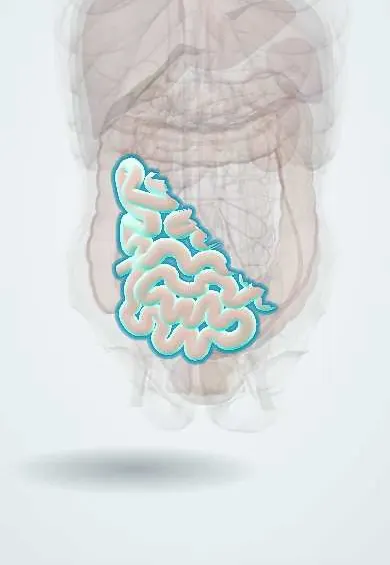
Meconium ileus is a blockage of the end of the small bowel (terminal ileum) at birth by abnormally thick, sticky meconium; it is the earliest sign of cystic fibrosis. Meconium plug syndrome is a milder, temporary blockage of the colon by a plug of meconium, usually in premature babies or infants of diabetic mothers, which passes after a contrast enema.
Who gets it
Meconium ileus affects about one in six or seven newborns with cystic fibrosis, and the large majority of babies with meconium ileus have cystic fibrosis. Around half are complicated by volvulus, atresia, perforation or meconium peritonitis. Meconium plug syndrome is more common, seen especially in preterm infants, infants of diabetic mothers and after maternal magnesium sulphate. Cystic fibrosis is less common in Latin America than in northern Europe but is under-diagnosed; Colombia's newborn screening law (Ley 1980 of 2019) is extending screening to more conditions, including cystic fibrosis, but coverage is still uneven, so every baby with meconium ileus needs a sweat test or genetic test whatever the screening result.
Causes
- Meconium ileus: cystic fibrosis (CFTR variants) in the great majority
- Meconium ileus without cystic fibrosis: rare, in some preterm or very low birthweight infants and with pancreatic anomalies
- Meconium plug: prematurity and immature bowel motility
- Meconium plug: maternal diabetes (small left colon syndrome) and maternal magnesium sulphate
- Meconium plug: Hirschsprung disease in a notable minority, and occasionally cystic fibrosis or hypothyroidism
Risk factors
- Family history of cystic fibrosis or a sibling with meconium ileus
- Both parents carriers of a CFTR variant
- Prematurity and low birthweight
- Maternal diabetes
- Maternal magnesium sulphate or opioid exposure before birth
Pathophysiology
Faulty CFTR channel → less chloride and water secreted into the bowel and pancreatic ducts → pancreatic enzymes already reduced before birth → meconium is dehydrated and rich in protein → it becomes thick and sticky → it lodges in the terminal ileum, the narrowest point → the ileum above dilates, packed with putty-like meconium → the colon below receives nothing and stays narrow (microcolon). If the heavy, distended loop twists or perforates before birth → volvulus, atresia or sterile meconium peritonitis → peritoneal calcifications or a meconium pseudocyst. In meconium plug syndrome → slow, immature colonic motility → normal-ish meconium dries in the colon → a plug forms in the left colon or rectum → it obstructs until it is washed out.
Classification
- Simple meconium ileus: obstruction by thick meconium without other bowel damage
- Complicated meconium ileus: with volvulus, ischaemia, atresia, perforation, meconium peritonitis or a giant pseudocyst
- Meconium plug syndrome: colonic obstruction by a plug, often with a small left colon
- Later equivalent in cystic fibrosis: distal intestinal obstruction syndrome in older children and adults
Symptoms and signs
- Abdominal distension within the first one or two days of life
- Bilious vomiting and poor feeding
- No passage of meconium in the first 24 to 48 hours
- Doughy or rope-like bowel loops felt through the abdominal wall (meconium ileus)
- Passage of a white or pale plug followed by normal meconium after an enema or rectal examination (meconium plug)
Diagnosis
- Clinical
- A newborn with abdominal distension, bilious vomiting and delayed meconium. A family history of cystic fibrosis, polyhydramnios or echogenic bowel on the prenatal scan raises suspicion of meconium ileus. Confirm the cause after the obstruction is treated.
- Tests
- Cystic fibrosis testing in every baby with meconium ileus: a sweat chloride test once the baby is old and heavy enough to produce sweat, and CFTR genetic testing, which can be done at once; newborn screening (immunoreactive trypsinogen) if available. After a meconium plug: rectal suction biopsy for Hirschsprung disease when stooling stays abnormal, and cystic fibrosis testing; thyroid function as part of newborn screening. Electrolytes and blood glucose, especially before and after hyperosmolar enemas.
- Imaging
- Abdominal X-ray: many dilated loops of differing size with few or no air–fluid levels, and a bubbly 'soap-bubble' or ground-glass pattern of gas mixed with meconium in the right lower abdomen; calcifications suggest prenatal perforation. Water-soluble contrast enema: a narrow, unused microcolon with pellets of meconium in the terminal ileum (meconium ileus), or a normal or small left colon with a filling defect from the plug (meconium plug). Ultrasound may show thick, echogenic meconium, a pseudocyst or ascites.
Differential diagnosis
- Hirschsprung disease
- Ileal or colonic atresia
- Malrotation with midgut volvulus (bilious vomiting is an emergency)
- Necrotising enterocolitis
- Anorectal malformation
- Functional ileus from sepsis, hypothyroidism or maternal drugs
Newborn who has not passed meconium: where is the block?
| Condition | Level of the block | Contrast enema | Underlying cause to check |
|---|---|---|---|
| Meconium ileus | Terminal ileum | Microcolon; meconium pellets in the terminal ileum | Cystic fibrosis |
| Meconium plug syndrome | Left colon or rectum | Plug in the colon, often a small left colon; relieved by the enema | Prematurity, maternal diabetes; exclude Hirschsprung disease |
| Hirschsprung disease | Rectum and sigmoid (aganglionic segment) | Narrow rectum with a cone-shaped transition to dilated bowel above | Absent ganglion cells on rectal biopsy |
| Ileal atresia | Ileum | Microcolon; contrast cannot reach the dilated bowel | Prenatal vascular accident; sometimes cystic fibrosis |
| Midgut volvulus | Duodenum to midgut (twist) | Not the test of choice; upper contrast study shows the twist | Malrotation: an emergency |
Goal of treatment
Relieve the obstruction without surgery when possible, operate early when the obstruction is complicated or the enema fails, keep the baby well hydrated and nourished, and confirm and start care for cystic fibrosis or Hirschsprung disease.
Treatment
- Acute
- Resuscitation: stop feeds, decompress the stomach with a nasogastric tube, give intravenous fluids and glucose, and start antibiotics if perforation or sepsis is suspected.
- Procedure
- Simple meconium ileus: therapeutic water-soluble hyperosmolar contrast enema under fluoroscopy, which draws water into the bowel and loosens the meconium; it can be repeated if partly successful. The baby must be well hydrated because the enema pulls fluid into the bowel.
- Procedure
- Meconium plug: a contrast enema is both diagnostic and curative; gentle rectal stimulation or saline washouts may also help.
- Surgical
- Failed enema or complicated meconium ileus: laparotomy to clear the meconium through an opening in the bowel with irrigation, resection of non-viable or atretic bowel, and either a primary join or a temporary stoma that allows postoperative irrigation.
- Medical
- Cystic fibrosis care once confirmed: pancreatic enzyme replacement with feeds, fat-soluble vitamins, salt supplements, nutritional support, airway clearance and referral to a cystic fibrosis team; CFTR modulator drugs depend on the genotype and age.
- Follow-up
- After a meconium plug, watch stooling closely; persistent constipation or a recurrent plug needs a rectal suction biopsy for Hirschsprung disease.
Complications
- Volvulus and bowel ischaemia
- Intestinal atresia
- Perforation and meconium peritonitis
- Perforation or dehydration from hyperosmolar enemas
- Short bowel syndrome after extensive resection
- Malnutrition and poor growth
- Later distal intestinal obstruction syndrome in cystic fibrosis
- Missed Hirschsprung enterocolitis after a meconium plug
Common traps
- Meconium ileus is just constipation in a newborn: it is a small-bowel obstruction and the first sign of cystic fibrosis in most babies; every case needs cystic fibrosis testing
- A normal newborn screening result rules out cystic fibrosis in a baby with meconium ileus: trypsinogen can be falsely normal in meconium ileus; do a sweat test or genetic test anyway
- Once the meconium plug passes, the baby is fine: a notable minority have Hirschsprung disease, so persistent or recurrent symptoms need a rectal biopsy
- A contrast enema is safe in any dehydrated baby: hyperosmolar contrast pulls water into the bowel and can cause shock; hydrate first and monitor
- A tiny colon on enema means the colon is malformed: a microcolon is simply unused because nothing reached it before birth, and it grows once stool passes
Prognosis
Survival of the obstruction itself is now very high, and many simple cases clear with enemas alone. Long-term outlook depends on cystic fibrosis, which has improved greatly with early diagnosis, nutrition and modulator therapy. Meconium plug syndrome on its own has an excellent prognosis once Hirschsprung disease and cystic fibrosis are excluded.
Prevention
- Genetic counselling and carrier testing for families with cystic fibrosis
- Prenatal recognition of echogenic bowel or dilated loops so delivery is planned at a centre with paediatric surgery
- Newborn screening for cystic fibrosis where available
- Good control of diabetes in pregnancy
Test yourself
Think of the answer, then tap the question to see it.
A 2-day-old with distension and bilious vomiting has a microcolon with pellets in the terminal ileum on contrast enema. What test must follow?
Cystic fibrosis testing (CFTR genetic test and a sweat chloride test when feasible), because the great majority of babies with meconium ileus have cystic fibrosis.
Why is the colon so narrow in meconium ileus?
Because the meconium blocks the terminal ileum before birth, nothing reaches the colon, so it stays small and unused (microcolon). It is not malformed and enlarges once stool passes.
Why must a baby be well hydrated before a therapeutic hyperosmolar contrast enema?
The contrast draws water from the body into the bowel to loosen the meconium; in a dry baby that fluid shift can cause hypovolaemia and shock.
A preterm infant of a diabetic mother passes a meconium plug after a contrast enema, then stays constipated. What should you exclude?
Hirschsprung disease, with a rectal suction biopsy; cystic fibrosis should also be considered.
Connections
Educational information, not medical advice. For any symptom, see a health professional.
Sources: Meconium Ileus (StatPearls (NCBI Bookshelf), 2024); Meconium Plug Syndrome (StatPearls (NCBI Bookshelf), 2024); Cystic Fibrosis (MedlinePlus (U.S. National Library of Medicine), 2025).
Spotted a mistake?We are always improving for the community. Tell us what is wrong and our team will review it.Report a mistake
Representative model, for educational purposes only.