
Gallstone ileus and Bouveret syndrome
A large gallstone erodes from the gallbladder into the bowel and gets stuck, blocking it. It mostly affects frail older women and is easy to miss.
What it is
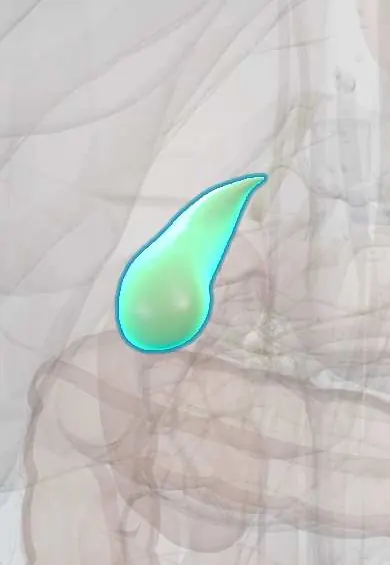
A mechanical bowel obstruction caused by a gallstone that has entered the gut through a fistula between the gallbladder and the bowel, most often the duodenum. The name 'ileus' is a historical misnomer: it is a true mechanical blockage, usually where the small bowel is narrowest, the terminal ileum near the ileocaecal valve. Bouveret syndrome is the rare variant in which the stone lodges in the duodenal bulb or pylorus and causes gastric outlet obstruction.
Who gets it
Uncommon overall: a small fraction of all mechanical small bowel obstructions, but a much larger share of non-hernia, non-adhesion obstructions in people over 65. Most patients are older women with long-standing gallstones, often with heart, lung or kidney disease, which explains the high mortality. In Colombia, where gallstone disease is common and cholecystectomy is sometimes delayed, it should be on the list for any older adult with obstruction and no previous surgery.
Causes
- Chronic or repeated cholecystitis with gallstones: the inflamed gallbladder sticks to the bowel and a large stone erodes through both walls
- Cholecystoduodenal fistula (most common), less often cholecystocolic or cholecystogastric fistula
- Rarely, a stone passed through the papilla after sphincterotomy or one left in the abdomen after laparoscopic cholecystectomy
Risk factors
- Older age, especially women
- Long-standing untreated gallstones and previous attacks of cholecystitis
- Large gallstones (usually over 2 to 2.5 cm)
- Pre-existing narrowing of the bowel (strictures, diverticular disease, previous surgery)
Pathophysiology
Repeated gallbladder inflammation → adhesion of the gallbladder to the duodenum → pressure necrosis from a large stone → cholecystoenteric fistula → the stone enters the gut and may grow by layering of bowel contents → it lodges where the lumen is narrowest (terminal ileum, or duodenum/pylorus in Bouveret syndrome, sigmoid colon if narrowed) → mechanical obstruction with distension, vomiting and fluid loss → the stone may move and lodge again (intermittent 'tumbling' obstruction) → delay leads to ischaemia, perforation, aspiration and death in frail patients. Meanwhile air from the bowel passes back through the fistula into the gallbladder and bile ducts (pneumobilia).
Classification
- By site of impaction: duodenum or pylorus (Bouveret syndrome), jejunum, terminal ileum (most common), colon (rare, usually sigmoid)
- By fistula: cholecystoduodenal (most common), cholecystocolic, cholecystogastric, choledochoduodenal
- Rigler triad on imaging: pneumobilia, small bowel obstruction and an ectopic gallstone; a fourth sign is a change in the stone's position on serial films
Symptoms and signs
- Colicky central abdominal pain, nausea, vomiting and abdominal distension
- Symptoms that come and go over days as the stone moves ('tumbling' obstruction), which delays diagnosis
- Often a history of gallstones or biliary colic, but many patients have no clear biliary history
- Bouveret syndrome: early fullness, epigastric pain and repeated vomiting with little distension; sometimes haematemesis
- Jaundice is unusual (the fistula usually drains the gallbladder, not the common bile duct)
Diagnosis
- Clinical
- Suspect it in an older adult, usually a woman with gallstones, who has small bowel obstruction without a hernia or previous surgery, especially if the symptoms have come and gone over several days. Bouveret syndrome presents as gastric outlet obstruction.
- Tests
- Full blood count, electrolytes, urea and creatinine, lactate, and liver tests (may be mildly abnormal). Blood gas in the vomiting or septic patient. Preoperative work-up for anaesthesia, as most patients have other illnesses.
- Imaging
- CT of the abdomen is the key study: it shows the obstruction, the transition point, the stone (even when it is not calcified), the air in the bile ducts and often the fistula, completing the Rigler triad far more often than X-ray. Plain abdominal X-ray may show dilated loops, gas in the biliary tree and, in a minority, a calcified stone in the right lower quadrant. Upper endoscopy shows a stone impacted in the duodenum or pylorus in Bouveret syndrome and can treat it.
Differential diagnosis
- Adhesive small bowel obstruction
- Obstructed hernia (femoral, obturator, inguinal)
- Small bowel or caecal tumour
- Paralytic ileus
- Intussusception in an adult
- Malignant or peptic gastric outlet obstruction (for Bouveret syndrome)
- Large bowel obstruction from colorectal cancer or diverticular stricture (for colonic gallstone ileus)
Small bowel obstruction in an older adult: which cause?
| Cause | Typical patient | Bedside clue | CT clue |
|---|---|---|---|
| Gallstone ileus | Older woman with gallstones, no previous surgery | Pain and vomiting that come and go over days | Air in the bile ducts, stone at the transition point |
| Adhesive obstruction | Previous abdominal surgery | Laparotomy scar | Transition point with no mass ('beak' sign) |
| Obstructed femoral hernia | Older woman | Tender lump below and lateral to the pubic tubercle | Bowel loop in the femoral canal |
| Small bowel tumour | Weight loss, anaemia or bleeding | Slow, intermittent symptoms over weeks | Mass or wall thickening at the transition point |
| Paralytic ileus | After surgery, electrolyte disorder or opioids | Quiet abdomen, little pain | Diffuse dilatation of small and large bowel, no transition point |
Goal of treatment
Relieve the obstruction safely in a frail patient, remove the stone and every other stone in the bowel, and decide whether the gallbladder and fistula need to be dealt with now, later or never.
Treatment
- Acute
- Resuscitation: intravenous fluids, correction of electrolytes, nil by mouth, nasogastric decompression, urinary catheter, analgesia and antibiotics if ischaemia or perforation is suspected; optimise heart, lung and kidney disease before theatre.
- Surgical
- Enterolithotomy (the standard): laparoscopic or open; the stone is milked back from the impaction site, removed through a longitudinal enterotomy in healthy bowel just above it, and the enterotomy closed. The whole bowel and gallbladder are checked for further stones. A segment that is ischaemic or perforated is resected.
- Surgical
- One-stage operation (enterolithotomy plus cholecystectomy and fistula repair) is reserved for selected fit, stable patients; in most, the fistula is left, because it often closes and the longer operation adds risk. Interval cholecystectomy is considered if biliary symptoms recur.
- Procedure
- Bouveret syndrome: endoscopic extraction first, often after breaking the stone (mechanical, laser or electrohydraulic lithotripsy); surgery (gastrotomy or duodenotomy) if endoscopy fails.
- Follow-up
- After recovery: watch for recurrent obstruction from a missed second stone, and for recurrent cholangitis or cholecystitis through the fistula.
Complications
- Bowel ischaemia, perforation and peritonitis at the impaction site
- Recurrent gallstone ileus from a stone left in the bowel or gallbladder
- Aspiration pneumonia from vomiting
- Acute kidney injury and electrolyte disorders
- Cholangitis or cholecystitis through the persistent fistula
- Gallbladder cancer found at or after surgery (rare)
- Postoperative complications in frail patients: wound infection, leak from the enterotomy, cardiac and respiratory events
Common traps
- Gallstone ileus is a paralytic ileus: the name misleads; it is a mechanical obstruction by a stone, usually in the terminal ileum, and needs the stone removed
- No stone on the plain X-ray rules it out: most gallstones are not calcified enough to show; CT shows the stone, the air in the bile ducts and the obstruction
- Air in the bile ducts after vomiting is a harmless finding: without previous biliary surgery or sphincterotomy, pneumobilia plus obstruction means a cholecystoenteric fistula until proven otherwise
- The operation must always remove the gallbladder and close the fistula: in a frail patient enterolithotomy alone is safer; the one-stage operation is for selected fit patients
- Once the obstructing stone is out the job is done: a second stone in the bowel causes recurrence, so the whole small bowel is checked
Prognosis
Mortality is higher than for other causes of small bowel obstruction, mainly because patients are old, ill and diagnosed late. Most who reach early enterolithotomy recover. A minority have a second episode, usually from a stone missed at the first operation.
Prevention
- Offer timely cholecystectomy to people with symptomatic gallstones or previous cholecystitis
- At enterolithotomy, check the whole small bowel for further stones
- Think of it early in older adults with obstruction and no previous surgery, so CT is done promptly
Test yourself
Think of the answer, then tap the question to see it.
An 81-year-old woman with no previous surgery has had colicky pain and vomiting on and off for four days. CT shows dilated small bowel and air in the bile ducts. What is the diagnosis?
Gallstone ileus: a gallstone has passed through a cholecystoduodenal fistula (hence the pneumobilia) and is obstructing the small bowel, usually the terminal ileum.
Why does the stone usually stop in the terminal ileum?
It is the narrowest part of the small bowel and has the weakest peristalsis, just before the ileocaecal valve, so a large stone that passed the duodenum gets stuck there.
What are the three parts of the Rigler triad?
Air in the biliary tree (pneumobilia), small bowel obstruction and an ectopic gallstone outside the gallbladder, best shown by CT.
An older woman with gallstones vomits repeatedly with little distension; endoscopy shows a large stone in the duodenal bulb. What is this, and what is tried first?
Bouveret syndrome, gallstone obstruction of the gastric outlet. Endoscopic extraction, usually after breaking the stone with lithotripsy, is tried first; surgery if it fails.
Why do most surgeons leave the fistula and gallbladder alone at the emergency operation?
The patients are usually frail; enterolithotomy alone relieves the obstruction with less risk, the fistula often closes by itself, and few patients later need cholecystectomy.
Why it happens
Connections
Educational information, not medical advice. For any symptom, see a health professional.
Sources: Gallstone Ileus (StatPearls (NCBI Bookshelf), 2022); Bouveret Syndrome (Bilioduodenal Fistula) (StatPearls (NCBI Bookshelf), 2023); Gallstones (MedlinePlus (U.S. National Library of Medicine), 2025).
Spotted a mistake?We are always improving for the community. Tell us what is wrong and our team will review it.Report a mistake
Representative model, for educational purposes only.