Conditions · Pediatrics and neonatology
VACTERL association !
A group of birth defects that often occur together: spine, anus, heart, windpipe-oesophagus, kidney and limb problems. Three or more make the diagnosis.
Updated 2026-11-01
Structures involved
Tap one to see what it is and open it in 3D.
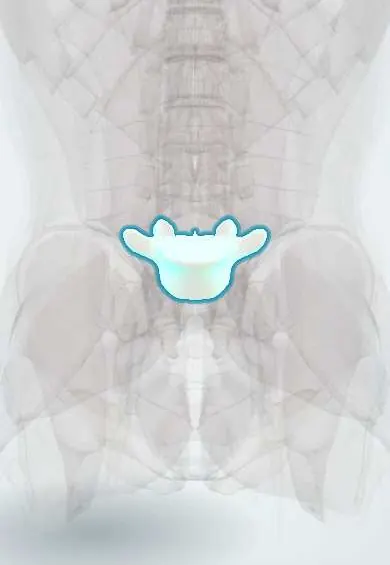
- L5 vertebra
- Esophagus
- Kidneys
- L1 vertebra
- Sacrum
- Spinal cord
- Trachea
- Interventricular septum
- Ureters
- Urinary bladder
- Radius
- Rectum
- External anal sphincter
What it is
A non-random association of congenital anomalies: Vertebral defects, Anal atresia, Cardiac defects, Tracheo-Esophageal fistula with oesophageal atresia, Renal anomalies and Limb (mainly radial) anomalies. The diagnosis is usually made when at least three of these features are present and other syndromes have been excluded.
Who gets it
About 1 in 10,000 to 40,000 newborns. Most cases are sporadic. Higher frequency in infants of mothers with pre-existing diabetes. In Colombia and Latin America, congenital anomaly surveillance includes it within multiple malformation reporting.
Causes
- Multifactorial and heterogeneous: likely a combination of genetic and environmental factors
- Disturbance of mesoderm development during the first weeks of embryogenesis
- Rare genetic contributors reported (for example in Sonic hedgehog pathway genes)
- Some cases overlap with recognised syndromes (Fanconi anaemia, 22q11 deletion, CHARGE, trisomy 18)
Risk factors
- Maternal pre-gestational diabetes
- Assisted reproductive technology and multiple pregnancy (reported associations)
- Exposure to certain teratogens early in pregnancy (reported for some drugs and hormones)
Pathophysiology
All components derive from structures forming around 3 to 8 weeks of gestation, when the mesoderm patterns the vertebrae, heart, limb buds and urogenital tract, and the foregut divides into trachea and oesophagus. An early insult or signalling defect (such as in Sonic hedgehog) disturbs several of these developing fields at once, so defects cluster together without a single unifying genetic cause in most children.
Classification
- V – vertebral: hemivertebrae, butterfly or fused vertebrae, rib anomalies, tethered cord
- A – anal atresia or other anorectal malformation
- C – cardiac: ventricular septal defect, atrial septal defect, tetralogy of Fallot, patent ductus arteriosus
- TE – tracheo-oesophageal fistula with or without oesophageal atresia
- R – renal: agenesis, dysplasia, horseshoe kidney, hydronephrosis, vesicoureteral reflux
- L – limb: radial ray defects (absent or hypoplastic thumb or radius), polydactyly
Symptoms and signs
- Newborn with excess frothy saliva, choking or coughing with first feed and inability to pass a nasogastric tube (oesophageal atresia)
- No visible anal opening or meconium passing through the perineum or urine (anorectal malformation)
- Heart murmur, cyanosis or signs of heart failure
- Abnormal thumbs or shortened, bowed forearm
- Spinal curvature or abnormal vertebrae seen on X-ray; scoliosis later
- Urinary tract infections, poor urine output or abdominal mass from kidney anomalies
- Polyhydramnios and growth restriction may be seen in pregnancy
Diagnosis
- Clinical
- Any newborn with one VACTERL feature should be examined systematically for all the others; at least three features make the diagnosis after excluding other syndromes. Check anal patency, pass a nasogastric tube, examine limbs and listen to the heart.
- Tests
- Kidney function and urinalysis; karyotype or chromosomal microarray; chromosome breakage test when radial or thumb defects suggest Fanconi anaemia; testing for 22q11 deletion when indicated.
- Imaging
- Chest and abdominal X-ray (tube coiled in a blind oesophageal pouch; gas in the stomach implies a distal fistula), echocardiography, renal and pelvic ultrasound, spine X-ray and spinal ultrasound or MRI for tethered cord, and limb X-rays.
Differential diagnosis
- Fanconi anaemia (radial defects with bone marrow failure)
- CHARGE syndrome
- 22q11.2 deletion (DiGeorge) syndrome
- Trisomy 18
- Holt–Oram and Townes–Brocks syndromes
- Caudal regression syndrome (maternal diabetes)
Goal of treatment
Stabilise the newborn, correct life-threatening defects first (airway, oesophagus, anus, heart) and then provide staged repair and long-term multidisciplinary follow-up.
Treatment
- Acute
- Initial stabilisation: nil by mouth, upright positioning and continuous suction of the upper oesophageal pouch, intravenous fluids, and careful respiratory support.
- Surgical
- Surgical repair of oesophageal atresia and tracheo-oesophageal fistula.
- Surgical
- Surgery for anorectal malformation (colostomy and/or anorectoplasty) and repair of significant heart defects.
- Surgical
- Orthopaedic and hand surgery for radial and thumb defects (such as centralisation or pollicisation) and for progressive spinal deformity.
- Rehabilitation
- Rehabilitation: bowel management programmes, physiotherapy and occupational therapy.
- Follow-up
- Long-term monitoring of kidney function, urinary infections, growth, nutrition, spine and development.
Complications
- Anastomotic leak or stricture, gastro-oesophageal reflux and tracheomalacia after oesophageal repair
- Faecal incontinence or constipation after anorectal repair
- Chronic kidney disease and recurrent urinary infections
- Progressive scoliosis and tethered cord
- Reduced hand function from radial and thumb defects
- Heart failure or residual heart defects
Prognosis
Depends mainly on the severity of the heart and kidney defects. With modern surgery most children survive; intelligence is usually normal, but many need multiple operations and long-term follow-up.
Test yourself
Think of the answer, then tap the question to see it.
What does the acronym VACTERL stand for?
Vertebral, Anal atresia, Cardiac, Tracheo-Esophageal fistula, Renal and Limb anomalies.
How many features are usually required for the diagnosis?
At least three, after excluding other syndromes.
What is the typical limb defect?
Radial ray anomalies: absent or hypoplastic thumb or radius.
Which syndrome must be ruled out in a child with radial defects?
Fanconi anaemia, with a chromosome breakage test, because of the risk of bone marrow failure.
What is the first nursing step in a newborn with suspected oesophageal atresia?
Nil by mouth, head-up positioning and continuous suction of the upper pouch to prevent aspiration.
Related conditions
- Esophageal atresia and tracheoesophageal fistula
- Anorectal malformations (imperforate anus)
- Ventricular septal defect
- Tetralogy of Fallot
- Atrial septal defect
- Patent ductus arteriosus
- Vesicoureteral reflux
- Scoliosis
- Fanconi anaemia
- DiGeorge syndrome (22q11.2 deletion syndrome)
- Spina bifida (myelomeningocele)
Educational information, not medical advice. For any symptom, see a health professional.
Sources: VACTERL association (MedlinePlus Genetics (U.S. National Library of Medicine), 2024).
Spotted a mistake?We are always improving for the community. Tell us what is wrong and our team will review it.Report a mistake
Representative model, for educational purposes only.