
Chronic pain in older adults
Pain lasting more than 3 months, very common with age. It harms sleep, mood and mobility; exercise, careful medicines and support control it better than rest.
What it is
Pain that persists or recurs for more than 3 months in an older adult, whether from a disease such as osteoarthritis or neuropathy (chronic secondary pain) or as a condition in its own right (chronic primary pain). It is often under-reported and under-treated.
Who gets it
Affects about half of older adults living at home and most nursing-home residents. Osteoarthritis, back pain, neuropathy and postherpetic neuralgia are the main causes. People with dementia receive less pain treatment than others despite similar disease.
Causes
- Musculoskeletal: osteoarthritis of the knee, hip and spine, osteoporotic vertebral fractures, spinal stenosis, polymyalgia rheumatica
- Neuropathic: diabetic and other peripheral neuropathy, postherpetic neuralgia, radiculopathy, post-stroke pain
- Cancer and its treatments
- Mixed and nociplastic pain, such as widespread pain or fibromyalgia
- Pressure injuries, contractures and immobility
Risk factors
- Female sex and older age
- Obesity and physical inactivity
- Depression, anxiety and poor sleep
- Multimorbidity and frailty
- Social isolation and low income
- Prior injuries or surgery
Pathophysiology
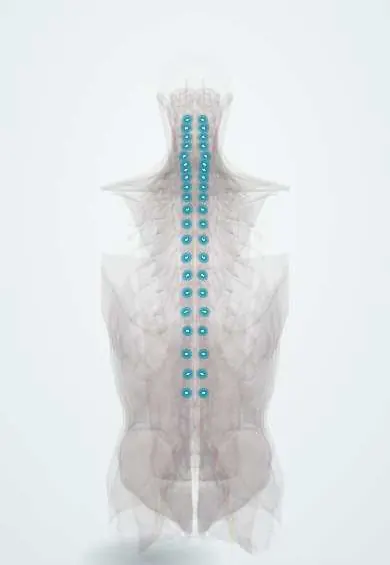
Ongoing input from a damaged joint or nerve → dorsal horn neurons in the spinal cord become more excitable (central sensitisation) → pain spreads beyond the injury and is felt with smaller stimuli → descending inhibitory pathways from the brainstem, already weaker with age and with depression, fail to turn the signal down → the thalamus, insula and anterior cingulate link the pain with low mood, poor sleep and fear of movement → the person moves less, loses strength and fitness, and pain grows: a self-sustaining cycle of pain, inactivity and low mood.
Classification
- By mechanism: nociceptive (tissue damage), neuropathic (nerve damage) or nociplastic (altered pain processing); often mixed
- ICD-11: chronic primary pain versus chronic secondary pain (cancer, postsurgical, neuropathic, musculoskeletal, visceral, headache)
- By pattern: continuous, episodic or breakthrough
Symptoms and signs
- Aching, stiffness or burning pain in joints, back or feet
- Pain on movement and reduced walking
- Poor sleep, fatigue and low mood
- In dementia: grimacing, moaning, guarding, restlessness, agitation, resisting care or reduced eating
- Withdrawal from social activities
Diagnosis
- Clinical
- Ask directly and repeatedly: older adults often say "aches" rather than "pain". Rate intensity with a numerical, verbal or faces scale; in advanced dementia use observational tools such as PAINAD. Assess the impact on function, sleep, mood and falls, look for the cause on examination and review all medicines, including non-prescription ones.
- Tests
- Guided by the suspected cause: inflammatory markers for polymyalgia or arteritis, glucose and B12 in neuropathy, kidney and liver function before choosing analgesics.
- Imaging
- Plain radiographs for joint or bone pain; MRI for red flags or before procedures. Imaging changes are common in older adults without pain and must be matched with symptoms.
Differential diagnosis
- Depression presenting as pain
- Polymyalgia rheumatica or giant cell arteritis
- Cancer or bone metastases
- Vertebral fracture
- Peripheral arterial disease (claudication)
- Delirium or agitation from other causes in dementia
Pain in an older adult: which mechanism?
| Type | Example | How it feels | Responds best to |
|---|---|---|---|
| Nociceptive (tissue) | Knee or hip osteoarthritis, vertebral fracture | Aching, localised, worse with movement | Exercise, weight loss, paracetamol, topical anti-inflammatories, joint procedures |
| Neuropathic (nerve) | Diabetic neuropathy, postherpetic neuralgia, radiculopathy | Burning, shooting, tingling or numb, in a nerve territory | Neuropathic agents (gabapentinoids, duloxetine), topical lidocaine |
| Nociplastic (altered processing) | Fibromyalgia, widespread pain | Diffuse, with fatigue, poor sleep and low mood | Exercise, cognitive behavioural therapy, sleep care; drugs help less |
| Inflammatory look-alike | Polymyalgia rheumatica | Shoulder and hip-girdle pain with morning stiffness; raised ESR or CRP | Corticosteroids, with a rapid response; check for giant cell arteritis |
Goal of treatment
Less pain and better function, sleep, mood and independence, with the fewest adverse effects; a pain-free state is often not realistic, so shared, specific goals are set.
Treatment
- Rehabilitation
- Exercise is the core treatment: walking, strengthening, balance work, tai chi and aquatic exercise; physiotherapy and occupational therapy with walking aids and home adaptations.
- Conservative
- Education, cognitive behavioural therapy and pain self-management programmes; heat or cold, weight loss in obesity, sleep care and treating depression.
- Medical
- Paracetamol (acetaminophen) for mild musculoskeletal pain; topical anti-inflammatories or capsaicin for localised joint pain. Oral anti-inflammatories are used briefly and with caution because of bleeding, kidney and heart risks.
- Medical
- Neuropathic pain: duloxetine, gabapentin or pregabalin (adjusted to kidney function and watching for sedation and falls), topical lidocaine. Opioids are reserved for severe pain that fails other options, with a clear goal, constipation prevention and regular review; tricyclics and long-acting sedatives are avoided.
- Procedure
- Joint or epidural injections, nerve blocks and joint replacement when indicated.
- Follow-up
- Review pain, function, falls, cognition and adverse effects at every visit; deprescribe what does not help.
Complications
- Depression, anxiety and insomnia
- Reduced mobility, falls and frailty
- Social isolation
- Analgesic harms: bleeding, kidney injury, constipation, delirium, falls and opioid dependence
- Agitation and behavioural symptoms in dementia
Common traps
- Pain is a normal part of ageing: persistent pain is not normal and is undertreated; older adults often say "aches" or "stiffness" and must be asked directly
- A person with dementia who does not complain is not in pain: in advanced dementia pain shows as grimacing, guarding, agitation, resisting care or eating less; use an observational scale such as PAINAD
- Rest protects painful joints: inactivity causes deconditioning, falls and more pain; graded exercise is the core treatment
- Oral anti-inflammatories are the safe option because they are not opioids: in older adults they cause gastrointestinal bleeding, kidney injury, fluid retention and heart failure; topical forms are preferred for one painful joint
- Degeneration on imaging explains the pain: degenerative changes are common in pain-free older adults; findings must match the symptoms and examination
Prognosis
Chronic pain is often lifelong, but a combined plan improves function and quality of life in most people. Untreated pain worsens mobility, mood and cognition.
Test yourself
Think of the answer, then tap the question to see it.
How do you assess pain in a person with advanced dementia who cannot rate it?
With an observational scale such as PAINAD: breathing, vocalisation, facial expression, body language and consolability; agitation or resisting care may be the only sign.
What is central sensitisation?
Increased excitability of spinal and brain pain pathways after persistent input, so pain spreads and is felt with less stimulus.
Why are oral anti-inflammatory drugs used cautiously in older adults?
They raise the risk of gastrointestinal bleeding, kidney injury, fluid retention, heart failure and high blood pressure.
What is the single most important non-drug treatment for chronic musculoskeletal pain in older adults?
Regular exercise (strength, walking, balance), which reduces pain and improves function and mood.
An 80-year-old woman with knee osteoarthritis and chronic kidney disease takes an oral anti-inflammatory daily and now has ankle oedema and a rising creatinine. What should change?
Stop the oral anti-inflammatory, which worsens kidney function and retains fluid. Make exercise and physiotherapy the core, use paracetamol or a topical anti-inflammatory, and review function, falls and mood.
In anaesthesia
In neurology
Connections
Educational information, not medical advice. For any symptom, see a health professional.
Sources: Chronic Pain (StatPearls (NCBI Bookshelf), 2025); Pain Assessment (StatPearls (NCBI Bookshelf), 2025).
Spotted a mistake?We are always improving for the community. Tell us what is wrong and our team will review it.Report a mistake
Representative model, for educational purposes only.