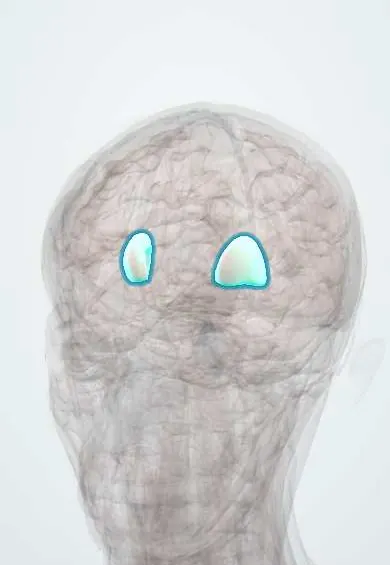
Dystonia (generalised and focal) !
A movement disorder in which muscles contract on their own, twisting a body part into abnormal postures, such as the neck, eyelids or hand.
Updated 2026-11-01
Structures involved
Tap one to see what it is and open it in 3D.
- Putamen
- Globus pallidus
- Sternocleidomastoid
- Caudate nucleus
- Thalamus
- Substantia nigra
- Cerebellum
- Splenius
- Upper trapezius
- Levator scapulae
- Orbicularis oculi
- Eyelids
- Vocal folds
- Platysma
- Flexor carpi radialis
- FPB
Why it happens
What it is
A movement disorder with sustained or intermittent involuntary muscle contractions that cause abnormal, often twisting and repetitive movements, postures or both. It is often triggered or worsened by voluntary action and may be relieved by a "sensory trick" (geste antagoniste). It can involve one body part (focal), adjacent parts (segmental) or the whole body (generalised). Common focal forms are cervical dystonia, blepharospasm, spasmodic dysphonia and writer's cramp.
Who gets it
Dystonia is the third most common movement disorder after essential tremor and Parkinson disease. Focal adult-onset dystonias are the most frequent, usually starting between 40 and 60 years; cervical dystonia and blepharospasm are more common in women. Generalised inherited forms usually begin in childhood. In Colombia and Latin America many cases are seen in neurology clinics; secondary dystonia from cerebral palsy, drugs and Wilson disease is also common.
Causes
- Idiopathic or isolated focal dystonia in adults
- Inherited forms: DYT1 (TOR1A) early-onset generalised dystonia, dopa-responsive dystonia (GCH1)
- Drug-induced: acute dystonic reactions and tardive dystonia from dopamine-blocking drugs (antipsychotics, metoclopramide)
- Brain injury: cerebral palsy, perinatal hypoxia, stroke, trauma, encephalitis
- Neurodegenerative and metabolic diseases: Wilson disease, Parkinson disease, Huntington disease, progressive supranuclear palsy
Risk factors
- Family history (autosomal dominant genes with reduced penetrance)
- Exposure to dopamine receptor-blocking drugs
- Repetitive skilled hand use (musicians, writers)
- Perinatal brain injury
- Female sex for cervical dystonia and blepharospasm
Pathophysiology
Dystonia is viewed as a network disorder involving the basal ganglia (mainly putamen and globus pallidus), cerebellum, thalamus and sensorimotor cortex. Loss of surround inhibition lets unwanted neighbouring muscles contract together with the intended ones (co-contraction and overflow). Abnormal sensorimotor integration and maladaptive plasticity explain why sensory tricks help and why highly practised tasks can trigger task-specific dystonias.
Classification
- By body distribution: focal, segmental, multifocal, hemidystonia, generalised
- By age at onset: childhood, adolescence, adult
- By aetiology: isolated (genetic or idiopathic), combined with other movement disorders, acquired (drugs, brain injury)
- Focal types: cervical dystonia (spasmodic torticollis), blepharospasm, oromandibular, laryngeal (spasmodic dysphonia), writer's cramp and musician's dystonia
Symptoms and signs
- Cervical dystonia: head turning, tilting, forward or backward pulling, often with neck pain and head tremor
- Blepharospasm: excessive blinking and forced eyelid closure, sometimes causing functional blindness
- Writer's cramp: cramping and abnormal posture of the hand only while writing
- Spasmodic dysphonia: strained, broken voice
- Generalised dystonia: twisting of the trunk and limbs, often starting in a foot or leg in children
- Improvement with a sensory trick, such as touching the chin or cheek
- Worsening with stress and fatigue; disappears during sleep
Diagnosis
- Clinical
- Diagnosis is clinical, based on the pattern of abnormal postures and movements, sensory tricks and task specificity. A careful drug history is essential.
- Tests
- Slit-lamp examination for Kayser-Fleischer rings, serum ceruloplasmin and urinary copper in anyone with onset before about 50 years to exclude Wilson disease. Genetic testing in early-onset or familial cases. A trial of levodopa in childhood-onset dystonia to detect dopa-responsive dystonia.
- Imaging
- Brain MRI in acquired, unilateral, rapidly progressive or combined forms, looking for basal ganglia lesions, stroke or metal deposition. MRI is normal in most isolated dystonias.
Differential diagnosis
- Musculoskeletal torticollis (sternocleidomastoid fibrosis, atlantoaxial subluxation)
- Tics (Tourette syndrome)
- Essential tremor and parkinsonism
- Functional (psychogenic) dystonia
- Hemifacial spasm and myokymia (eyelid)
- Focal seizures
Goal of treatment
Reduce involuntary contractions, pain and disability and improve posture and function; treat the cause when one is found.
Treatment
- Procedure
- Botulinum toxin injections into the overactive muscles are first-line for focal dystonias such as cervical dystonia, blepharospasm and spasmodic dysphonia, repeated every few months.
- Medical
- Oral anticholinergics (trihexyphenidyl) mainly in young patients with generalised dystonia; benzodiazepines and baclofen as adjuncts. Every child with dystonia deserves a levodopa trial for dopa-responsive dystonia. Acute drug-induced dystonia responds rapidly to parenteral anticholinergic or antihistamine drugs.
- Surgical
- Deep brain stimulation of the globus pallidus internus for disabling generalised, segmental or refractory cervical dystonia, especially DYT1 dystonia.
- Rehabilitation
- Physiotherapy, sensory retraining, speech therapy for dysphonia and occupational adaptations for task-specific dystonia.
- Follow-up
- Nursing priorities in status dystonicus: airway, temperature, hydration, CK and kidney function, and pain control in intensive care.
Complications
- Chronic neck pain and cervical spine degeneration with radiculopathy
- Functional blindness in severe blepharospasm
- Swallowing and speech problems
- Contractures and scoliosis in generalised dystonia
- Status dystonicus with rhabdomyolysis and kidney failure
- Depression, anxiety and social isolation
Prognosis
Adult-onset focal dystonias rarely spread beyond one or two adjacent regions and often respond well to botulinum toxin; spontaneous remissions occur in a minority of cervical dystonia cases. Childhood-onset forms more often generalise. Dopa-responsive dystonia has an excellent outcome with treatment.
Prevention
- Cautious use of dopamine-blocking drugs and early recognition of drug reactions
- Genetic counselling in inherited forms
Test yourself
Think of the answer, then tap the question to see it.
A patient's head turns involuntarily to one side and improves when she touches her chin. What is this and what is the sign called?
Cervical dystonia; the relief from touch is a sensory trick (geste antagoniste).
What is first-line treatment for most focal dystonias?
Botulinum toxin injections into the affected muscles.
Which treatable disease must be excluded in dystonia beginning before about age 50?
Wilson disease (ceruloplasmin, urinary copper and slit-lamp examination).
Which drug test should every child with dystonia receive?
A levodopa trial, to detect dopa-responsive dystonia.
Which deep brain stimulation target is used for refractory dystonia?
The globus pallidus internus.
Related conditions
- Torticollis
- Antipsychotic-induced movement disorders (dystonia, akathisia, parkinsonism, tardive dyskinesia)
- Wilson disease
- Parkinson disease
- Essential tremor
- Tourette syndrome and tic disorders
- Huntington disease
- Cerebral palsy
- Autoimmune encephalitis (including anti-NMDA receptor encephalitis)
- Epilepsy and seizures
- Progressive supranuclear palsy
Educational information, not medical advice. For any symptom, see a health professional.
Sources: Dystonia | MedlinePlus (MedlinePlus (U.S. National Library of Medicine), 2025).
Spotted a mistake?We are always improving for the community. Tell us what is wrong and our team will review it.Report a mistake
Representative model, for educational purposes only.