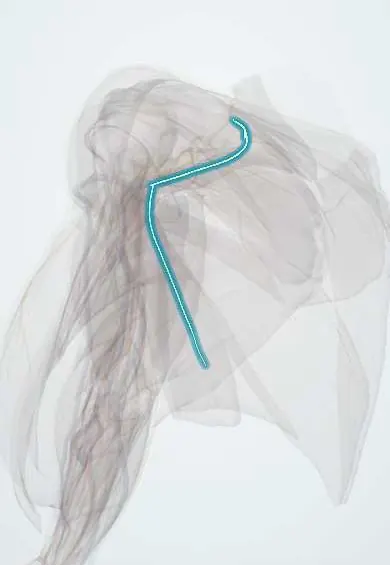
Winged scapula !
Winged scapula is when the shoulder blade sticks out from the back, most often because the long thoracic nerve to the serratus anterior is injured.
Updated 2026-10-29
Structures involved
Tap one to see what it is and open it in 3D.
- Long thoracic nerve
- Serratus anterior
- Scapula
- Upper trapezius
- Middle trapezius
- Lower trapezius
- Rhomboid major
- Dorsal scapular nerve
- Scalenes
Why it happens
What it is
Abnormal prominence of the medial border of the shoulder blade, which lifts off the chest wall, most often because the serratus anterior is paralysed by injury to the long thoracic nerve. Weakness of the trapezius or the rhomboids causes other, lateral patterns of winging.
Who gets it
Uncommon. Long thoracic nerve palsy affects mostly young, active adults through sport, heavy carrying or surgery; trapezius palsy is usually iatrogenic after neck surgery.
Causes
- Long thoracic nerve injury: repetitive overhead activity, heavy backpacks or shoulder straps, blunt or penetrating trauma to the chest wall
- Surgery: axillary lymph node dissection, mastectomy, thoracic surgery, first rib resection
- Neuralgic amyotrophy (Parsonage-Turner) and viral illness
- Spinal accessory nerve injury (trapezius), usually after lymph node biopsy or dissection in the posterior triangle of the neck
- Dorsal scapular nerve injury (rhomboids), and muscular dystrophy, especially facioscapulohumeral
Risk factors
- Overhead and throwing sports, weightlifting
- Carrying heavy loads on the shoulder
- Axillary, chest wall or neck surgery
- Recent viral infection or vaccination (neuralgic amyotrophy)
Pathophysiology
The long thoracic nerve (C5 to C7) runs a long, superficial course down the lateral chest wall on the serratus anterior, so it is easily stretched or compressed. Without the serratus the scapula is not held to the ribs and the medial border lifts. Trapezius weakness instead lets the scapula drop and slide laterally.
Classification
- Medial winging: serratus anterior palsy from long thoracic nerve injury; scapula moves upward and toward the spine
- Lateral winging: trapezius palsy from spinal accessory nerve injury (scapula drops and moves outward), or rhomboid weakness
- Static winging from bony or structural causes (for example scapular osteochondroma)
Symptoms and signs
- Visible prominence of the shoulder blade, especially when pushing forward or raising the arm
- Difficulty lifting the arm above shoulder height
- Dull pain around the shoulder blade and neck, and fatigue with overhead work
- Shoulder droop and difficulty shrugging in trapezius palsy
Diagnosis
- Clinical
- Inspection from behind while the patient pushes against a wall or raises the arm forward: medial winging points to serratus anterior palsy. A shrug and resisted abduction test the trapezius. The direction of winging separates the causes.
- Tests
- Electromyography and nerve conduction studies confirm which nerve is affected and track recovery.
- Imaging
- X-rays or CT exclude bony causes; MRI of the cervical spine, brachial plexus or chest wall when a structural lesion is suspected.
Differential diagnosis
- Scapular dyskinesis from rotator cuff or impingement disease
- Scapular osteochondroma (pseudo-winging)
- Facioscapulohumeral muscular dystrophy
- Cervical radiculopathy at C5 to C7
- Brachial plexus injury
Goal of treatment
Support the scapula and keep the shoulder mobile while the nerve recovers, and restore scapular stability surgically when recovery does not occur.
Treatment
- Conservative
- Avoiding the activities that provoke the injury, analgesia with nonsteroidal anti-inflammatory drugs and observation, since many long thoracic nerve palsies recover over months, sometimes up to about two years.
- Rehabilitation
- Physiotherapy to keep range of motion and strengthen the scapular stabilisers; a scapular brace is sometimes used.
- Surgical
- Neurolysis or nerve transfer for selected nerve injuries that do not recover.
- Surgical
- Persistent serratus palsy: transfer of the sternal head of the pectoralis major to the inferior scapula. Persistent trapezius palsy: transfer of the levator scapulae and rhomboids (Eden-Lange).
Complications
- Chronic shoulder and scapular pain
- Secondary subacromial impingement and rotator cuff problems
- Shoulder stiffness
- Lasting loss of overhead function
Prognosis
Most non-penetrating long thoracic nerve palsies recover with time and rehabilitation, although recovery can be slow. Iatrogenic spinal accessory nerve injuries recover less reliably; tendon transfers can restore useful function when recovery fails.
Prevention
- Limiting heavy shoulder loads and repetitive overhead strain
- Careful identification of the long thoracic and spinal accessory nerves during axillary and neck surgery
Test yourself
Think of the answer, then tap the question to see it.
Injury to which nerve causes medial winging of the scapula?
The long thoracic nerve, which supplies the serratus anterior.
Which roots form the long thoracic nerve?
The C5, C6 and C7 roots.
Which nerve and muscle are involved in lateral winging of the scapula?
The spinal accessory nerve and the trapezius, often injured during surgery in the posterior triangle of the neck.
Which bedside test brings out medial scapular winging?
Pushing against a wall with the arms extended, while the examiner watches the scapula from behind.
Which surgery classically risks injuring the long thoracic nerve?
Axillary lymph node dissection, for example during breast cancer surgery.
Related conditions
Educational information, not medical advice. For any symptom, see a health professional.
Sources: Anatomy, Thorax, Long Thoracic Nerve (StatPearls (NCBI Bookshelf), 2023).
Spotted a mistake?We are always improving for the community. Tell us what is wrong and our team will review it.Report a mistake
Representative model, for educational purposes only.