
Enterocutaneous fistula (including postoperative pancreatic fistula)
An abnormal tunnel from bowel to skin, usually after surgery, that leaks gut contents. It drains fluid, salts and nutrients and can take months to close.
What it is
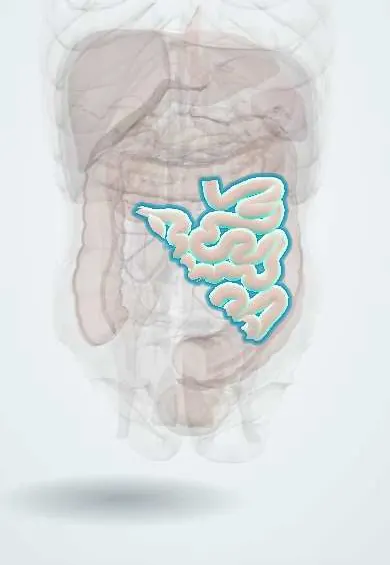
An abnormal communication between the lumen of the gut and the skin through which intestinal contents drain. Most follow surgery (a leak that tracks to the wound or a drain site); a fistula opening into an open abdomen without overlying tissue is an enteroatmospheric fistula. A postoperative pancreatic fistula is pancreatic juice leaking from the cut pancreas or a pancreatic anastomosis.
Who gets it
Around three quarters or more of enterocutaneous fistulas are postoperative, after bowel resection, adhesiolysis, hernia repair with mesh or trauma laparotomy; the rest arise spontaneously from Crohn disease, cancer, radiation, diverticular disease or infection. In Colombia, damage-control laparotomies with open abdomen after gunshot and stab wounds are an important cause of enteroatmospheric fistulas. Clinically relevant pancreatic fistula follows a meaningful minority of pancreatic resections, more often with a soft gland and a small duct.
Causes
- Anastomotic leak or unrecognised bowel injury during surgery (most cases)
- Open abdomen and exposed bowel after damage-control surgery or abdominal compartment syndrome
- Mesh erosion after hernia repair
- Crohn disease, diverticulitis, intra-abdominal abscess
- Cancer and radiation enteritis
- Pancreatic resection (pancreaticoduodenectomy or distal pancreatectomy), pancreatic trauma or necrotising pancreatitis for pancreatic fistula
Risk factors
- Emergency or repeated laparotomy, dense adhesions
- Malnutrition, sepsis and immunosuppression
- Prior radiotherapy or active inflammatory bowel disease
- Open abdomen management
- For pancreatic fistula: soft pancreatic texture, small pancreatic duct, high body mass index, high blood loss
Pathophysiology
Leak at a join or injury → contents collect as an abscess → the abscess drains through the wound or a drain site → a track forms between bowel and skin → small-bowel contents (water, sodium, potassium, magnesium, bicarbonate, enzymes) are lost → dehydration, electrolyte and acid-base disorders, kidney injury and malnutrition; enzymes digest the skin around the opening → persistent sepsis and malnutrition stop the track from healing, which keeps the losses going → in pancreatic fistula, activated pancreatic enzymes erode nearby vessels, which can cause sudden life-threatening haemorrhage.
Classification
- By output over a day: low (under about 200 mL), moderate (about 200–500 mL), high (over about 500 mL); high output predicts fluid loss and lower spontaneous closure
- By anatomy: gastric or duodenal, small bowel, colonic; simple short track versus complex (several tracks, associated abscess, large wall defect)
- Enteroatmospheric fistula: opens into an open abdominal wound without overlying skin or soft tissue; almost never closes on its own
- Postoperative pancreatic fistula (ISGPS): drain amylase above three times the upper limit of normal serum amylase from postoperative day 3 with a clinical impact; biochemical leak (no clinical impact, no longer called a fistula), grade B (change in management such as drains kept long, percutaneous drainage, antibiotics), grade C (reoperation, organ failure or death)
Symptoms and signs
- Bowel contents, bile or clear fluid draining from the wound or a drain site, often after a febrile postoperative course
- Painful, red, excoriated skin around the opening
- Thirst, low urine output, dizziness (dehydration)
- Weakness and weight loss
- Fever and abdominal pain when an abscess is associated
- After pancreatic surgery: amylase-rich drain fluid, fever, delayed gastric emptying
Diagnosis
- Clinical
- Usually obvious from the drainage. Record the output and its appearance (bilious, feculent, clear), examine for an associated abscess and the state of the abdominal wall, and assess hydration and nutritional status.
- Tests
- Urea, creatinine, sodium, potassium, magnesium, bicarbonate, phosphate and glucose; full blood count and CRP for sepsis; albumin as a risk marker; drain amylase after pancreatic surgery; oral dye or charcoal can confirm the communication in doubtful cases.
- Imaging
- CT of the abdomen with oral and intravenous contrast to find abscesses and the bowel segment involved; fistulogram (contrast injected into the external opening) to map length, the defect and any distal obstruction; MR enterography or small-bowel contrast studies in Crohn disease; CT angiography or angiography for bleeding after pancreatic surgery.
Differential diagnosis
- Surgical site infection or wound seroma without bowel communication
- Urinary, biliary, lymphatic or pancreatic fistula draining clear fluid
- Anastomotic leak not yet fistulised (contained or free)
- Wound dehiscence with exposed bowel but no leak
- Stoma complications such as a parastomal leak
Will it close on its own?
| Feature | Favours closure | Works against closure |
|---|---|---|
| Downstream bowel | Open, no obstruction | Distal obstruction or stricture |
| Track | Long (over about 2 cm), single, not lined by epithelium | Short, epithelialised, or opens into an open abdomen (enteroatmospheric) |
| Bowel wall defect | Small | Large or complete disruption |
| Tissue and host | Healthy bowel, nourished, sepsis controlled | Abscess, foreign body or mesh, cancer, radiation, active Crohn disease, malnutrition, steroids |
| Output and site | Low output; oesophageal, duodenal stump or biliary-pancreatic | High output; jejunal or ileal with a large defect |
Goal of treatment
Keep the patient alive first and close the fistula second: control sepsis, restore fluids and electrolytes, protect the skin, feed the patient, define the anatomy, and allow spontaneous closure or plan a definitive operation at the right time.
Treatment
- Acute
- Sepsis first: resuscitate, drain abscesses (percutaneously when possible), give targeted antibiotics; uncontrolled sepsis is the main cause of death. Replace fluid and electrolyte losses measured from the output.
- Follow-up
- Nursing priorities: measure all output and urine, daily weight, electrolytes; skin protection with barriers and a pouching system or wound manager fitted to the opening; negative-pressure systems adapted to isolate an enteroatmospheric fistula.
- Medical
- Reduce output: proton pump inhibitors to cut gastric secretion, antimotility drugs such as loperamide, and somatostatin analogues (octreotide) in selected high-output cases; they reduce output but have not been shown to increase closure. Correct magnesium and treat acid-base problems.
- Lifestyle
- Nutrition: enteral feeding whenever the gut can be used (low-output or distal fistulas, or feeding into the bowel beyond the fistula, called fistuloclysis); parenteral nutrition for high-output or proximal fistulas; amounts and route set by a nutrition team.
- Surgical
- Definitive surgery when the fistula does not close: resection of the involved bowel with a new anastomosis and closure of the abdominal wall, usually delayed for months until sepsis is controlled, the patient is nourished and the abdomen is no longer hostile. Pancreatic fistula: drains, percutaneous drainage of collections, embolisation for pseudoaneurysm bleeding, reoperation rarely.
- Rehabilitation
- Psychological support, stoma and wound teaching and physiotherapy during the long recovery; many patients go home on parenteral nutrition or with a pouching system.
Complications
- Sepsis and abscess
- Dehydration, acute kidney injury, hypokalaemia, hypomagnesaemia and metabolic acidosis
- Malnutrition and intestinal failure
- Skin breakdown around the opening
- Parenteral nutrition complications: line sepsis, thrombosis, liver dysfunction
- After pancreatic surgery: haemorrhage from pseudoaneurysm, delayed gastric emptying
Common traps
- An early reoperation is the fastest way to close a fistula: operating in a septic, malnourished patient with a hostile abdomen causes more fistulas and deaths; surgery is delayed until sepsis is controlled and the abdomen softens
- Octreotide closes fistulas: somatostatin analogues reduce output, which eases fluid and skin care, but trials have not shown that they increase closure
- A fistula means the gut cannot be used: low-output and distal fistulas tolerate enteral feeding, and feeding beyond the fistula is possible; parenteral nutrition is for high-output or proximal fistulas
- A raised drain amylase after pancreatic surgery is a pancreatic fistula: without a change in the clinical course it is a biochemical leak, not a fistula; grades B and C require a clinical impact
- A fistula that has not closed just needs more time: once sepsis is controlled and the patient is fed, most that will close do so within the first weeks; one that persists usually has a cause, such as distal obstruction, an epithelialised track, a foreign body or cancer
Prognosis
Roughly a third of fistulas close spontaneously, most within the first weeks once sepsis is controlled and the patient is fed; if they have not closed by then they are unlikely to. Mortality is driven by sepsis, malnutrition and electrolyte loss, and is highest for high-output and enteroatmospheric fistulas. Definitive surgery succeeds in most patients when done at the right time.
Prevention
- Careful surgical technique and recognition of bowel injuries during adhesiolysis
- Avoid anastomosis in septic or unstable patients; protect exposed bowel in an open abdomen and close the abdomen as early as safely possible
- Nutritional optimisation before elective surgery
- Careful mesh placement away from bowel
- After pancreatic surgery, risk-adapted drain use and drain amylase monitoring
Test yourself
Think of the answer, then tap the question to see it.
Ten days after an adhesiolysis bilious fluid drains through the wound and the patient is febrile. Which step comes first?
Sepsis control: resuscitate, CT to look for an abscess, percutaneous drainage and antibiotics. Then measure output, replace fluids and electrolytes, protect the skin and plan nutrition.
Why does an enteroatmospheric fistula almost never close on its own?
It opens directly into an open wound with no overlying tissue, so there is no track that can collapse and heal; it needs isolation, nutrition and eventually surgical repair.
Which four reasons can stop a fistula closing despite good care?
Distal obstruction, an epithelialised or very short track, a foreign body or mesh, cancer, radiation, active Crohn disease, persistent abscess or malnutrition (any four).
After a pancreaticoduodenectomy with a pancreatic fistula, a small amount of fresh blood appears in the drain. Why is this urgent and what is the test?
A sentinel bleed may precede rupture of a pseudoaneurysm eroded by pancreatic enzymes. Urgent CT angiography, then angiographic embolisation.
Why is surgery for a persistent fistula usually delayed for months?
Early on the abdomen is inflamed and adherent, and the patient is often septic and malnourished; waiting lets sepsis be controlled, nutrition restored and adhesions soften, making resection safer.
Why it happens
Connections
Educational information, not medical advice. For any symptom, see a health professional.
Sources: Enterocutaneous Fistula (StatPearls (NCBI Bookshelf), 2025); Pancreatic Fistula (StatPearls (NCBI Bookshelf), 2025); Management of Intestinal Failure: The High-Output Enterostomy and Enterocutaneous Fistula (Clinics in Colon and Rectal Surgery (PMC), 2017).
Spotted a mistake?We are always improving for the community. Tell us what is wrong and our team will review it.Report a mistake
Representative model, for educational purposes only.