
Hollow viscus, duodenal and pancreatic injury
A torn bowel, duodenum or pancreas bleeds little at first, so scans and early exams look fine. Hours later leaking contents cause peritonitis or sepsis.
What it is
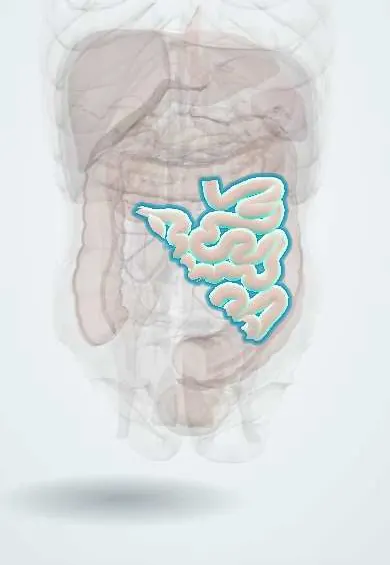
Injury to the stomach, small bowel, colon or mesentery (hollow viscus), to the mostly retroperitoneal duodenum, or to the pancreas, from penetrating or blunt trauma. In penetrating trauma the bowel is the organ hit most often; in blunt trauma these injuries are uncommon but are the ones most often missed, because they bleed little and declare themselves late through peritonitis or retroperitoneal sepsis.
Who gets it
Hollow viscus injury is found in roughly 1% of blunt trauma admissions and is far more common after penetrating wounds, where the small bowel and colon are the organs most often injured. Duodenal and pancreatic injuries are rare but carry high complication rates because they are often diagnosed late and come with major vascular injuries. In Colombia, gunshot and stab wounds make penetrating bowel injury a daily problem in urban trauma centres, and motorcycle crashes add blunt handlebar and seat-belt injuries.
Causes
- Penetrating trauma: gunshot and stab wounds to the abdomen, flank and back
- Lap seat-belt injury in sudden deceleration (bowel and mesentery compressed and torn)
- Handlebar injury in cyclists and motorcyclists, especially children (duodenum and pancreas)
- Direct blows to the upper abdomen (assault, kicks, steering wheel) crushing the duodenum and pancreas against the spine
- Child abuse: unexplained duodenal haematoma or pancreatic injury in a young child
- Falls and crush injuries
Risk factors
- Abdominal wall bruising across the lower abdomen in the shape of the belt (seat-belt sign)
- Flexion-distraction (Chance) fracture of the lumbar spine
- High-energy deceleration crashes
- Altered consciousness, intoxication or spinal cord injury that blunt the examination
- Penetrating wounds whose track may cross the peritoneum or retroperitoneum
Pathophysiology
Blunt force → bowel crushed against the spine, torn at fixed points where mobile meets fixed (ligament of Treitz, ileocaecal junction, sigmoid) or burst when a closed loop is suddenly compressed → small perforation or devascularising mesenteric tear → little bleeding, so early signs are slight → bowel contents leak → chemical irritation and then bacterial peritonitis over hours; a devascularised segment may perforate days later → duodenum and pancreas are retroperitoneal → leaks track behind the peritoneum, giving vague back or flank pain and little peritoneal irritation → pancreatic duct disruption releases activated enzymes → pancreatic fistula, pseudocyst, abscess and sepsis → each hour of delay raises the rate of sepsis and death.
Classification
- By organ: stomach, small bowel, colon and rectum, mesentery, duodenum, pancreas
- AAST organ injury scales grade each organ from I (haematoma or partial-thickness tear) to V (massive disruption or devascularisation)
- Duodenum: intramural haematoma (may obstruct, treated without surgery) versus full-thickness perforation (needs repair)
- Pancreas: the key question is whether the main pancreatic duct is injured, and whether the injury is to the left of the superior mesenteric vessels (body and tail) or in the head
- Colon: non-destructive injuries (repaired primarily) versus destructive injuries (resection, with anastomosis or stoma)
- Timing: early recognition versus delayed diagnosis beyond the first hours
Symptoms and signs
- Abdominal pain that worsens over hours
- Tenderness, guarding and then rigidity (peritonitis)
- Bruising of the abdominal wall in a belt pattern or from a handlebar
- Back, flank or epigastric pain with few abdominal signs (duodenum or pancreas)
- Vomiting and upper abdominal fullness (duodenal haematoma obstructing the outlet)
- Fever, fast pulse and ileus from developing sepsis
Diagnosis
- Clinical
- Primary survey, then repeated abdominal examination by the same surgeon every few hours; a change from soft to tender is often the first and best sign. Unstable patients and those with peritonitis or evisceration go straight to laparotomy. Stable penetrating wounds are explored locally, imaged or assessed by laparoscopy depending on the wound and the centre. Patients who cannot be examined (head injury, intoxication, cord injury) need a lower threshold for repeat imaging or laparoscopy.
- Tests
- Full blood count repeated over time, lactate, blood gas; amylase and lipase (a normal early value does not exclude pancreatic injury, and a rise is not specific); diagnostic peritoneal lavage where available, looking for bowel content, bacteria or a high white cell count in the fluid.
- Imaging
- FAST detects free fluid but cannot see a bowel leak or a retroperitoneal injury. Contrast CT is the main study in stable patients: signs of hollow viscus injury are unexplained free fluid, free air (often tiny), bowel wall thickening or poor enhancement, mesenteric stranding or haematoma, contrast extravasation, and retroperitoneal air or fluid around the duodenum or right kidney. CT can be normal early; repeat CT, or MRCP or ERCP to show the pancreatic duct, when suspicion persists. Laparoscopy or laparotomy settle the question when doubt remains.
Differential diagnosis
- Solid organ injury (liver, spleen, kidney) causing pain and free fluid
- Abdominal wall contusion or rectus sheath haematoma without visceral injury
- Retroperitoneal haematoma from pelvic or spinal fracture
- Post-traumatic acute pancreatitis without duct disruption
- Paralytic ileus after spinal or retroperitoneal injury
- Diaphragmatic injury with herniated bowel
Bowel, duodenum or pancreas: why each is missed and how to find it
| Injury | Typical mechanism | Why it is missed | What finds it | Usual treatment |
|---|---|---|---|---|
| Small bowel and mesentery | Lap belt, deceleration, any penetrating wound | Little bleeding; early CT can look normal | Repeated examination, unexplained free fluid on CT, laparoscopy | Primary repair or resection with anastomosis |
| Colon | Gunshot or stab wounds; blunt injury less often | Retroperitoneal parts give few signs | CT with contrast, laparotomy | Primary repair or resection; stoma in shock or heavy contamination |
| Duodenum | Epigastric blow, handlebar, child abuse | Retroperitoneal: back pain, minimal peritonitis | Retroperitoneal air or fluid on CT, oral contrast leak | Haematoma: decompression and feeding; perforation: repair, drainage |
| Pancreas | Upper abdomen crushed against the spine | Enzymes may be normal early; CT underestimates duct injury | Repeat CT, MRCP or ERCP for the duct | No duct injury: drainage; distal duct injury: distal pancreatectomy |
Goal of treatment
Find the leak before sepsis, control contamination, repair or resect injured bowel, define and treat pancreatic duct injury, and use damage control in unstable patients.
Treatment
- Acute
- Resuscitation, nil by mouth, nasogastric decompression and early broad-spectrum antibiotics covering bowel flora when a bowel injury is suspected or found.
- Surgical
- Laparotomy for instability, peritonitis, evisceration, free air or a gunshot wound crossing the peritoneum; systematic inspection of the whole bowel from stomach to rectum, with Kocher manoeuvre and opening of the lesser sac to see the duodenum and pancreas.
- Surgical
- Bowel repair: primary closure of small holes, resection with anastomosis for multiple or destructive injuries; colon injuries are mostly repaired primarily, with a stoma reserved for shock, heavy transfusion or severe contamination.
- Surgical
- Duodenum and pancreas: repair and drainage of duodenal perforations; distal pancreatectomy for duct injury in the body or tail; wide drainage for head injuries, with complex reconstruction only after staged damage control in the rare destructive case.
- Procedure
- Diagnostic laparoscopy in stable patients with equivocal findings or tangential penetrating wounds, which can also repair some injuries; ERCP with stenting for selected pancreatic duct injuries.
- Conservative
- Duodenal intramural haematoma without perforation: nasogastric decompression and nutritional support until it resolves; surgery only if obstruction persists.
- Follow-up
- Serial abdominal examination, vital signs, temperature, white cell count and lactate; drain output and amylase for pancreatic leaks; watch for fistula, abscess and anastomotic leak.
Complications
- Peritonitis and septic shock
- Intra-abdominal abscess
- Anastomotic leak and enterocutaneous fistula
- Pancreatic fistula and pseudocyst
- Duodenal fistula
- Short bowel after extensive resection
- Multiple organ dysfunction and death after delayed diagnosis
Common traps
- A normal first CT rules out bowel injury: CT can miss early leaks; a patient with a seat-belt sign or worsening pain needs repeat examination and a low threshold for repeat CT or laparoscopy
- FAST negative means no abdominal injury: FAST finds free blood, not a bowel hole or a retroperitoneal duodenal or pancreatic injury
- A normal amylase excludes pancreatic injury: enzymes can be normal in the first hours and a rise is not specific; the question is the duct, best seen on repeat CT or MRCP
- Free fluid without a solid organ injury is just a little blood: in blunt trauma it is a classic sign of bowel or mesenteric injury until proven otherwise
- A soft belly in the duodenum and pancreas means a small injury: these organs are retroperitoneal, so leaks cause back pain and late sepsis rather than early peritonitis
Prognosis
Isolated bowel injuries recognised early have a good outcome. Delay of more than a few hours sharply increases sepsis, fistula and death. Duodenal and pancreatic injuries carry the highest morbidity, mainly from fistulas and associated major vascular injury; the status of the main pancreatic duct is the strongest predictor of complications.
Prevention
- Correct seat-belt use: lap belt low over the pelvis and a shoulder belt, child seats and booster seats
- Helmets and protective gear for motorcycle riders
- Violence prevention
- Recognising and reporting suspected child abuse
Test yourself
Think of the answer, then tap the question to see it.
Why are bowel injuries missed more often than liver or spleen injuries after blunt trauma?
They bleed little, so shock and free blood are absent early; leaking contents cause peritonitis only over hours, and early CT can look normal.
A restrained driver has a belt-shaped bruise across the lower abdomen and a lumbar flexion-distraction fracture. Which injury must be sought, and how?
Small bowel and mesenteric injury: CT with careful reading for unexplained fluid or free air, serial examination, and repeat imaging or laparoscopy if pain or signs evolve.
Why can a duodenal or pancreatic injury present with back pain and a soft abdomen?
Both lie mainly in the retroperitoneum, so leaking contents and enzymes collect behind the peritoneum and irritate it little at first.
Which single feature decides the operative plan for a pancreatic injury?
Whether the main pancreatic duct is disrupted, and where: duct injury in the body or tail is usually treated by distal pancreatectomy; without duct injury, drainage is enough.
A child has persistent vomiting days after a handlebar injury to the upper abdomen. What is a likely cause and how is it usually managed?
Duodenal intramural haematoma obstructing the outlet; it usually resolves with nasogastric decompression and nutritional support. Consider abuse when the history does not fit.
In clinical skills
Connections
Educational information, not medical advice. For any symptom, see a health professional.
Sources: Seat Belt Injury (StatPearls (NCBI Bookshelf), 2025); Duodenal Trauma (StatPearls (NCBI Bookshelf), 2026); Pancreatic Trauma (StatPearls (NCBI Bookshelf), 2023); Blunt Abdominal Trauma (StatPearls (NCBI Bookshelf), 2023).
Spotted a mistake?We are always improving for the community. Tell us what is wrong and our team will review it.Report a mistake
Representative model, for educational purposes only.